

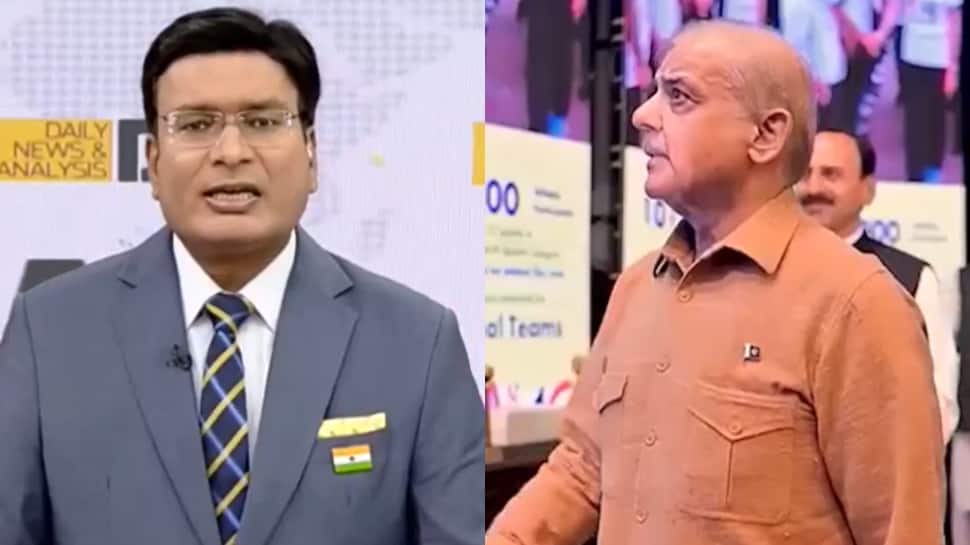
In a significant diplomatic moment during the Shanghai Cooperation Organisation (SCO) summit, Pakistan appeared increasingly isolated as India’s firm stance on cross-border terrorism shaped the joint declaration — a move widely seen as a setback for Islamabad.
The summit saw several bilateral interactions, including a notable moment when Indian Prime Minister Narendra Modi and Russian President Vladimir Putin exchanged a light conversation and walked together, passing by Pakistan’s Prime Minister Shehbaz Sharif without acknowledging him. While it’s unclear what Shehbaz may have felt, the optics did not go unnoticed. In today’s DNA episode, Rahul Sinha, Managing Editor, Zee News, analysed Pakistan’s embarrassment during the SCO summit 2025:
Watch DNA Episode Here:
#DNAWithRahulSinha | चीन में ‘पहलगाम’ सुनते ही शहबाज ‘धड़ाम’! SCO में पाकिस्तान की ‘पराजय’ के प्रमाण#DNA #SCOSummit2025 #PMModi #DonaldTrump @RahulSinhaTV pic.twitter.com/6NESmueyL0
— Zee News (@ZeeNews) September 1, 2025
SCO Nations Condemn Pahalgam Attack
For the first time, the SCO joint declaration made specific mention of the Pahalgam terror attack and explicitly addressed cross-border terrorism.
The declaration also warned against “double standards” on terrorism, a point long emphasized by New Delhi.
The joint statement also mentioned attacks by Baloch insurgents inside Pakistan — a point that was part of the earlier defence ministers’ draft as well. However, this time the statement went further by adding references to cross-border terrorism and rejecting double standards, which many interpret as a diplomatic warning to Pakistan.
This marked a sharp contrast from the SCO Defence Ministers’ meeting held in June in Qingdao, China, where the Pahalgam attack was notably absent from the joint statement. That omission prompted Indian Defence Minister Rajnath Singh to reject the declaration, stating clearly that India would not accept a selective approach to terrorism.
Since then, India ramped up diplomatic efforts — efforts that appear to have paid off. In the current summit, not only was the Pahalgam attack included in the declaration, but PM Modi also delivered a strong statement condemning terrorism from the SCO stage. His remarks underscored India’s uncompromising position on the issue.
Decoding SCO Joint Declaration
A closer look at the language used in the joint declaration reveals critical signals. The use of “cross-border” terrorism, a term India consistently uses to describe Pakistan’s role in sponsoring terror.
Additionally, the mention of “double standards” — commonly understood as referring to Pakistan’s historical distinction between “good” and “bad” terrorists — both point to a broader international consensus aligning with India’s view.
While Pakistan may attempt to spin the outcome of the summit in its favor, claiming diplomatic success, the facts on the ground suggest otherwise. China, traditionally Pakistan’s strongest backer within the SCO, appeared to take a step back this time, offering little visible support to Islamabad during critical discussions.