

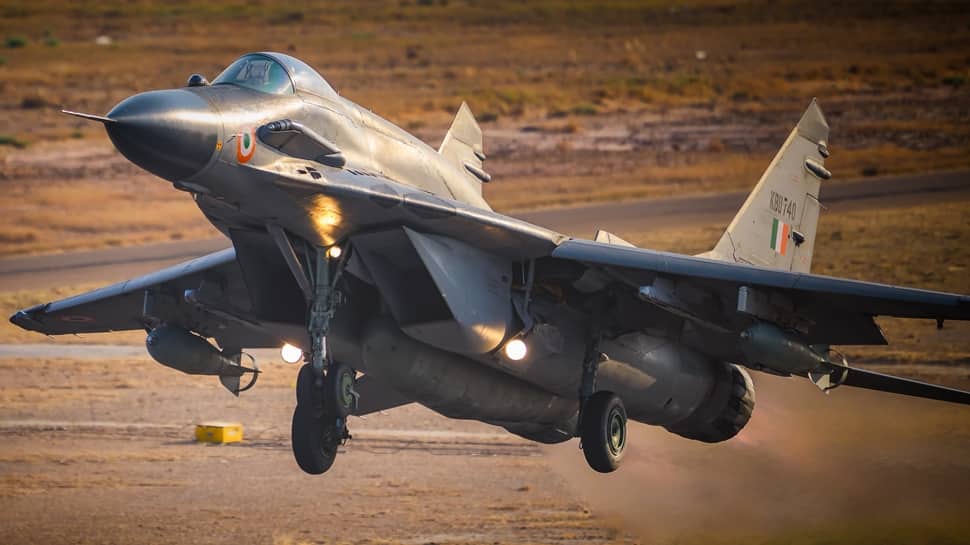
As combat grows more complex with the proliferation of drones, close air support (CAS), and advanced air defence systems, the Indian Army is pressing for tactical control of airspace at the frontline. The lesson from the recent military operations is clear: when soldiers manoeuvre under hostile fire, the authority to clear or deny airspace cannot rest in distant air rooms. It must lie with commanders in the field.
Friendly Fire
During Operation Sindoor, Army Air Defence (AD) units deployed at the frontlines with systems such as Akash, QRSAM and Igla MANPADS shouldered the responsibility of preventing hostilities by friendly fire. In the chaos of modern combat, where friendly drones, artillery-fired munitions and CAS aircraft operate in overlapping kill zones, the risk of shooting down one’s own assets, although not high (because of friend-and foe identification system), is still present as a possibility.
In case it does happen, shooting down one’s own assets would not only be an operational embarrassment; it can cripple morale and distort the tempo of manoeuvre. Global trends suggest that the only way to reduce such risks is by giving airspace management authority to those actually fighting in the contested zone.
Tactical AD batteries, artillery fire direction centres, and ground manoeuvre brigades cannot afford delays caused by waiting for clearance from distant Air Operations Centres (AOCs).
The ISO Act Rules 2025
The Integrated Space and Operations (ISO) Act Rules 2025, which empower joint commanders in theatre, have created an opportunity for the Army’s case to be pressed. While the Indian Air Force (IAF) rightly manages strategic air campaigns, the Army is seeking embedded integration cells within AOCs to ensure its operational priorities remain at the forefront in operational settings.
Military experts are in agreement here: airspace management is not just about protecting jets; it is about safeguarding manoeuvres. In joint operations, the ability of a brigade to exploit a breakthrough or of an artillery regiment to saturate a target depends on instant clearance of kill boxes and unmanned aerial systems (UAS) lanes. By embedding Army cells in AOCs, the Army would be able to be a direct part of these decisions and could better ensure seamless operations.
Army-Owned Kill Boxes and UAS Lanes
One of the core lessons from Operation Sindoor was the need for Army-owned kill boxes— predefined airspace blocks where ground commanders can coordinate fires, CAS and drones without constant clearance requests from higher headquarters. Such boxes ensure artillery, rockets and drones can operate fluidly without fear of being intercepted by friendly air defence.
Similarly, dedicated UAS lanes are becoming a non-negotiable requirement. With swarms of tactical drones feeding intelligence and conducting strikes, their integration into the battlespace must be seamless.
Consider this hypothetical: During active combat, UAS can effectively neutralise the enemy without risking human assets. However, for Army units to fly these missions, they will require airspace approvals, which would in turn have to be routed through centralised nodes. Speed would be the first casualty; the element of surprise would be the second. For soldiers on the ground, such delays are operationally unacceptable.
Synchronising CAS and UAS
Another critical issue is the synchronisation of CAS and UAS with Army fire plans. Currently, CAS is often coordinated separately by the IAF, meaning it could be out of sync with Army artillery and rocket barrages. This fragmentation risks duplication of effort and even mis-targeting.
One of the proposed solutions for this is for CAS sorties and drone operations to be mapped into the same fire support plan that governs artillery and rockets. Only then can ground manoeuvres be truly supported.
If this is implemented successfully, the need to hold back artillery barrages because CAS missions were in the airspace would be eliminated. A direct result of that would be the elimination of any pauses in momentum.
Safeguarding Manoeuvre
At its core, the doctrinal truth can be put thus: airspace management is not about bureaucratic turf but about protecting manoeuvre. In the next war, the tempo of advance will depend on how quickly ground commanders can integrate drones, long-range fires, and CAS without the possibility of any blue-on-blue incidents.
Critics argue that decentralising airspace control risks fragmentation of command and reduces the IAF’s ability to maintain strategic oversight. But the counterargument is compelling: a rigid, centralised system is too slow for the fluid, high-density airspace of modern battlefields. Tactical authority, exercised through integration cells and kill boxes, is a practical compromise.
Message For Future
Operation Sindoor demonstrated that the battlefield is no longer divided neatly between air and land domains. It is a single continuum of contested space.
The ISO Act Rules 2025 have opened a framework for jointness, but the real test will be whether integration allows the relevant service to secure authority where it matters most: at the point of contact. With drones, artillery and CAS converging over the same skies, future manoeuvres cannot be safeguarded without Army-led tactical command.