

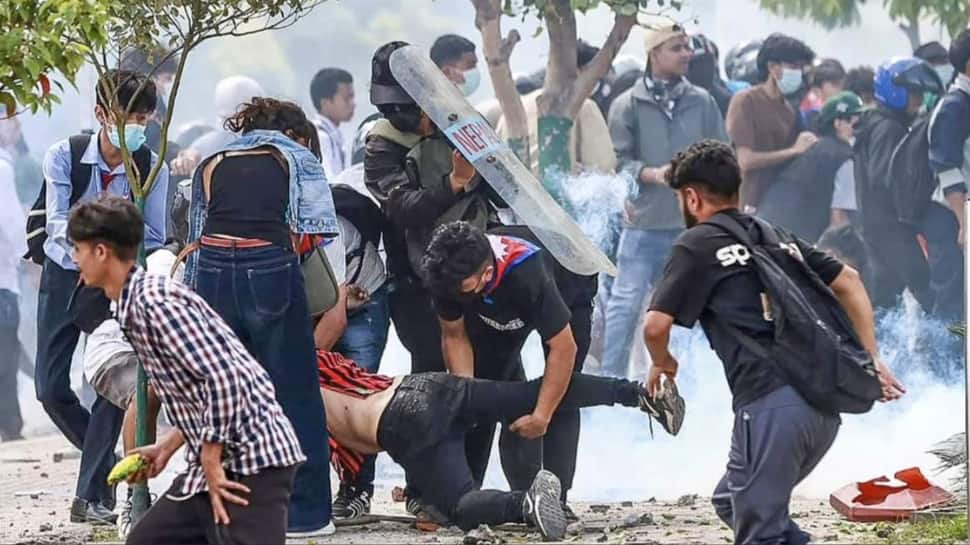
A deep political crisis has hit Nepal after the resignation of Prime Minister KP Sharma Oli. His resignation came at a time when protests against corruption were gaining momentum and turned violent after the government put a blanket ban on social media. At least 19 people have died in the unrest, including students, and it soon evolved into a wider protest against Nepal’s longtime political elite.
This crisis is the biggest test Nepal’s new democracy has faced since the end of the monarchy in 2008, laying bare a wide gulf between the country’s political establishment and agitated youth. The next few weeks will prove crucial in deciding whether the leaders in Nepal are able to effectively negotiate with protesters and ride through a constitutional transition or whether the country will descend into further chaos, possibly prompting new elections under an interim arrangement.
What Triggered the Unrest?
The protests against corruption increased steam on Monday following the government’s move to block more than two dozen social media sites, such as Facebook, X, and YouTube. The government accused the sites of declining to register and fall under government oversight rules.
What started as outrage against censorship soon snowballed into a much wider movement. Large sections of youth, commonly known as Gen Z, were expressing deep disappointment over widespread corruption, cronyism, and shocking unemployment among youth, which has thousands emigrating abroad every day in search of employment.
By Tuesday, the protests were becoming violent. Demonstrators broke into and burned government and media houses, including the parliament, presidential compound, and prime minister’s office. Politicians too were not spared, with Foreign Minister Arzu Rana Deuba and her husband, former Prime Minister Sher Bahadur Deuba, said to be attacked by crowds.
The Current Landscape
Military Intervention: Troops have taken over Kathmandu, imposing curfews and issuing warning shots to deter prison breaks. More than 27 suspected looters have been detained as security personnel strive to restore order.
Caretaker Government: President Ram Chandra Poudel accepted Oli’s resignation and ordered him to form a caretaker government until his successor is named. Yet, Oli’s whereabouts and political status remain uncertain, as he has not been seen in public since the eruption of protests.
Calls for Dialogue: The army has urged protesters to form a negotiation team. Yet, with the movement largely leaderless, it remains uncertain who can effectively represent the protesting crowds in any potential talks.
What Lies Ahead?
Nepal’s 2015 constitution provides a straightforward procedure in case of a collapse of the ruling government: The president is directed to invite the majority party in parliament to form the government. In the absence of any majority party, the president may appoint any member who can command a majority subject to their demonstrating it through a confidence motion within 30 days. Failing all such efforts, parliament can be dissolved, opening up the ground for new elections.
The more immediate challenge, though, is considerable: many of the senior party figures are now tainted in the eyes of demonstrators, some having been attacked or having gone into hiding. This casts grave doubts on whether the legally required path will be embraced by the population.
Possibility of an Interim Government?
Although Nepal’s constitution makes no direct reference to an interim government, legal advisors believe a temporary broad-based government could be formed to gain recognition from the demonstrators.
“Such a government can drive the agenda for change that Gen Z is seeking and conduct elections for a new parliament in six months,” constitutional expert Bipin Adhikari said to news agency Reuters.
Who Would Gen Z Back?
With the protests still raging, two leaders have stepped forward, drawing the younger population to them:
Balendra Shah (Balen Shah): The 35-year-old mayor of Kathmandu and ex-rapper, who is much loved for his anti-corruption views and politics welcoming to youth.
Rabi Lamichhane: An ex-TV journalist who formed the Rastriya Swatantra Party in 2022. Interestingly, protesters released him from prison on Tuesday, as he was being held in jail pending trial on charges of financial misconduct.
Both are considered to be outsiders to the old political establishment and are thus extremely attractive to the young protesters who hope for radical transformation.
A New Constitution in the Cards?
Certain protesters are calling for a total overhaul of the 2015 charter, a controversial document to begin with upon its adoption. Although the constitution permits amendments to be made through parliamentarian processes, protesters contend that the current political class cannot be relied upon to implement substantive reforms. On this basis, demands for a more extensive reconsideration of Nepal’s overall political system are increasingly vocal.
For the moment, Kathmandu is still under curfew, with troops deployed to quell the peace after days of heightened unrest. What happens next depends on whether the political class will be able to locate a livable solution to engage with the protesters or if the present standoff will continue to be deepened into protracted instability.
ALSO READ | Nepal’s New Army Chief Ashok Raj Sigdel: Why India-Trained General Takes Helm Amid Crisis?