

)
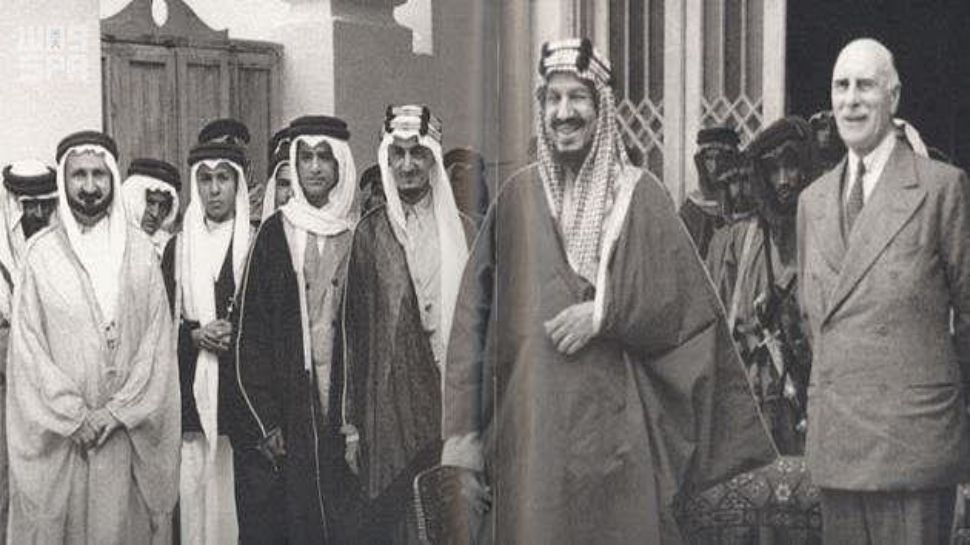
Riyadh: In 1902, a young Abdulaziz bin Abdul Rahman Al Saud entered Riyadh with only 40 loyal companions. In 1932, he declared the Kingdom of Saudi Arabia. His vision gave birth to a nation that today ranks among the richest and one of the most powerful in the world. The roots of the Saudi royal family go back to the 18th century, when the first Saudi state emerged. In 1891, the rival Rashidi tribe seized Riyadh, forcing the Al Saud family into exile. Among them was a 15-year-old Abdulaziz, who grew up in Kuwait under the protection of Sheikh Mubarak Al-Sabah.
In 1901, at the age of 24, Abdulaziz vowed that he would reclaim Riyadh, no matter what it took. He had no army and no heavy weapons. With 50-60 riders mounted on camels, he began the journey across the desert. Along the way, many companions turned back, leaving only 40 to continue.
On the night of January 15, 1902, Abdulaziz and his men reached Riyadh. That night would change Arabia forever. Inside the city stood the Masmak Fort, controlled by Rashidi Governor Ajlan. Abdulaziz and his men climbed leaning palm trees to scale the fort’s walls. They stormed the fort, and Ajlan was killed after prayers. The battle lasted only minutes, and Abdulaziz threw Ajlan’s severed head before the people of Riyadh. The city welcomed him, and supporters of the old Saudi family rallied. The Third Saudi state was born that night.
Riyadh was just the beginning. Across the Arabian Peninsula, tribes controlled Najd, Al-Hasa, Hijaz and other regions, many of them opposed to the Saudis. Abdulaziz relied on Shafai teachings to unify his forces and raised a dedicated fighting force called the Ikhwan. Bedouin tribes abandoned farming to join jihad. Victories followed. By 1913, Al-Hasa was under his control, and by 1922, Najd was fully consolidated.
The toughest battles came in Hijaz, home to the holy cities of Mecca and Medina. Sharif Hussein ruled Hijaz with British support, but Abdulaziz’s Ikhwan defeated him, bringing Mecca under Saudi control. Abdulaziz emerged as Sultan.
He expanded alliances through marriage, marrying 22 times and fathering more than 100 children. By 1927, Najd and Hijaz were united, but in 1929, the Ikhwan rebelled. Abdulaziz crushed them at the Battle of Sabilla.
After years of conquest and consolidation, a royal decree was issued on September 18, 1932, and on September 23, Prince Faisal declared from Hamidiyah Palace in Mecca that the Kingdom of Saudi Arabia was born. Riyadh became the capital, Arabic the national language and the Quran the constitution.
The birth of Saudi Arabia transformed the Arabian Peninsula and the wider world. The discovery of massive oil reserves in Dhahran in 1938 gave the Kingdom a dominant position in the global energy market. Saudi Arabia soon became the second-largest oil producer in the world. The oil boom of the 1970s shook global economies, establishing the Kingdom as a centre of economic power. Oil wealth funded infrastructure, education and healthcare, strengthening the country internally.
On the political and strategic front, Abdulaziz met then US President Franklin D. Roosevelt in 1945 and struck a deal exchanging oil for security and weapons. Saudi Arabia also became a founding member of the United Nations, solidifying its presence on the global stage. With oil and alliances, the Kingdom emerged as a key power in the Middle East.
Religiously and culturally, control of Mecca and Medina gave Saudi Arabia unparalleled authority in the Muslim world. The annual Hajj pilgrimage drew millions of Muslims from around the globe, establishing the Kingdom as a hub for cultural and religious exchange. Over the decades, the combination of oil wealth, strategic alliances and religious leadership has made Saudi Arabia a nation with far-reaching influence, both regionally and globally.
Nearly a century later, the House of Saud still rules. Today, King Salman, the youngest son of Abdulaziz, leads the Kingdom, which is actively pursuing Vision 2030 to build a post-oil economy. Saudi Arabia now has a population of 35 million and ranks among the world’s top 20 economies.
Abdulaziz’s daring capture of Riyadh with just 40 men in 1902 remains one of the most extraordinary chapters in modern history, laying the foundation for a nation that continues to shape global energy, politics and religion.