

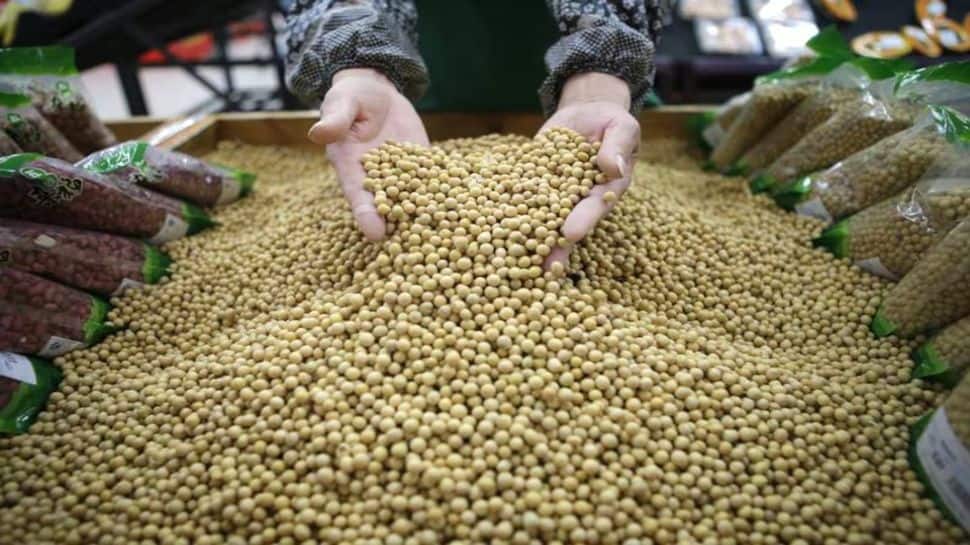
Washington: American soybean farmers are staring at a looming disaster as China, their largest buyer, has stopped importing U.S. soybeans. Fields across the Midwest are ready for harvest, but farmers have no certainty about where their crops will go, leaving an entire sector on edge.
“This is a five-alarm fire for our industry,” said Caleb Ragland, head of the American Soybean Association.
China, which traditionally purchased at least a quarter of U.S. soybeans, imposed a 34% duty on American soybeans in May after US President Donald Trump enacted steep tariffs on Chinese goods. The retaliatory move has made South American soybeans far cheaper, effectively shutting out U.S. exports.
Last year, nearly $24.5 billion worth of soybeans left American ports, with China alone buying $12.5 billion. This year, sales to Beijing have plummeted to zero, according to the New York Times.
The European Union, the second-largest buyer, purchased only $2.45 billion worth of soybeans last year.
Jim Sutter, CEO of the U.S. Soybean Export Council, expressed deep concern as harvest season nears. “I am honestly getting worried that the time is running out,” he said, emphasising that four rounds of negotiations between May and September have failed to yield any progress on resuming trade with Beijing.
President Trump indicated on Thursday that he is weighing an aid package for farmers if no deal emerges, similar to support programmes during his first term.
Farmers, however, caution that any government aid would only serve as a temporary measure.
China has made it clear that the first step must come from the United States. “Regarding the trade of soybeans, the United States should take positive action to cancel the relevant unreasonable tariffs to create conditions for expanding bilateral trade,” Chinese Commerce Ministry spokesperson He Yadong said Thursday.
Senior Chinese negotiator Li Chenggang met with U.S. Midwest leaders earlier this week, showing a limited willingness to discuss soybean purchases ahead of broader negotiations. Still, technical disagreements continue to block any breakthrough.
The impact is not confined to soybeans. Retaliatory tariffs have also hit U.S. growers of sorghum, corn and cotton, along with seafood exports. But soybeans remain the nation’s most valuable food export, representing 14% of all agricultural goods sold abroad.
For U.S. farmers, the uncertainty is more than financial. It is a storm threatening livelihoods and the future of American agriculture.