

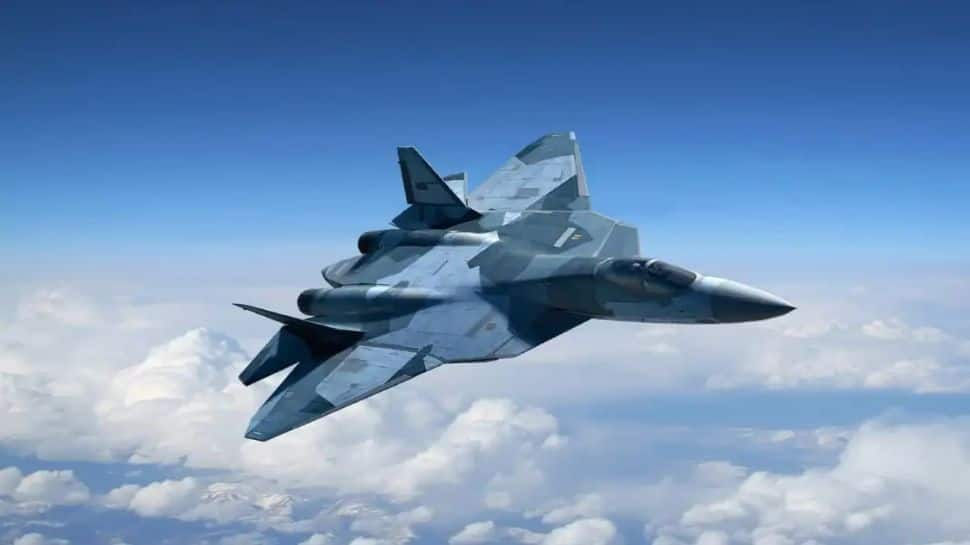
Moscow: Russia has finalised the design of its MiG-41, a next-generation interceptor intended to challenge the U.S. F-35 stealth fighter jet. The aircraft is being developed to intercept hypersonic missiles, stealth fighters like the F-35 and potentially even satellites.
Retired Russian Air Force Commander Vladimir Popov told Russia Today on September 16, 2025, that the MiG-41 has completed its outer design stage and that a prototype flight is expected in the coming years. This jet is being built as the successor to the MiG-31.
Popov explained that the MiG-41, part of the PAK DP program, has reached the stage where its external configuration is finalised. The prototype is expected to fly within the next few years.
MiG-41 Designed To Counter F-35
The MiG-41’s capabilities surpass conventional interceptors. According to Army Recognition, the aircraft can reach speeds exceeding Mach 4, approximately 4,800 kilometres per hour. It can operate at near-space altitudes of up to 80,000 feet, targetting hypersonic and stealth threats.
The fighter will be available in both piloted and unmanned versions. Advanced sensors and radar will allow it to lock onto multiple targets simultaneously while maintaining long-range surveillance. The MiG-41 is expected to play a key role in Russia’s Arctic defense strategy.
Reports reveal that Russia is also designing the MiG-41 for anti-satellite missions. This would allow it to target satellites in low-Earth orbit using specialised air-to-space missiles. The aircraft will be armed with the MPKR DP missile system, a multi-purpose platform capable of deploying multiple sub-missiles from a single missile, increasing the likelihood of striking hypersonic and high-speed targets.
Additional features include advanced radar, laser defense systems and a combined-cycle engine, an upgraded version of the Su-57’s Izdeliye-30 engine.
Challenges Ahead For Russia
Questions remain about whether Russia can successfully realise the MiG-41. Achieving speeds above Mach 4 is an immense technical challenge. Such velocities generate extreme thermal stress on the airframe, requiring advanced heat-resistant materials, sophisticated cooling systems and high-powered electronics.
Moscow has already faced production delays with the Su-57 programme, which raises concerns about whether the MiG-41 can be developed on schedule.
Current projections suggest that the first prototype may fly by 2026-27, while serial production is likely to begin around 2030.
The MiG-41 promises to redefine Russia’s aerial capabilities, combining extreme speed, high-altitude reach, advanced targeting systems and anti-satellite functionality. If successfully deployed, it could emerge as a formidable challenge to U.S. stealth fighters and hypersonic platforms, marking a significant step in Russia’s strategic defense initiatives.