

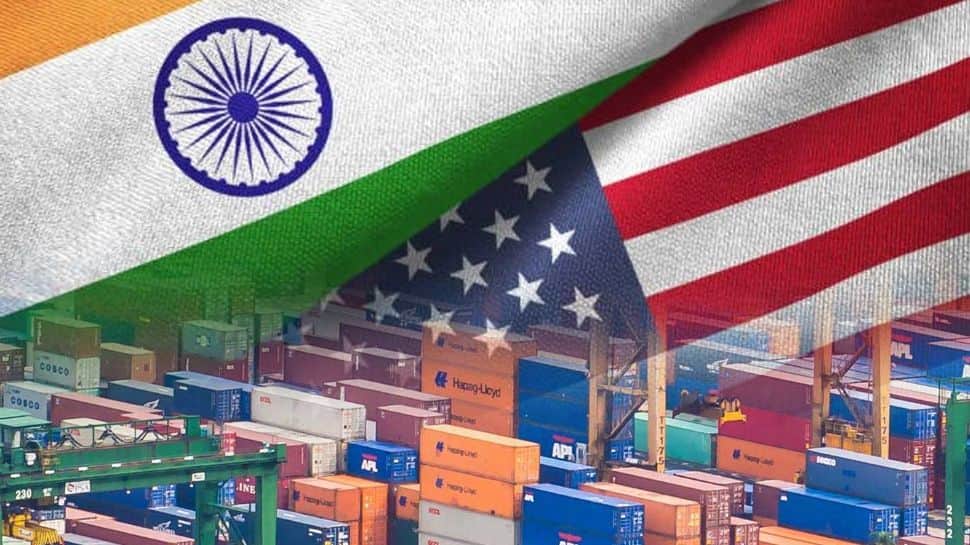
New Delhi: As India continues to explore a bilateral trade agreement with the United States, a prominent think tank has raised red flags about the direction of negotiations. The Global Trade Research Initiative (GTRI) has warned Indian policymakers not to fall into the same pattern as Indonesia, which recently signed what GTRI calls a “one-sided” trade pact with Washington.
In a report released on Wednesday, the GTRI described the US-Indonesia agreement as heavily skewed in favour of American interests. The group pointed to aggressive pressure tactics by the United States, warning that similar dynamics could play out in India’s case unless approached with caution and long-term planning.
“The US-Indonesia trade deal offers a clear example of how intense U.S. pressure can lead to unbalanced outcomes,” the report said, stressing the importance of measured and reciprocal agreements for developing economies like India.
What Indonesia Agreed To
The recently signed trade pact requires Indonesia to eliminate 99% of its tariffs on U.S. goods, opening its markets to a wide range of U.S. products – from industrial and tech to agricultural commodities. The United States, in contrast, will impose a 19% tariff on Indonesian exports, down from an initially proposed 40%, but still a significant barrier.
According to the GTRI, Indonesia has committed to buying $22.7 billion worth of American goods. That includes $15 billion in energy imports such as liquefied petroleum gas, crude oil and petrol; $4.5 billion in agricultural products like soybeans, wheat and cotton; and $3.2 billion allocated for Boeing aircraft.
The report further states that Indonesia agreed to dismantle local content rules, which previously required foreign companies to source components locally. With those protections removed, small and medium-sized Indonesian businesses could lose out on demand from larger firms now able to directly source from abroad.
Another key concern is that there are no requirements compelling U.S. companies to disclose whether their supplies come from countries like China, raising questions about transparency and economic security.
Vehicle Standards, Digital Rules and Remanufactured Goods
The agreement also compels Indonesia to accept American automotive safety and emissions standards. This allows U.S. carmakers to export directly into the Indonesian market without alterations. However, Indonesian auto firms will still have to comply with U.S. rules to sell in America.
In addition, Jakarta has agreed to lift restrictions on remanufactured goods, which the GTRI fears could lead to an influx of cheap and second-hand machinery. That, they say, could harm local engineering and capital goods industries unable to compete with lower-cost refurbished imports.
Why India Should Pay Attention
According to the GTRI, the United States is looking to replicate aspects of this deal in its negotiations with India. Some of the proposals on the table include opening India’s agriculture and dairy sectors, allowing genetically modified animal feed and relaxing digital trade and product standards in line with U.S. preferences.
“These are not minor adjustments, they would reshape how India manages food safety, digital privacy and local industry,” the think tank warned.
U.S. President Donald Trump, who reinstated a reciprocal tariff policy in his second term, has been vocal about ensuring America gets a fair deal in trade partnerships. His administration imposed a 10% baseline tariff from April to July, following a 90-day suspension meant to give countries like India time to negotiate.
He has also made clear that the United States will match any tariff imposed by another country, including India, in the name of fair trade. A key tariff deadline for India is set for August 1.
High-Level Talks Underway
Amid these developments, a senior delegation from India’s Commerce and Industry Ministry has traveled to Washington, D.C. to continue working on a potential bilateral trade agreement. With Trump’s deadline fast approaching, talks have gained urgency.
The GTRI emphasised that India must ensure any final deal undergoes transparent cost-benefit analysis, especially in sensitive areas like health, food safety and intellectual property.
“India should only agree to terms that are fair and reciprocal. Concessions that favour short-term wins at the cost of long-term economic control could become liabilities down the line,” the report concluded.