

New Delhi: The United States has trapped the world in a complex web of tariffs. For India, the only effective way to break through this maze is a bilateral trade deal with Washington. Talks on such an agreement have recently gained momentum. A senior Indian delegation is travelling to America this week to advance negotiations that began in February. “The Indian team will visit this week,” said an official close to the development.
This visit marks the next step in a series of discussions aimed at boosting trade and removing tariff barriers between the two countries.
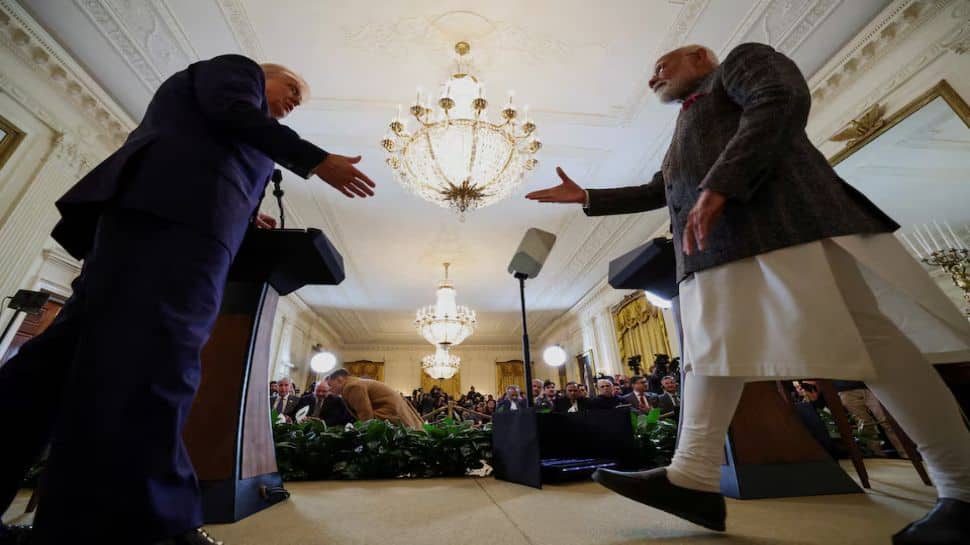
Prime Minister Narendra Modi spoke with US President Donald Trump last Thursday. Officials said the talks had made good progress. The agreement has been under discussion since February. Leaders then instructed their teams to work on a deal and finalise its first phase by fall 2025.
Five rounds of talks have already taken place. Officials in the knowhow of the progress claimed that the talks are moving in the “right direction” and that the “breakthrough is steady”. The question now is when the two sides will sign the deal.
US Looks To India For Support
Meanwhile, tensions between the United States and China have escalated, and Washington is looking for New Delhi’s support.
US Treasury Secretary Scott Baesant objected strongly to China’s new restrictions on export of rare earth materials. He said the United States and its allies will not allow Beijing to “arbitrarily control” the export.
Calling it a “direct attack on global supply chains”, he described the situation as “China versus the rest of the world”. The United States plans to coordinate with allies, including India and European partners.
Last month, Commerce and Industry Minister Piyush Goyal visited New York. He led an official delegation for trade consultations with US officials. After the meetings, both sides agreed to continue negotiations for a mutually beneficial trade deal.
During the visit, Goyal met US Trade Representative (USTR) James Greer and US nominee Ambassador to India Sergio Gor and discussed multiple aspects of the proposed trade framework.
Trade Barriers Could Ease
The talks come as the United States has imposed retaliatory tariffs of 25% on Indian goods, along with an additional 25% penalty. This step came in response to India’s ongoing crude oil purchases from Russia. The total tariff on Indian exports now stands at 50%. This situation highlights the importance of a bilateral trade agreement, which could reduce these trade barriers.
The agreement aims to more than double trade between India and the United States to $500 billion by 2030. Present trade between the two nations stands at $191 billion. For the fourth consecutive year in 2024-25, the US remains India’s largest trading partner. The total trade is estimated to be at $131.84 billion, including $86.5 billion in Indian exports.
At present, the United States accounts for about 18% of India’s total goods exports, 6.22% of imports and 10.73% of overall trade. The proposed agreement is crucial for India’s external trade strategy. It will simplify trade between the two countries, benefiting both. Growth in trade is also expected to create jobs.