

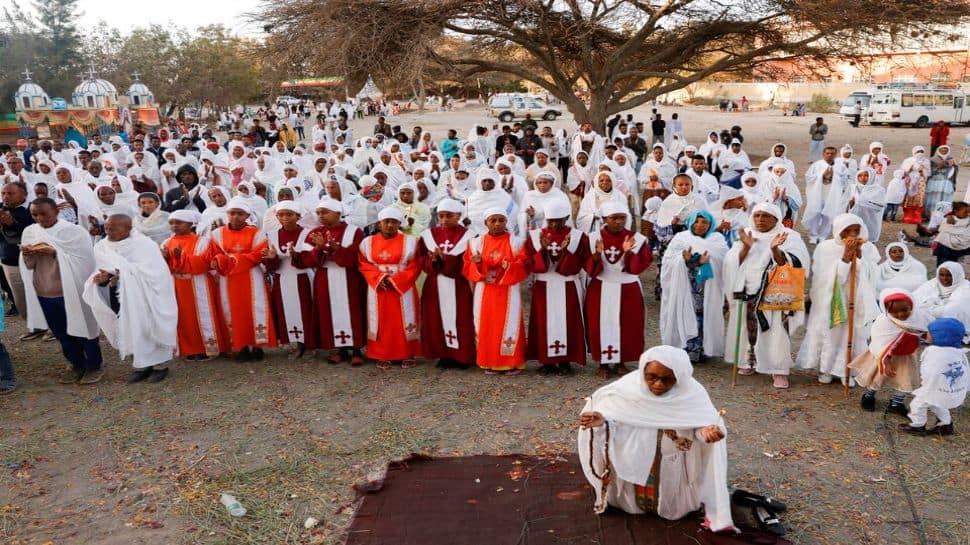
New Delhi: Most of the world is nearing the end of 2025, but there is one country that still lives in the year 2017. This country is Ethiopia. It follows a calendar called the Ge’ez or Ethiopian calendar, which runs about seven to eight years behind the Gregorian calendar used by most of the world. In this system, a year has 13 months instead of 12. Twelve months have 30 days each, and the 13th month has five or six days, depending on whether it is a leap year.
Because of this, Ethiopia celebrates New Year in September, not January, and that makes it one of the most unique countries in the world.
When most of the world celebrates on January 1, Ethiopians wait for September 11. In leap years, the celebration moves to September 12. The day is called Enkutatash, meaning “gift of jewels”. The festival marks the end of the rainy season and the beginning of sunshine and renewal. Even Christmas is celebrated differently here, not on December 25, but on January 7.
Time Woven By Tradition
Ethiopia’s unique calendar comes from its Orthodox Christian tradition. The difference in counting years lies in how the birth of Jesus Christ is calculated. While most Christian nations follow the Gregorian count that begins from what they believe to be the year of Christ’s birth, the Ethiopian Orthodox Church believes Jesus was born seven years earlier. That calculation shifted the timeline, and Ethiopia stayed with its ancient count.
Even as global trade and governance operate on the Gregorian system, most Ethiopians continue to live their daily lives by the Ge’ez calendar. Banks, schools and government offices often display both dates side by side, one for the world, one for Ethiopia.
A Different Sense Of Time
Even the day begins here differently. While most countries start counting the day at midnight, Ethiopians begin their day at sunrise. What the world calls 6 a.m., Ethiopians call 12 o’clock. When it is noon on the international clock, it is 6 p.m. in Ethiopia. The timing system is a reflection of how life revolves around sunlight and nature.
A Nation Apart
Ethiopia is not just unique in timekeeping. It also stands apart in history. It is the only African nation never colonised by European powers. Its culture remains deeply rooted in tradition, spirituality and self-identity. The country is home to ancient rock-hewn churches, rich Orthodox Christian rituals and one of the world’s oldest culinary traditions based on fasting and vegetarian dishes.
Ethiopia is also famous as the cradle of humankind. The fossil of Lucy, one of the earliest known human ancestors, was discovered here in 1974. Surrounded by Kenya, Somalia, Eritrea and Sudan, its land forms the centre of the Horn of Africa, a region steeped in history and myth.
Calendar As Identity
The Ge’ez calendar is more than a measure of time. It is part of Ethiopia’s identity. It shapes festivals, farming seasons and religious observances. It links the people to their ancestors and faith. For Ethiopians, being seven years behind the world is not a disadvantage. It is a mark of pride, a reminder that time, like culture, is made by people, not by power.
Ethiopia’s clock may tick slower than the rest of the world, but its heritage runs deep. In its 13-month year, the country holds a timeless truth: every civilisation creates its own rhythm and every culture defines its own time.