

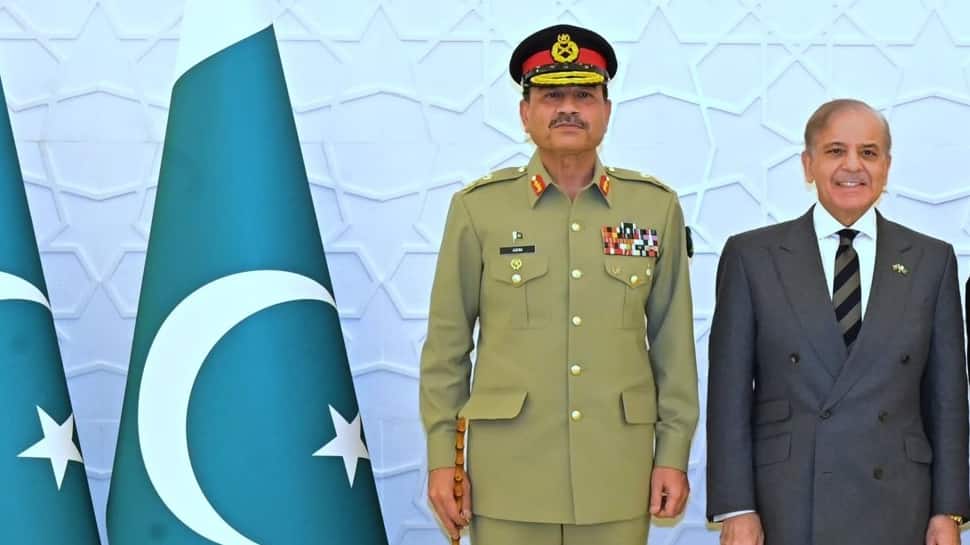
Chaos In Pakistan Soon? Pakistan’s government on Saturday introduced the 27th Constitutional Amendment Bill, paving the way for the creation of a powerful new position titled Chief of Defence Forces (CDF) to oversee unified command of the Army, Navy, and Air Force. The move significantly strengthens the role of the current Army Chief, General Asim Munir, who is widely expected to take charge of the newly created office.
The proposed amendment seeks to modify Article 243 of the Constitution, which governs the command and structure of the armed forces. Under the new framework, both the Chief of Army Staff (COAS) and the Chief of Defence Forces will be appointed by the President on the advice of the Prime Minister.
However, the bill also states that the Chief of Army Staff will simultaneously serve as the Chief of Defence Forces, effectively consolidating military authority under a single office. Additionally, the Army Chief will appoint the head of the National Strategic Command, which oversees Pakistan’s nuclear command structure, in consultation with the Prime Minister. The amendment clarifies that the head of the strategic command must be from the Pakistan Army.
The bill also introduces provisions allowing the promotion of officers to lifetime ranks such as Field Marshal, Marshal of the Air Force, and Admiral of the Fleet, titles that historically symbolize exceptional military authority and prestige.
Concerns Over Civil-Military Balance
The move has reignited familiar debates in Pakistan regarding the balance of power between the civilian government and the military establishment. Analysts note that Pakistan’s Army has historically held a dominant role in national policy, with multiple past coups shaping the country’s political trajectory.
General Asim Munir already wields significant influence in matters of governance, foreign policy, and internal security. Opposition leaders and political observers argue that the new constitutional arrangement could further tilt the power structure away from elected civilian leadership.
The issue gained attention again after Defence Minister Khawaja Asif, when asked recently whether the military or the government holds final decision-making authority, replied that decisions in Pakistan are taken through “mutual understanding” — a remark interpreted by many as an implicit acknowledgment of the military’s overriding role.
Sharif Government Under Pressure
Prime Minister Shehbaz Sharif’s administration has faced persistent criticism for appearing dependent on military backing, particularly during economic negotiations, regional diplomacy, and internal security operations. The new amendment is seen by some political commentators as reinforcing that dynamic.
Observers warn that if tensions emerge between the government and military leadership, the centralization of authority under the Army Chief could set the stage for heightened political friction. While no overt signs of a coup exist at present, political analysts agree that the structural shift places more decisive power in military hands, a trend Pakistan has seen in previous periods of instability.
What Does It Mean?
The latest constitutional amendment once again lays bare the deep structural imbalance at the heart of Pakistan’s political system. Despite being a parliamentary democracy on paper, real authority continues to rest with the military establishment, while the elected government appears reduced to a ceremonial layer of approval. The concentration of power in the office of the Army Chief, now further institutionalized through the new Chief of Defence Forces role, only widens the gap between democratic intent and political reality.
Rather than asserting the mandate given by the public, the Sharif government has opted to reinforce the military’s dominance, signaling either political helplessness or complete dependency on Rawalpindi’s support to stay in power. For a nation struggling with economic crisis, internal instability, and diplomatic isolation, the continued monopoly of unelected power centers leaves little room for democratic institutions to evolve or strengthen. If Asim Munir plots yet another coup and ousts Shehbaz Sharif in the future, it won’t be a surprise at all.