

Defence Research and Development Organisation (DRDO) Chairman Dr. Samir V. Kamat on Saturday shared insights into the advanced technology used during Operation Sindoor, emphasising that it helped in sensors, unmanned platforms, secure communications, AI-driven decision support, and precision weaponry.
“Operation Sindoor was not merely defined by the courage and capability of our soldiers in uniform but also by the technological backbone that supported them with sensors, unmanned platforms, secure communications, and AI-based decision support, as well as precision weaponry,” he said.
“… This was a highly coordinated, multi-dimensional operation that addressed a high-stakes challenge along our western borders,” Kamat added, ANI reported.
Kamat further added that the systems used by Indian forces during Operation Sindoor included several indigenous technologies such as the Akash short-range surface-to-air missiles, medium-range surface-to-air missiles, BrahMos supersonic cruise missiles, the B-4 anti-drone system, the AEW&C airborne early warning and control system, the Akashteer system, and the C-4I system.
While recalling his call with PM Modi, DRDO chairman said, ” PM has given a call to all of us that as a nation we should become a developed nation as well as a technology leader by 2047…”
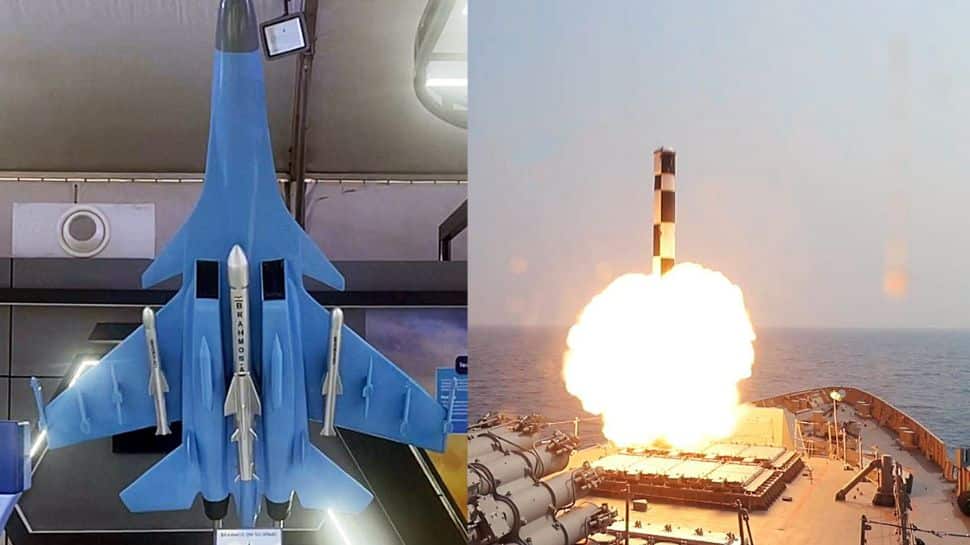
Speaking about the offensive capabilities, Dr. Kamat stated that the BrahMos missile was the primary offensive weapon used, launched from the Sukhoi Mark 1 platform. As for defensive weapon systems, the Akashteer anti-drone system was used.
“When it comes to offensive weapons, BrahMos was the primary weapon used, which was launched from our Sukhoi Mark 1 platform. When it comes to defensive weapon systems, the Akashteer system, the anti-drone system… All the sensors were networked using the Akashteer, which helped in identifying the threats coming towards us and then deploying the right kind of weapon to neutralise those threats,” Kamat said during the press conference.