

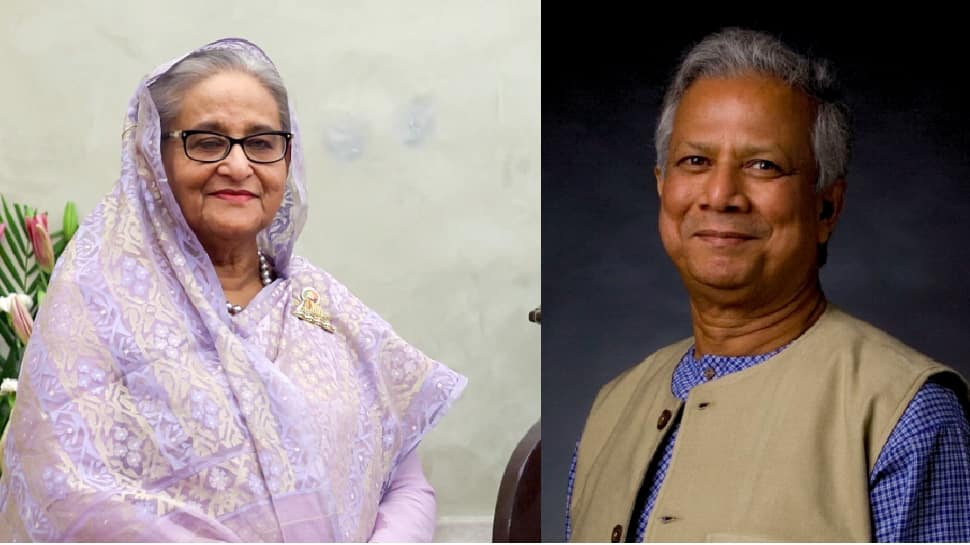
Since Muhammad Yunus became Chief Advisor of Bangladesh’s interim government on August 8, 2024, after the controversial exit of Prime Minister Sheikh Hasina, concerns about the erosion of democracy have intensified. Rather than restoring democratic order and holding free and fair elections promptly as expected, the Yunus administration’s actions have led to deeper political turmoil, fueling fears about the future of democracy.
Analysts reckon the developments as a major political vendetta being pursued by the Yunus regime, as several cases were filed against the former Prime Minister, her supporters, and the working officials during her tenure on frivolous grounds immediately following her ouster in August 2024. The unceremonious exit of Hasina last August was widely viewed as a major setback to the country’s democratic setup. The interim government has also received massive criticism for providing shelter to radical and extremist Islamic outfits.
Bangladesh police arrested another 1,593 Awami League leaders and activists in a nationwide operation amid the ongoing crackdown on the party by the Muhammad Yunus-led interim government recently. Additionally, the Dhaka Metropolitan Police (DMP) has taken into custody 11 Awami League activists in raids at different places in the capital, as confirmed by the Deputy Commissioner of DMP Muhammad Talebur Rahman.
Among the arrested activists of Awami League is online Awami League blogger and activist, Kamal Pasha Chowdhury. All the arrested persons were charged in multiple criminal cases related to last year’s July demonstration.
In another incident of suppression of political dissent in Bangladesh under the Muhammad Yunus-led interim government, the police arrested at least 25 leaders and activists of the Awami League and its affiliated bodies in April, including from its student wing, Chhatra League, after a series of flash processions in Khulna city.
Earlier in February this year, over 1,000 people were arrested in Bangladesh under a nationwide joint forces operation. According to mainstream media reports, 81 activists of the Awami League party were arrested in Gazipur on the outskirts of Dhaka.
Condemning the arrest of Kamal Pasha Chowdhury, Awami League leader and former Minister of State for Information and Broadcasting of Bangladesh, Mohammad Arafat took to social media, calling it “unjust”.
“Pro-Liberation activist and artist Kamal Pasha Chowdhury has been unjustly arrested — another act of repression under Yunus’s authoritarian grip. It is with deep alarm and indignation that we report the arrest of Kamal Pasha Chowdhury—renowned artist, General Secretary of Charu Sangshad, a leading figure in the Sammilita Sangskritik Jote (a platform of various cultural organisations) and a staunch secular, pro-Liberation voice,” Arafat had posted on X.
The Awami League’s media cell reported that the country is witnessing an alarming surge in “fake legal cases, mob violence, and political revenge” under the Yunus regime. The party highlighted a “collapse of the justice system” in Bangladesh amid a “tsunami of fake cases” since the fall of the democratically elected Awami League government led by former Prime Minister Sheikh Hasina.
It is not just the Awami League that is under fire from Yunus’ administration. Even the other major political party, the Bangladesh Nationalist Party (BNP), headed by former PM Begum Khalida Zia, is also facing the brunt of an increasingly autocratic regime.
In a statement posted by the party on its website, it stated that a total of 20,326 leaders and activists of the BNP had been arrested so far and 73,123 party followers sued in 837 cases filed since October 28 last year, following clashes with the members of the law enforcement agencies and the ruling Awami League activists over a grand rally in Dhaka.
Even though Yunus announced that national elections would be held in February 2026, the student political groups remain unimpressed.
Saddam Hussain, President of the Bangladesh Students League, the student wing of the Awami League, called the announcement a “state-sponsored drama” and accused the current government of lacking legitimacy and control.
According to him, the elections were not a priority for this government, and this was just a state-sponsored drama.
“They banned the Bangladesh Awami League…The people of Bangladesh are waiting for a democratic representative to govern the country…The present government has no control over the law and order situation…For restoring democracy in Bangladesh, we have no other option than the removal of this current fascist regime…Muhammad Yunus is using the state machinery for his own personal agenda,” he said.
Student groups also question the fairness and transparency of upcoming elections under the interim government. As democracy remains weakened and the socio-political fabric frays, the crucial question persists: Will Yunus step aside to restore genuine democracy in Bangladesh?