

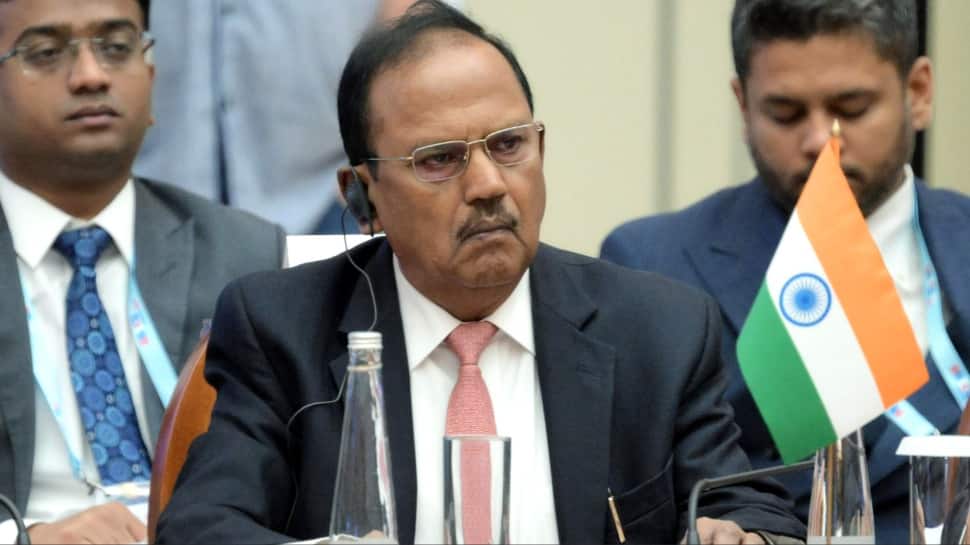
National Security Advisor Ajit Doval’s career as a spymaster is storied and includes a little-known but pivotal mission in the Himalayan kingdom of Sikkim, a tale that underscores India’s strategic foresight in the intricate geopolitical chessboard. In the early 1970s, then a young intelligence officer, Doval was sent to counter rising foreign influence and pave the way for the eventual merger of Sikkim with India.
The ‘Spy Queen’ and a Looming Threat
The hub of the mission’s activities was Hope Cook, the American-born wife of the Chogyal (king) of Sikkim. She was considered suspicious in Delhi as a “spy queen” with supposed CIA connections. Her role in influencing palace policy and going public for interviews depicting Sikkim as a state under Indian pressure created concerns. When India’s relations with the US were tense, especially during the 1971 Bangladesh war, the possibility of a buffer state along China’s border coming under American influence was every national security nightmare.
Doval’s Role: On the Ground and Undercover
Ajit Doval was dispatched to Sikkim to size up the situation and neutralize the queen’s increasing power. He himself soaked up the milieu, meeting political leaders and trying to read the pulse of the people. His observations assured that the Sikkimese, especially the dominant Nepali people, resented the monarchy, which was perceived by them as distant and anti-India.
Doval’s reports gave Delhi valuable information, assuring that the will of the people was against the monarchy and in support of integrating with India. This set the stage for a democratic movement that would alter the course of history in Sikkim.
Monarchy Dismissed, Sikkim Makes Union with India
By 1973, protests against the monarchy had become widespread. Due to huge public pressure, Queen Hope Cook fled Sikkim for New York, never to return. Two years later, in 1975, the Sikkim Assembly passed a resolution to end the monarchy and accede to India. The move was overwhelmingly approved in a referendum with more than 97% of the population rallying behind the initiative. Delhi quickly moved to act, and Sikkim formally became the 22nd Indian Union state, a strategic as well as diplomatic triumph in which Ajit Doval’s initial surreptitious efforts were instrumental.