

Oslo: The 2025 Nobel Peace Prize will be announced on October 10, and the world’s eyes will be on Oslo once again. But how exactly is this prestigious award decided? Here is a full look behind the scenes.
Who Decides?
The Norwegian Nobel Committee is in charge. Appointed by the Norwegian parliament, it has five members, often retired politicians but sometimes academics or experts in civil society.
The present committee is led by the head of Norway’s branch of PEN International, an organisation defending freedom of expression.
Appointments reflect Norway’s political balance, with members put forward by political parties. They carry immense responsibility: balancing legal, historical and humanitarian considerations when selecting a laureate.
Who Can Win?
The Nobel Peace Prize is guided by the 1895 will of Swedish industrialist Alfred Nobel, who wrote that it should go to the person “who has done the most or best to advance fellowship among nations, the abolition or reduction of standing armies and the establishment and promotion of peace congresses”.
According to Kristian Berg Harpviken, secretary of the committee, interpretation is flexible, “They will look at the world, see what is happening, what are the global trends, what are the main concerns and what are the most promising processes that we see. And processes here can mean anything from a specific peace process to a new type of international agreement that is under development or that has recently been adopted.”
The prize is meant to reflect the current context of global peace and conflict, not just historical achievements.
Who Can Nominate?
Nominations come from a wide circle. Members of governments and parliaments, incumbent head of states, university professors in history, social sciences, law and philosophy as well as former laureates can all propose candidates.
For 2025, there are 338 official nominees. Their names are locked away in a vault for 50 years. However, nominators themselves can disclose whom they proposed, though verification is impossible.
How Does The Committee Decide?
Nominations close on January 31, after which committee members can make their own submissions before their first meeting in February.
The process unfolds in stages:
- Discussion and Shortlisting: Members review all nominations and create a shortlist.
- Expert Assessment: Permanent advisers and specialists examine each candidate.
- Monthly Deliberations: The committee meets roughly once a month, typically finalising decisions by August or September.
The goal is consensus. If members cannot agree, decisions are made by majority vote.
The process has seen controversy. In 1994, a committee member resigned when Yasser Arafat shared the prize with Israel’s Shimon Peres and Yitzhak Rabin.
Who Is Nominated?
While the full list is secret, disclosed nominations this year include International Criminal Court, NATO, Jailed Hong Kong activist Chow Hang-tung and Canadian human rights lawyer Irwin Cotler.
Some leaders, including those of Cambodia, Israel and Pakistan, claim to have nominated US President Donald Trump, but their nominations arrived after the January 31 deadline and are ineligible for 2025.
Experts observe that Trump could only win if he reversed present policies, which they argue are currently dismantling the international world order the committee upholds. Instead, the prize often highlights humanitarian organisations, journalists or UN institutions or occasionally produces a surprise choice.
Last year’s laureate was Nihon Hidankyo, a group representing Japanese atomic bomb survivours, reflecting the committee’s long-standing focus on the threat of nuclear weapons.
What Does The Laureate Get?
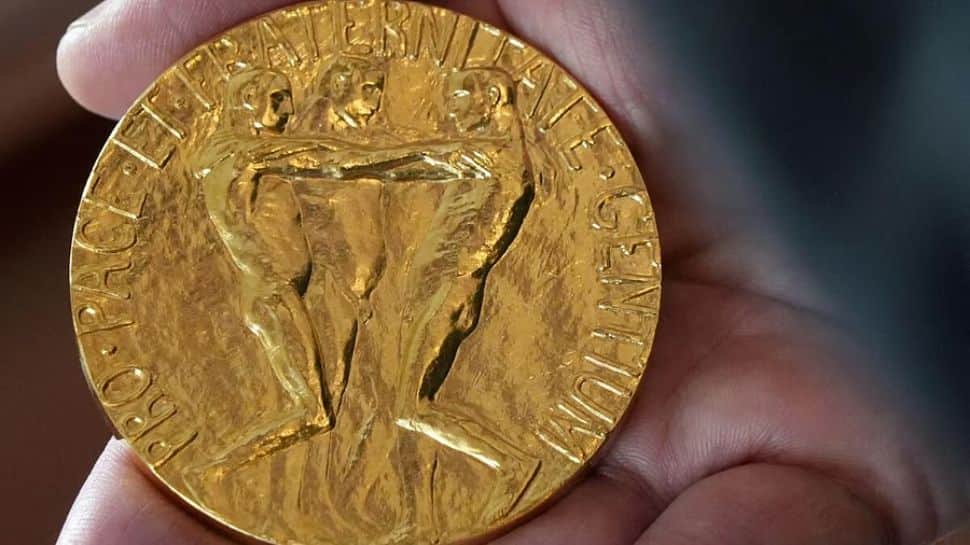
Winners receive a medal, a diploma, 11 million Swedish crowns ($1.19 million) and immediate global recognition.
Announcement, Ceremony Schedules
The announcement is scheduled for 1100 CET (0900 GMT) on Friday, October 10, at the Norwegian Nobel Institute in Oslo, delivered by committee chair Joergen Watne Frydnes.
The ceremony will follow at Oslo City Hall on December 10, commemorating the death of Alfred Nobel.