

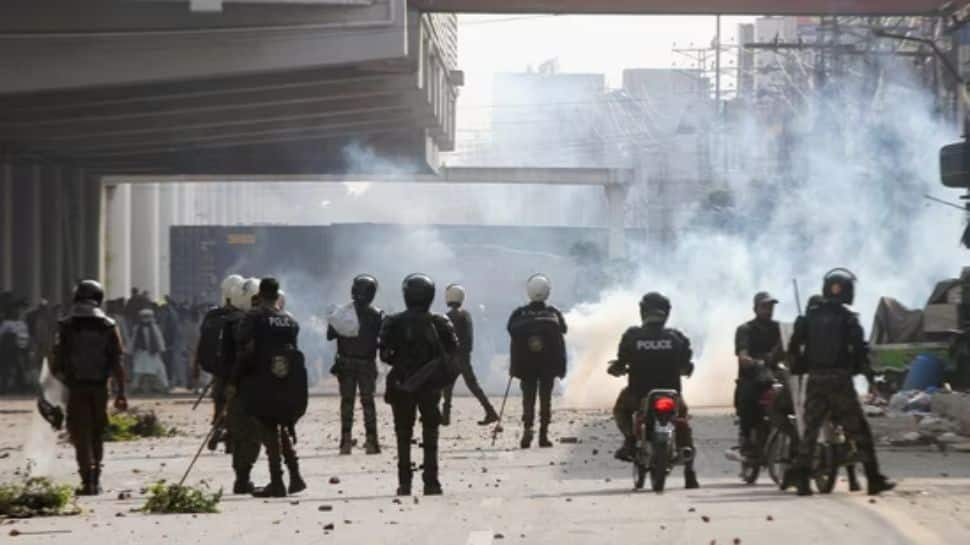
Pakistan-Afghanistan Border Clashes: The mountains along the Pakistan-Afghanistan frontier echoed with heavy gunfire through October 11 night. Border outposts burned. Soldiers fell on both sides. By dawn, both governments were claiming victory and accusing the other of starting one of the deadliest cross-border battles in recent years.
The Taliban government in Kabul said its fighters killed 58 Pakistani soldiers in “retaliatory strikes” that began late Saturday. Pakistan’s army confirmed 23 deaths but claimed it had destroyed 21 Afghan posts and killed more than 200 Taliban and affiliated militants.
What triggered the battle is still tangled in accusation and denial, but the fighting has laid bare how deep the rift between the two uneasy neighbours has become.
A War Along An Old Line
The exchange began around 10 p.m., spreading across several points of the long and disputed border known as the Durand Line. Gunfire and explosions were reported in Angoor Adda, Bajaur, Kurram, Dir and Chitral in Pakistan’s Khyber Pakhtunkhwa province and at Bahram Chah in Balochistan.
“The situation on all official borders and de facto lines of Afghanistan is under complete control,” said Taliban spokesman Zabihullah Mujahid.
He said Afghan forces had captured 25 Pakistani army posts and wounded 30 more soldiers.
Pakistan’s military called the attacks “cowardly actions aimed at destabilising the border” and said it had “repelled the assault decisively”.
Pakistan Army’s media wing, Inter-Services Public Relations (ISPR), added, “Last night’s episode vindicates Pakistan’s long-standing position that the Taliban government is actively facilitating the terrorists.”
Afghan state media reported the Taliban’s defence ministry was deploying tanks and heavy weapons near the border in Kunar province. In Pakistan’s Kurram region, residents said they could still hear sporadic gunfire the next day.
A Trigger In Kabul
Two days before the fighting erupted, Kabul and Paktika province were rocked by deadly explosions. The Taliban blamed Pakistan for the blasts, calling them “a violation of Afghanistan’s sovereignty”.
Islamabad neither confirmed nor denied, but security officials privately told Reuters that air strikes had targeted Tehrik-e-Taliban Pakistan (TTP) chief Noor Wali Mehsud. Whether Mehsud survived remains unclear.
Once Pakistan’s most wanted insurgent group, the TTP has regained strength since the Afghan Taliban took power in 2021. Islamabad accuses Kabul of sheltering its fighters; Kabul denies it.
Since the fall of Imran Khan’s government in 2022, attacks on Pakistani soldiers have surged again. A report by the Centre for Research and Security Studies in Islamabad said more than 2,400 people were killed in militant violence in the first nine months of this year alone.
Words From Both Capitals
Pakistan’s Prime Minister Shehbaz Sharif called the Taliban assault a “provocation” and praised the army’s “befitting reply”.
Interior Minister Mohsin Naqvi condemned the attacks as “unprovoked firing” on civilians, saying Afghanistan was “playing a game of fire and blood”.
Taliban government’s Defence Ministry spokesman Enayatullah Khowarazmi described the Taliban response as “retaliatory” and warned of further action if “Afghanistan’s airspace is violated again”.
“The operation concluded at midnight,” he said, claiming, “Our forces are ready to defend every inch of Afghan soil.”
Growing Unease In The Region
The clashes have drawn calls for restraint from regional powers. Iran’s Foreign Minister Abbas Araghchi urged both sides to avoid escalation, saying “stability between these two neighbours contributes to regional stability”.
Qatar and Saudi Arabia also appealed for dialogue and diplomacy, warning against “further escalation that threatens regional peace”.
India has so far remained silent. Afghan Foreign Minister Amir Khan Muttaqi is presently on his first official visit to New Delhi, where he received a red-carpet welcome.
Analysts said that gesture “probably influenced Pakistan’s decision to show force on the border”.
Experts See A Fragile Pause
The analysts said both sides want to avoid a full-scale conflict. “As far as conventional warfare goes, Afghanistan does not have the capability to challenge Pakistan. But guerrilla tactics are a different matter,” they said.
Kabul-based analyst Bahiss said both governments are under pressure at home. “The Afghan retaliation was to show their public that they can defend their sovereignty. Pakistan, too, needed to show strength after repeated attacks on its forces,” he said.
Security experts said diplomacy is the only way out. “If the Afghan Taliban do not act against the TTP, Pakistan will keep striking inside Afghanistan. But if Kabul does act, it risks angering its own fighters. It is a dangerous trap,” they said.
They added that China, Russia and Saudi Arabia would all prefer calm. “They do not want another war zone along that border,” they opined.
For now, the guns are quiet. But along the barren hills of the Durand Line, no one believes the silence will last.