

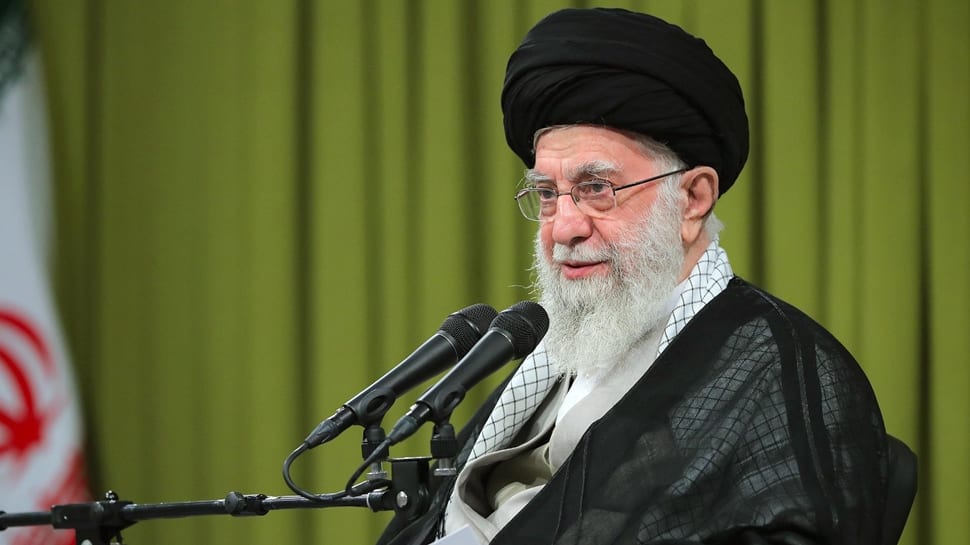
Iranian President Masoud Pezeshkian reiterated at the UN General Assembly that his country does not intend to develop nuclear weapons. He emphasized that Iran has never sought—and will not seek—to build an atomic bomb, citing religious edicts from the Supreme Leader and other clerical authorities as the basis for Tehran’s stance. Iran’s modern nuclear history stretches back to the 1950s under the US-backed Shah, and the country joined the Nuclear Non-Proliferation Treaty (NPT) in 1970, placing its nuclear activities under IAEA safeguards.
60% Announcement and Its Limits
Days earlier, Supreme Leader Seyyed Ali Khamenei said Iran had limited uranium enrichment to 60 percent, stopping short of the roughly 90 percent level typically associated with weapons-grade material. While 60 percent is below the higher threshold, it significantly narrows the technical gap and therefore remains strategically important.
Resumption of Enrichment
Iran says it restarted higher-level enrichment following a coordinated airstrike—claimed to have targeted its nuclear facilities—by Israel and the United States. Tehran insists these steps are defensive and not intended to produce nuclear arms, even as the scale of enrichment has raised international concern.
E3 Move Against Iran
President Pezeshkian also condemned attempts by Britain, France and Germany—the E3 parties to the 2015 nuclear deal—to revive UN sanctions against Iran, calling such actions illegitimate. The E3 notified the Security Council of what they called Iran’s non-performance under the Joint Comprehensive Plan of Action (JCPOA) and sought to trigger the deal’s “snapback” mechanism. Critics point out the move bypassed the JCPOA’s dispute-resolution procedures and the 35-day window provided under UN Resolution 2231, casting doubt on the legality of the E3 action.
Iran’s Talks with France
On the sidelines of the UN session, Pezeshkian and French President Emmanuel Macron discussed Iran’s nuclear dossier and bilateral ties. According to Iran’s presidential office, Macron expressed a willingness to work to de-escalate tensions and signalled France’s interest in stabilising relations and preserving peace in the Middle East.
Tehran Rejects Talks With Washington
Khamenei warned against negotiating with the United States under current conditions, arguing that talks would not serve Iran’s national interest and could even inflict “major” or “irreparable” losses. He characterised recent US demands—such as a halt to enrichment—as preconditions amounting to dictation rather than genuine negotiation.
Engagement with the IAEA
Iran maintains that its enrichment programme has no military purpose, even as the IAEA notes Tehran is the only non-nuclear-weapon state to enrich uranium to such high levels. Iranian Foreign Minister Seyed Abbas Araghchi met IAEA Director General Rafael Grossi in New York, with both sides describing recent interactions as constructive and urging diplomatic channels to prevent further escalation.
How Uranium Enrichment Works
Nuclear weapons and civil reactors use fissile materials—uranium among them—whose nuclei can be split in a chain reaction that releases large amounts of energy. Natural uranium is dominated by the isotope U-238; the fissile isotope U-235 is present in only trace amounts. “Enrichment” increases the proportion of U-235 in a sample so it can sustain the reactions needed for power generation or, at higher concentrations, for weapons.
Is 60% Enough for a Nuke?
Weapons typically use uranium enriched to about 90 percent or more because such material allows for smaller, more efficient warheads and delivery systems. Technically, however, uranium enriched to 60 percent is still weapons-usable. A device using 60 percent material would likely be bulkier and less efficient than one using 90 percent material, but it remains “bomb-capable.” That technical reality is why Western capitals view Iran’s 60 percent enrichment with deep skepticism despite Tehran’s reiterated denials of military intent. Therefore, Iran’s claim that it doesn’t want nuclear weapons is just yet another move to avoid further sanctions and military conflict.