

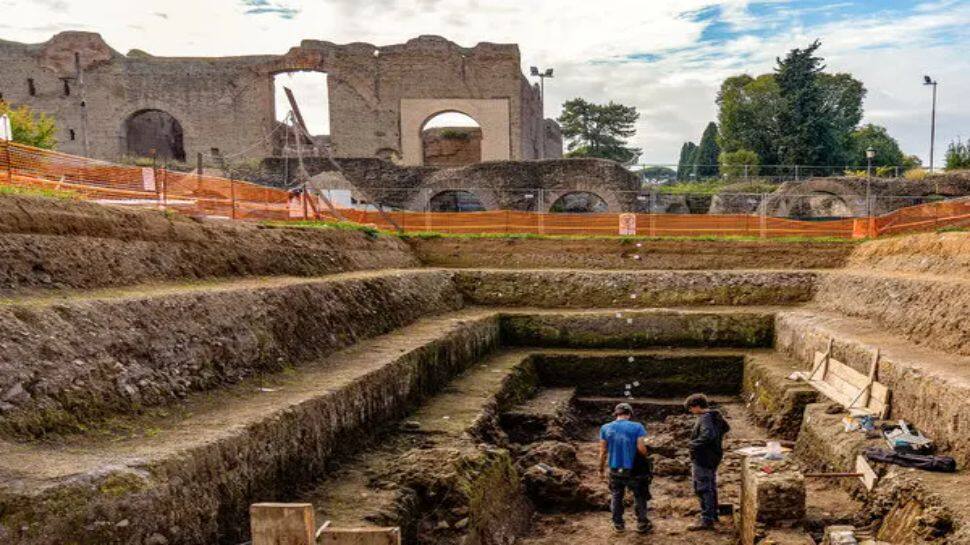
New Delhi: From Egypt to Japan, from the heart of Rome to the mountains of Britain, roads tell stories older than nations. These pathways carried traders, armies, pilgrims and dreamers. Some were paved, some carved into hillsides, some merely worn earth, but all connected humanity across centuries. Today, traces of these ancient arteries remain, offering a window into the engineering, culture and movement of civilizations long gone.
The Road To Giza, Egypt
Over 4,000 years old, the Road to Giza carried massive limestone blocks to construct the iconic pyramids. Stretching 7.5 miles from southwest Cairo to Lake Moeris, this route linked to the Nile.
Today, fragments of the ancient path survive, echoing the labour and ingenuity of its builders.
Nakasendo Highway, Japan
This historic Japanese road stretches 310 miles between Kyoto and Edo, the present-day Tokyo. Built in the 17th century on older paths, it guided travellers on foot or horseback.
Modern-day hikers still tread sections lined with centuries-old inns, wandering through landscapes that feel frozen in time.
The Silk Road, Rome To China
Famed for trade and cultural exchange, the Silk Road began around 200 BC. Rome met Chang’an (modern Xi’an, China) via an intricate network of paths. Merchants carried silk, spices, ideas, religions and technologies.
Today, remnants are visible across Central Asia, testifying to its centuries-long significance.
The Ridgeway, UK
Britain’s Ridgeway stretches across uplands for thousands of years, forming part of the Icknield Way. Druids, traders and travellers walked its course.
Modern hikers explore its ancient landscapes, which still carry traces of Bronze Age tracks and historic landmarks.
Yuen Tsuen Ancient Trail, Hong Kong
This trail once connected Yuen Long and Tsuen Wan, guiding villagers and traders through steep terrain. Amid Hong Kong’s urban sprawl, segments remain green and peaceful, offering walkers a direct link to centuries past.
Old Great North Road, Australia
Constructed by convict labourers in the 19th century, this road from Sydney to Newcastle follows older Aboriginal paths. Stone culverts and engineered formations survive as heritage sites, illustrating historic road-making techniques.
Old North Trail, North America
Used by the Blackfeet tribe, this trail ran from Canada through Montana and further south. It guided trade, hunting and cultural journeys.
Sections are preserved in Glacier National Park, allowing visitors to follow ancient footsteps.
Khmer Highway, Cambodia/Thailand
Once connecting Angkor in Cambodia to Phimai in Thailand, this 225 km route belonged to the Khmer Empire. Nature has claimed much, but temple ruins and fragments still reveal its historical significance.
Persian Royal Road, Turkey To Iran
Commissioned by Darius the Great around the 5th century BC, this road connected Sardis to Susa. Couriers and messengers travelled its length, enabling communication across the Persian Empire.
Remnants of the route still exist.
King’s Highway, Egypt To Syria
A route of biblical and classical importance, linking Egypt to Syria, this highway connected pilgrimage sites, trading posts and cultural hubs. Parts of it remain in use today.
Via Augusta, Spain
Named for Emperor Augustus, this Roman road ran from Cádiz through Catalonia toward the Pyrenees and Rome.
Soldiers, traders and citizens travelled it, leaving behind a path that shaped Roman Hispania.
These roads are more than stone or dirt. They are living chronicles of human ambition, faith, commerce and movement.
They remind us that the journeys we take today are echoes of paths carved thousands of years ago. To walk them is to step directly into history, to touch the lives of those who came before and to see how their journeys shaped the world we live in.