

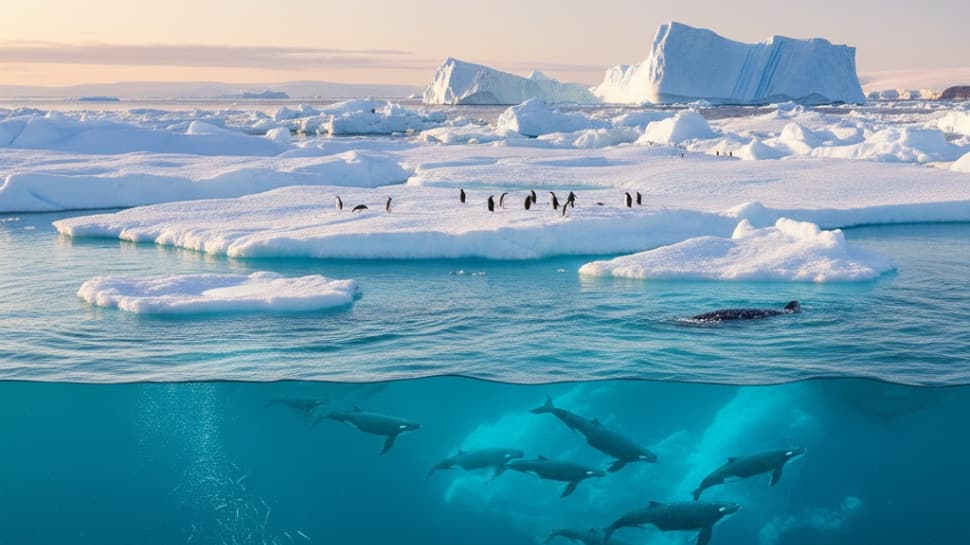
The Hidden Danger Beneath Melting Antarctic Ice: At the end of the last Ice Age, something dramatic unfolded off the coast of Antarctica. As sea ice melted back toward the continent, it was like uncorking a soda bottle, pressure in the ocean dropped, slowing the natural process that traps carbon dioxide in the deep sea. The result? The Earth’s temperature rose dramatically, pushing the planet out of the Ice Age.
Now, scientists warn that history could be repeating itself. As Antarctic sea ice continues to shrink at alarming rates, new research suggests it could again disrupt a vital ocean process, one that acts as the planet’s largest carbon sink.
How the Ocean Stores Carbon and Why It Matters
The ocean plays a crucial role in keeping our planet cool by absorbing and storing carbon dioxide (CO₂). One key player in this process is Antarctic Bottom Water (AABW), a dense, icy current that forms when seawater freezes near Antarctica. This cold water sinks to the ocean floor, carrying trapped CO₂ deep into the abyss for centuries.
However, when melting sea ice weakens AABW formation, less carbon is trapped, and more escapes back into the atmosphere. This shift could accelerate global warming, disrupt weather systems, and reduce the ocean’s ability to buffer human-caused emissions.
A Groundbreaking Discovery
Climate scientist Chengfei He from Northeastern University led a team that analysed seabed sediments using radiocarbon dating, a method that measures how long water has been circulating through the ocean’s depths. Their findings, published in Nature Communications, challenge long-held theories about how ocean systems responded at the end of the Ice Age.
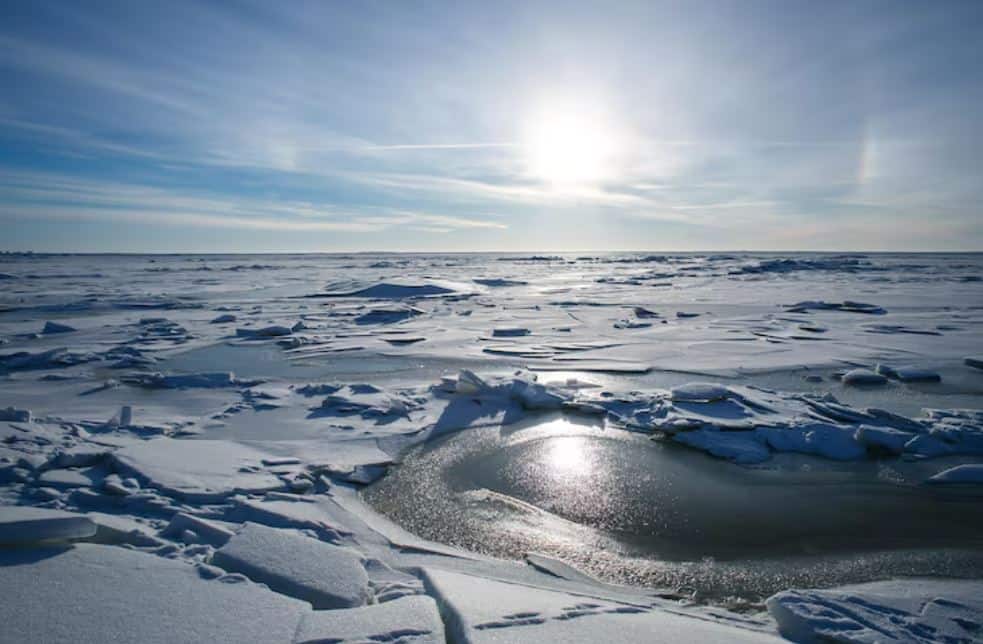
Rather than acting like a “climate seesaw,” where the Antarctic and North Atlantic balanced each other, both oceans’ deep-water systems weakened simultaneously, releasing massive stores of carbon that fueled rapid global warming.
Lessons From the Last Ice Age
Around 17,000 years ago, as Antarctic sea ice melted, AABW production slowed, reducing carbon storage in the deep ocean. At the same time, North Atlantic water circulation weakened. Together, these events caused atmospheric CO₂ levels to soar, accounting for nearly half of the total carbon increase that ended the Ice Age.
This event unfolded over just a couple of thousand years, a blink of an eye in geological time, and transformed the Earth’s climate dramatically.
What It Means for Our Future
Today, scientists are witnessing eerily similar trends. The Southern Ocean is warming again, and new data shows Antarctic Bottom Water formation is weakening once more. If this continues, vast amounts of CO₂ stored in deep ocean reservoirs could be released, supercharging global warming.
Dr He warns that understanding how this carbon “switch” worked in the past is key to predicting our climate future:
“We’re seeing signals that the deep ocean carbon pump is slowing again. What happened at the end of the Ice Age could offer a glimpse of what’s to come.”
The melting of Antarctic sea ice isn’t just about rising sea levels, it’s about unlocking a buried carbon vault that has kept Earth’s temperature in check for millennia. As the ice retreats, that balance may be slipping away, faster than humanity is prepared for.