

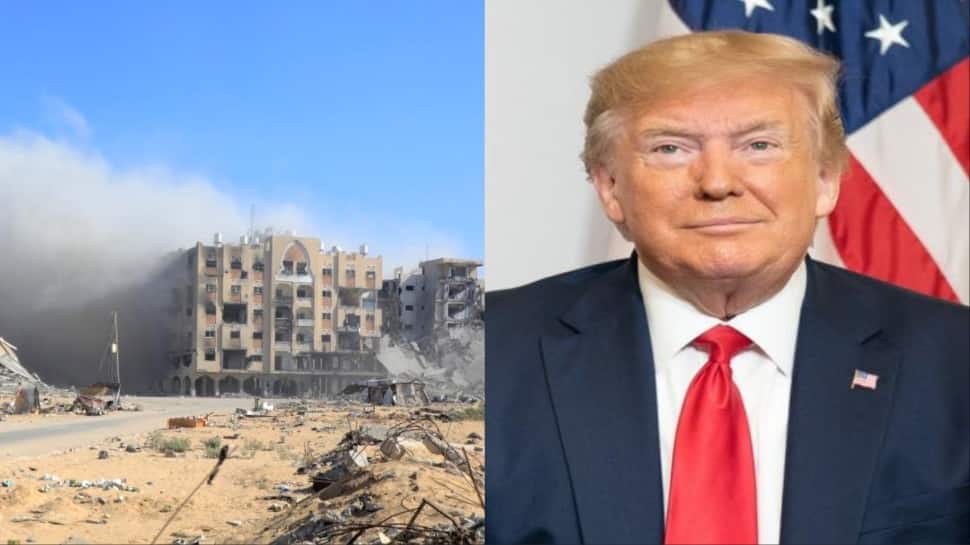
Hamas has responded to US President Donald Trump’s recently proposed 20-point peace plan for Gaza, signalling acceptance of several major components, including an end to the conflict, Israel’s withdrawal, and the release of Israeli hostages alongside Palestinian prisoners. However, significant differences remain over the governance of Gaza and Hamas’ future role in the territory.
In a statement issued on Friday, the Palestinian militant group agreed to a ceasefire and Israel’s “full withdrawal” from Gaza, while reiterating its opposition to Israeli occupation and any forced displacement of Palestinians. Hamas welcomed the plan’s call for increased humanitarian aid and reconstruction efforts, including the rehabilitation of critical infrastructure, hospitals, and bakeries.
Central to the proposal is the release of Israeli hostages held in Gaza. Hamas confirmed its willingness to free these hostages, both living and deceased, “according to the exchange formula contained in President Trump’s proposal, with the necessary field conditions for implementing the exchange.” The group did not elaborate on what those “necessary field conditions” entail, but expressed readiness to commence immediate negotiations through mediators.
Trump’s plan specifies that all hostages would be returned within 72 hours of Israel publicly accepting the agreement. Following this, Israel would release 250 Palestinian prisoners serving life sentences and 1,700 others detained since 7 October 2023, including women and children. For every Israeli hostage whose remains are returned, Israel will also release the remains of 15 deceased Gazans.
On the question of governance, Trump’s proposal envisions a temporary transitional government in Gaza, managed by an apolitical Palestinian technocratic committee overseen by an international body headed by Trump, with members including former UK Prime Minister Tony Blair. This committee would supervise the administration during the transition, and the plan calls for a demilitarisation of Gaza.
Hamas, however, stated it would hand over Gaza’s administration “to a Palestinian body of independents (technocrats) based on Palestinian national consensus and supported by Arab and Islamic backing.” The group did not address the proposed international stabilisation force or the demilitarisation demand, maintaining its stance of being part of a “comprehensive Palestinian national framework” and rejecting calls to disarm.
“This is tied to a collective national position and in accordance with relevant international laws and resolutions, to be discussed within a comprehensive Palestinian national framework, in which Hamas will be included and will contribute with full responsibility,” the statement said.
The militant group also opposed any expulsion of Palestinians from Gaza, aligning with Trump’s plan that states “no one will be forced to leave,” while those wishing to depart may do so freely with the right to return.
The differences in governance and Hamas’ role remain the key sticking points that could influence the success of further negotiations. Hamas indicated its willingness to engage in talks through mediators to resolve outstanding issues.