

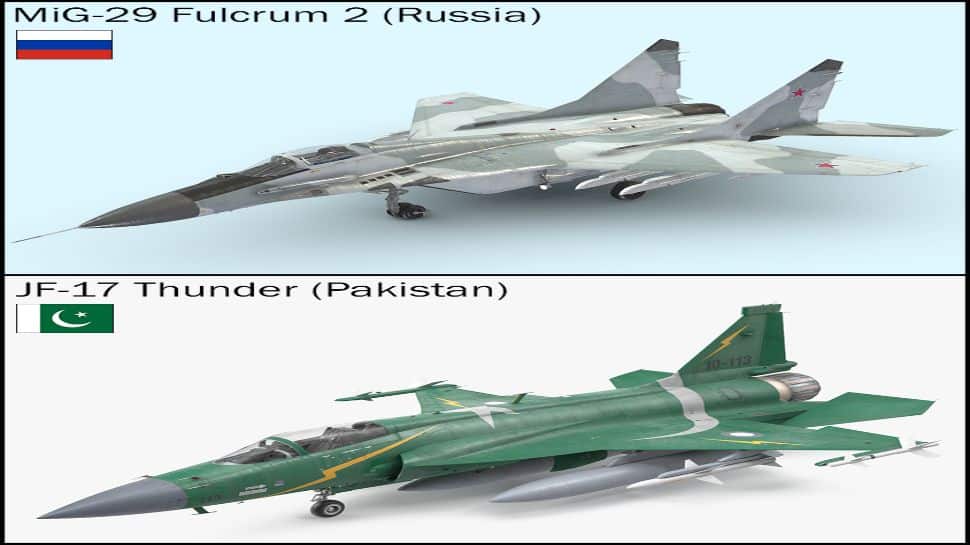
Moscow/Beijing: Russia has dismissed media reports suggesting it plans to sell engines to Pakistan for the JF-17. These reports, however, triggered political debate in India. The fact remains that the Pakistani JF-17, built in China, flies with a Russian engine. Moscow sells engines to Beijing, which installs them in the aircraft.
For India, this is sensitive because of its strong defense partnership with Russia. Indian fighter jets, including the MiG-29 and Su-30, operate with Russian engines and technology supplied by Moscow over the years.
Why Russian Engines Power Both JF-17, MiG-29
Russia has clarified that it has no plans to sell engines to Pakistan. But the question remains: why does China continue to fit Russian engines in Pakistan’s JF-17?
The answer lies in today’s global defense industry, which relies heavily on international supply chains.
The JF-17 project began in the 1990s as a joint venture between Pakistan and China’s Chengdu Aircraft Corporation. The aim was to produce a cost-effective fighter jet, as Pakistan could not afford expensive aircraft like the F-16.
Pakistan’s Collaboration With China
China played the central role in the project, providing electronics and control systems, while Pakistan handled the airframe and final assembly. The aircraft incorporates components from multiple countries: the ejection system from the United Kingdom, radar technology from Italy and the targetting pod from Turkey.
The MiG-29 Connection
The engine is the heart of the JF-17. According to India Today, it is powered by the Russian RD-93 turbofan engine, a single-engine variant of the RD-33 used in India’s MiG-29 fighters. The RD-93 produces 18,000 to 20,000 pounds of thrust, enabling speeds of up to Mach 1.6.
Technically, Pakistan’s JF-17 and India’s MiG-29 share the same engine lineage.
Why JF-17 Uses A Russian Engine
When the project began in the late 1990s, China could not yet produce fighter jet engines. Designing such engines requires extreme heat tolerance and complex engineering, capabilities that Russia had. Partnering with Moscow allowed the JF-17’s development to proceed quickly and at a lower cost, while China and Pakistan focused on airframe, avionics and weapons systems.
This made the JF-17 operational, affordable and ready-to-fly.
Global Components, Future Plans
Pakistan and China are now exploring Chinese engines, such as the WS-13 or WS-19, for future JF-17 variants to reduce reliance on Russia. Despite this, the current JF-17 Thunder continues to operate with an engine from the same family as India’s MiG-29 fleet.