

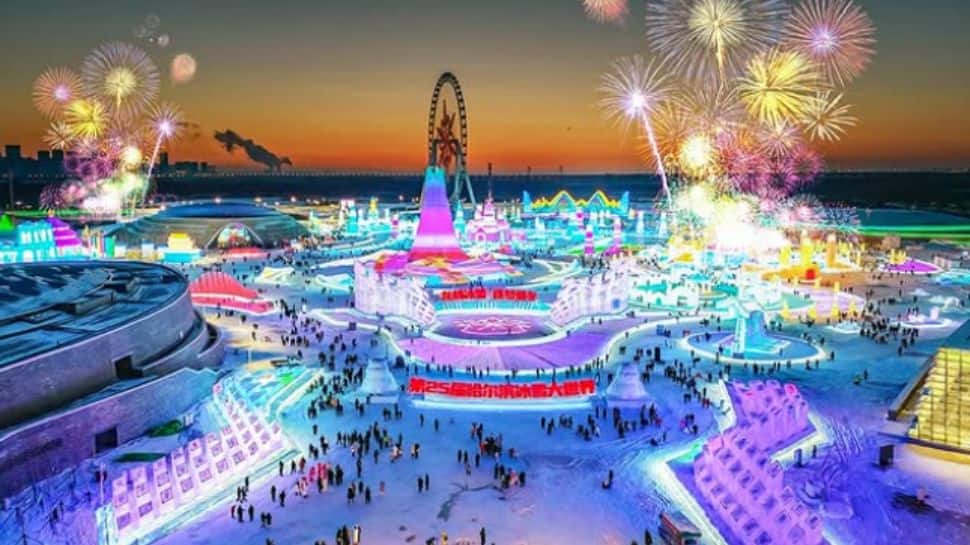
Every winter, Harbin, a city in northeast China, transforms into a stunning ice wonderland. This is due to the Harbin International Ice and Snow Sculpture Festival, one of the largest winter celebrations in the world. The festival is famous for its massive ice and snow structures, including castles, bridges, and replicas of famous landmarks. At night, these sculptures are illuminated with colorful lights, creating a magical atmosphere that attracts visitors from all over the globe.
Every year, workers collect about 200,000 cubic meters of ice from the frozen Songhua River. The ice is cut into big blocks, each weighing around 700 kilograms, and carefully put together into detailed sculptures using traditional tools. The work takes more than a month to finish, with workers facing freezing temperatures of about -25°C (-13°F) during construction.
The festival officially opens on January 5 every year and runs until late February. During this time, Harbin becomes a major tourist destination, welcoming millions of visitors who come to admire the breathtaking ice creations and take part in winter activities. The festival features not only the impressive sculptures but also ice slides, snow mazes, and cultural performances, which makes it an exciting experience for people of all ages.
Despite its grandeur, the ice city is temporary. As temperatures rise in the spring, the ice structures slowly melt and disappear into the river. This short lifespan makes the festival even more special, as visitors know that the magical city will exist only for a limited time.
A Global Cultural Celebration
The Harbin Ice and Snow Festival is more than just a display of artistic skill; it is a major cultural event that draws visitors from across China and around the world. The festival celebrates creativity, winter traditions, and the natural beauty of the region, while also showcasing Harbin’s ability to transform extreme cold into an extraordinary spectacle.
Each year, the festival impresses tourists with its grand scale, innovative designs, and visual appeal. It has become a landmark event for winter tourism, combining tradition, artistry, and the unique allure of ice sculptures.