

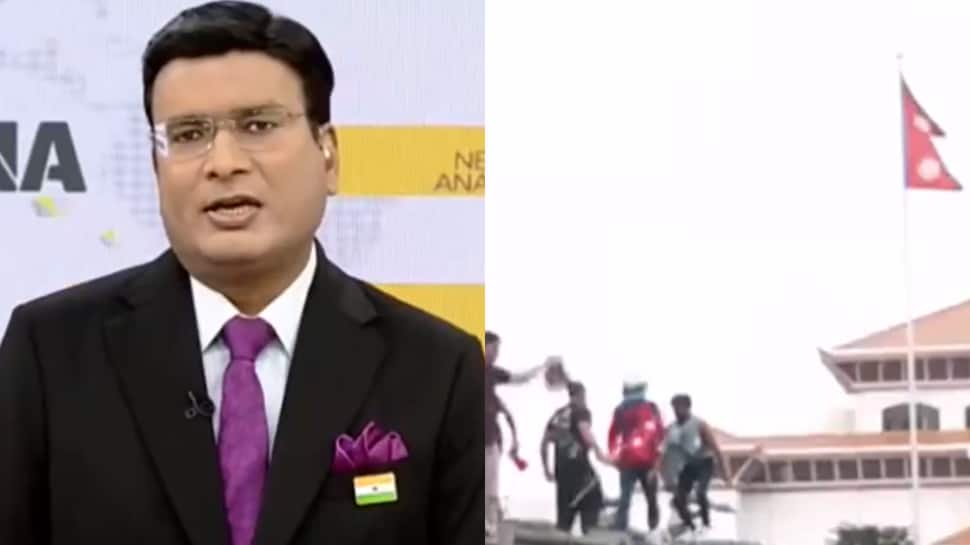
In what is being described as the world’s first “Gen Z Revolution,” thousands of young protesters in Nepal took to the streets following the government’s ban on 26 social media platforms. The ban, which came into effect on September 4, targeted apps that failed to register with Nepalese authorities under new digital compliance rules.
The protests, led largely by youth aged 13 to 30, rapidly escalated into violent clashes. Demonstrators stormed restricted zones, surrounded Parliament, and clashed with police in Kathmandu. The government imposed curfews, deployed the army, and reportedly issued shoot-to-kill orders in some areas. So far, 19 people have been killed, and over 350 have been injured. In today’s DNA episode, Rahul Sinha, Managing Editor of Zee News, analysed the protests in Nepal led by Gen Z:
Watch DNA Episode Here:
#DNAWithRahulSinha | ओली सरकार के खिलाफ सड़क पर ‘यलगार’, सोशल मीडिया बैन से Gen-Z का विरोध प्रदर्शन #DNA #Nepal #NepalProtest @RahulSinhaTV pic.twitter.com/lKtrbVOotZ
— Zee News (@ZeeNews) September 8, 2025
Amid growing pressure, Nepal’s Home Minister resigned. Prime Minister K.P. Sharma Oli defended the decision.
What Triggered The Protests?
On August 28, the Nepalese government gave social media companies seven days to register locally. Most platforms failed to comply, prompting the ban. Apps like TikTok reportedly followed the rules, while others including Facebook, Instagram, WhatsApp, and X (formerly Twitter) were blocked.
With more than 90 per cent of Nepal’s 30 million population using the internet, the impact was massive:
– 12.5 million WhatsApp users affected
– 10 million Facebook users
– 4.5 million YouTube users
– 3.6 million Instagram users
Who Are Gen Z and Why Are They Protesting?
Gen Z includes those born between 1997 and 2012, making up around 21 per cent of Nepal’s population. This generation has grown up with smartphones, internet access, and social media as integral parts of their daily lives — for communication, education, income, and activism.
Initially, Gen Z voiced their dissent online. But after the ban, the protest spilled into the streets. Many students, even in school uniforms, joined the movement. The situation became so volatile that the military had to be deployed and Parliament turned into a battleground.
Social Media
Globally, more than 4.5 billion people are on social media. In India, the average time spent per user is 2 hours and 28 minutes per day. Among 18–24-year-olds, that number rises to over 3 hours.
The global creator economy, driven by social platforms, is now valued at Rs. 17 lakh crore. India alone has over 2.5 million content creators contributing to a Rs. 21,000 crore market. In the last three years, YouTube creators have earned over Rs. 6 lakh crore.
While this shows the positive economic impact of social media, experts caution that its sudden removal can lead to instability — especially among a generation that sees it as a lifeline.
Regional and Strategic Ramifications
Nepal shares a 1,751 km open border with India. Any instability in Nepal could lead to migration and security concerns for India, which has already increased vigilance along the border.
Another dimension is geopolitical. Chinese apps like TikTok and Viber were not banned, leading to speculation about increased Chinese influence in Nepal. The current government, perceived to lean toward Beijing, could face challenges if protests grow stronger.
Could This Lead To A Coup?
Though the protest has been temporarily suspended, analysts warn that it may return with greater intensity if demands are not met.
With Gen Z forming a large and organized demographic, some even fear the possibility of regime change.
Historical Parallels: Arab Spring And Tunisia
Similar movements have occurred before. During Egypt’s Arab Spring in 2011, the government imposed an internet blackout to prevent protesters from organizing via Facebook and Twitter. The result was intensified protests and eventually, President Hosni Mubarak stepped down.
In Tunisia, the Jasmine Revolution began after social media outrage over police brutality. Censorship could not stop the movement, and President Zine El Abidine Ben Ali fled the country in early 2011.