

In a move that has pushed South Asia’s fragile stability to the brink, Pakistan’s military, under Army Chief General Asim Munir, launched airstrikes near Kabul, Afghanistan, late last night. Islamabad claimed the operation targeted Tehrik-e-Taliban Pakistan (TTP) commander Noor Wali Mehsud, allegedly responsible for a recent deadly attack on Pakistani forces in Orakzai.
However, within hours, TTP released an audio message purportedly from Mehsud, denying reports of his death and declaring himself alive.
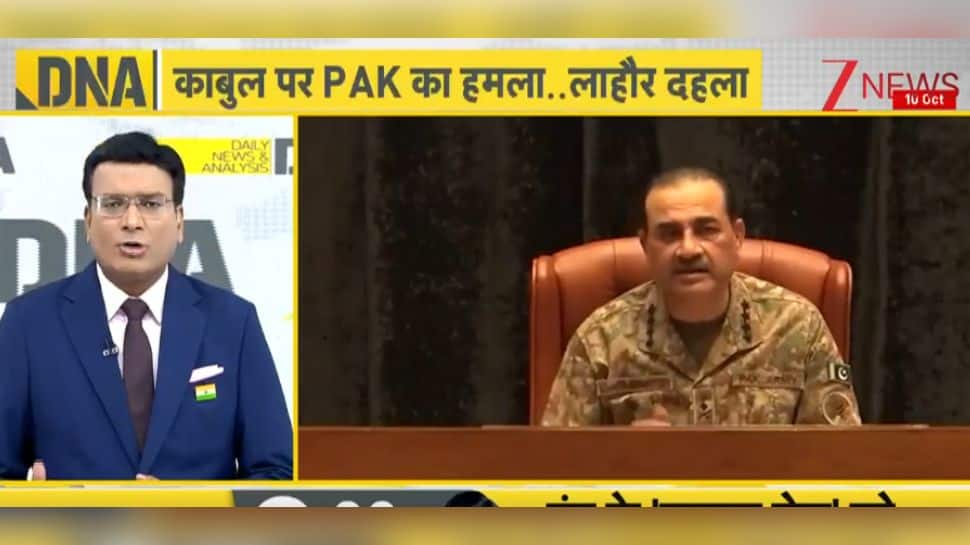
In today’s DNA, Zee News Managing Editor Rahul Sinha analysed how the recent airstrike on Afghanistan has left Pakistan’s so-called “counterterror operation” under scrutiny- its biggest blunder.
Watch Today’s Full Epoisode:
योगी के यूपी में दंगाइयों का इलाज..’यमराज’!
काबुल पर PAK का हमला..लाहौर दहला
बिहार के ‘पिकासो’ का ‘कारनामा’ आपने देखा?
देखिए #DNA LIVE Rahul Sinha के साथ#ZeeLive #ZeeNews #DNAWithRahulSinha @RahulSinhaTV https://t.co/LcTRkAVyyJ
— Zee News (@ZeeNews) October 10, 2025
The Taliban government in Kabul swiftly condemned the strikes, calling them a violation of Afghanistan’s sovereignty and warning of retaliation. In a strongly worded statement, the Taliban said Pakistan would have to “pay the price” for civilian casualties caused by the unprovoked attack.
The situation is particularly volatile as Afghan Foreign Minister Amir Khan Muttaqi is currently visiting India, meeting with External Affairs Minister S. Jaishankar. India reaffirmed that Afghanistan’s sovereignty and security remain a priority and announced plans to reopen its full-fledged embassy in Kabul — signaling renewed diplomatic engagement with the Taliban regime.
Domestically, Pakistan’s government faces mounting turmoil. Prime Minister Shehbaz Sharif’s administration has suspended internet services across Islamabad and Rawalpindi amid mass protests by the radical Tehreek-e-Labbaik Pakistan (TLP) group, which attempted to march toward the US Embassy over the Gaza conflict. Violent clashes with security forces have already erupted.