

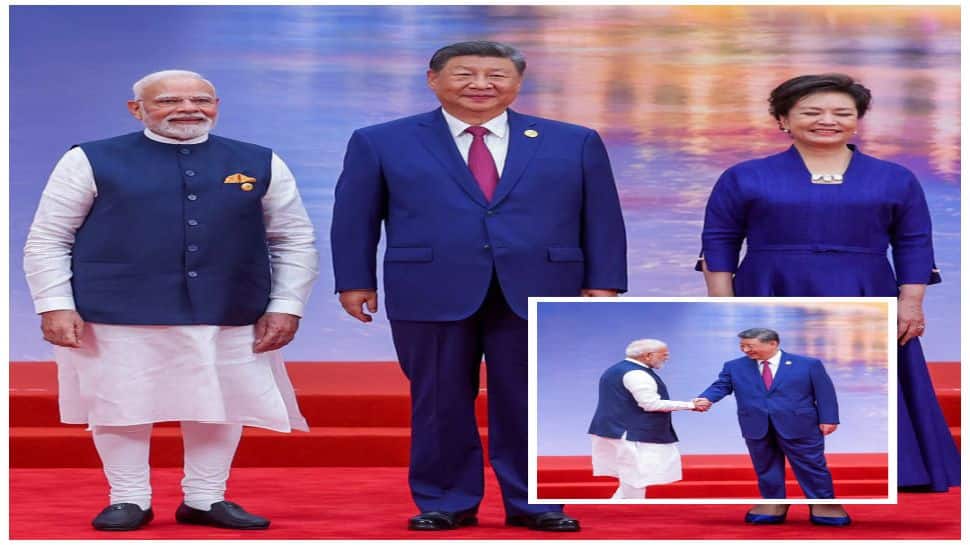
Tianjin (China): A significant shift in the tone and substance of India-China relations unfolded on the sidelines of the 25th Shanghai Cooperation Organisation (SCO) Summit, as Prime Minister Narendra Modi and Chinese President Xi Jinping met for a bilateral conversation that may well mark a turning point in the recent history of the two Asian giants. The dialogue was marked by clarity, caution and a shared sense of purpose, focusing not on competition, but on convergence.
Both sides reached an understanding that their principal priorities lie in domestic development. Leaders agreed that the vast populations of both nations, together comprising 2.8 billion people, stand to gain far more from cooperation than from confrontation. There was a palpable sense of mutual interest, with the acknowledgment that divergence should not evolve into discord.
Points Of Convergence
A consensus emerged around key strategic and geopolitical themes:
Peace along the border: There was mutual satisfaction over the progress made in disengagement and restoring calm at the contested border regions. Both sides agreed to maintain stability through existing diplomatic and military mechanisms.
Prime Minister Modi highlighted that peace on the border is not only desirable, but essential for any further growth in bilateral ties.
Strategic alignment in global forums: At the summit, Indian Foreign Secretary Vikram Misri emphasised that current global institutions, particularly the World Trade Organisation (WTO) and the United Nations (UN), are faltering in functionality and relevance.
Both India and China raised their voices in unison, recognising the urgent need for reform. As major stakeholders in global trade and finance, they committed to working together for more equitable governance systems.
People-to-people connectivity: There was a warm reception on both sides for the growing people-to-people exchanges. Whether through direct flights or religious pilgrimages such as the Kailash Mansarovar Yatra, leaders acknowledged that such bridges foster deeper understanding and goodwill.
Common ground on global vision: Both leaders reaffirmed support for a multipolar world order and emphasised the concept of an “Asian Century”, suggesting a shared vision for the region’s resurgence on the global stage. The focus was on cooperation over dominance and development over division.
Xi Jinping’s Four-Point Proposal
During the engagement, President Xi Jinping laid out four broad principles to guide future relations:
- Deepening strategic communication to strengthen mutual trust.
- Expanding bilateral exchanges and collaboration.
- Promoting shared prosperity through joint efforts.
- Respecting each other’s core concerns while enhancing multilateral coordination.
These suggestions were met with a constructive response, indicating a willingness to engage with openness and patience. Both sides viewed the meeting as a necessary recalibration, a step toward pragmatic diplomacy rather than rhetorical posturing.
Modi’s Invitation And The Message In Mandarin
In a symbolic gesture, Prime Minister Modi personally invited Xi Jinping to attend the upcoming BRICS Summit in India. What stood out more than the invitation itself was Modi’s decision to tweet about the meeting in Mandarin, a diplomatic signal highlighting sincerity and respect.
Experts say this small but deliberate act points to a more sensitive and engaged approach in bilateral communication.
A Diplomatic Win, Strategic Statement
India’s diplomatic outreach at the Tianjin summit went beyond symbolism. The reaffirmation of strategic partnership with Egypt and other regional players added to India’s growing footprint in multilateral diplomacy.
However, the most consequential takeaway remains the shift in India-China relations, from managing tensions to cultivating trust.
As images from the SCO summit circulated globally, with Modi and Xi standing side-by-side, warmly shaking hands, they sent a clear message: Asia’s future will be written not through rivalry, but through resolve and recognition of mutual stakes.
This renewed approach does not signal an erasure of past conflicts, particularly post-Galwan tensions, but it does suggest a fresh momentum led by dialogue, grounded in mutual benefit and anchored by realism.
Whether this meeting in Tianjin becomes a lasting milestone or a temporary pause depends on sustained commitment. For now, it marks a chapter where two major civilisational powers choose engagement over estrangement, with the hope that their peoples, nearly one-third of humanity, can move forward with stability and shared purpose.