

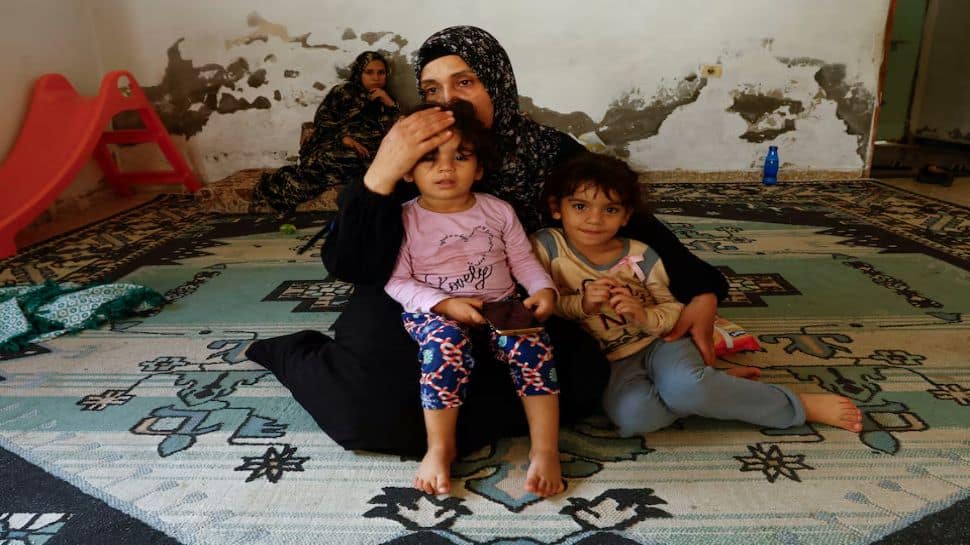
Two Years of War on Gaza: Grief lingers over Gaza. Dust fills the air. The smell of smoke, the echo of explosions and the silence of buried homes tell their own story. Two years have passed. The numbers speak in whispers of death. More than 67,000 Palestinians are dead. Many remain under rubble, nameless and faceless.
Among the dead, at least 20,000 were children. That means one child has died nearly every hour – one child whose dreams, laughter and future were erased before the world’s eyes. In Gaza today, one in every 33 people is dead.
Hospitals reveal another dimension of the tragedy. Around 1,69,000 Palestinians have been injured, many left without limbs, sight or the ability to walk again. That means one person out of every 14 in Gaza bears a wound from this war.
Behind Israel’s prison walls, the suffering continues. More than 10,800 Palestinians are detained in crowded and dimly lit cells. Among them are 450 children and 87 women. Over 3,600 of these prisoners have never been charged or tried. They wait indefinitely, suspended between fear and hopelessness.
As the war completed its second year, the world has largely watched from a distance while Israel itself has changed. Analysts describe a society torn apart by anger, guilt and exhaustion. Once shaped by strength and solidarity with Western allies, Tel Aviv’s image abroad has fractured. Inside the country, many citizens question what has become of their democracy.
At the United Nations General Assembly in September, Prime Minister Benjamin Netanyahu faced the world. As he began to speak, delegates stood, turned their backs and walked out in silence. The empty hall echoed with quiet protest, a gesture against what many nations now call a genocidal war.
For decades, Israel shared close ties with Western powers. Today, those friendships tremble. Countries such as the United Kingdom, France and even Germany, once its strongest allies, have publicly condemned the ongoing assault on Gaza. Inside the country, the word democracy sounds old, faded and hollow.
A Nation In Pain
Alon Pinkas, a former ambassador, feels the weight of it.
“Israeli society is in excruciating pain over what it feels is its condemnation at the hands of world opinion,” he told Al Jazeera.
He remembered the lights of October 7, 2023, when when Hamas and other Palestinian militant groups launched a series of coordinated armed incursions into southern Israel during the Jewish holiday of Simchat Torah.
“The British Parliament, the Eiffel Tower and the Empire State Building were lit up in white and blue in support of Israel. Now, it is ostracised,” he said.
The date (October 7, 2023) still governs life. Israel and its politics is still in October 7. That day claimed 1,139 Israeli lives and saw around 200 people taken hostage by Hamas. The memory of that attack continues to dominate Israel’s media, politics and identity.
Analysts say that the government has built a psychological wall around that moment, using it to justify every airstrike and every military action since.
“The world has moved on, but Israel is stuck there. That is the justification for everything it does and why it still sees everyone in Gaza as complicit in that attack, even after killing more than 65,000 of them,” said the experts.
Fatigue And Fury
Political scientist Ori Goldberg described a nation both weary and hardening. “Israel has become fatigued and more violent at the same time,” he said.
People now avoid subjects that wound, the captives in Gaza, the families still waiting, the famine and the endless displacement. “The toll of the war is visible everywhere,” he said.
Suicides rise. Domestic abuse grows. Post-traumatic stress grips an entire generation. Soldiers return home, but not whole.
Even in daily life, exhaustion shows. Drivers ignore signals. The Gordon swimming pool in Tel Aviv sent letters to members in August. “Please avoid any expression of physical or verbal aggression,” it warned.
Politics Without Light
In parliament, debates no longer ask why, only how. The Opposition argues about methods, not morals. Few dare speak of peace.
Within Netanyahu’s coalition, two men, Itamar Ben-Gvir and Bezalel Smotrich, wield enormous power. Their presence shapes every policy.
Israeli politics is in a fight for its soul. This did not start with the war, though the war has accelerated it. It began with the last election and the legitimisation of far-right messianic forces.
From his re-election in 2022 to today, Netanyahu has balanced on fragile ground. Analysts point to his corruption trials and the alliances he has forged and broken along the way.
The war drags on. Rafah burned in May 2024. Ceasefire promises broke in March. Gaza City stands shattered.
The far right still steers the course. Their vision shapes policy, not the people’s grief.
They want control of the ministries and control over the domestic affairs of the West Bank.
Alone In The World?
In recent months, once-loyal partners changed tone. The United Kingdom, Canada, France and Australia condemned the war. They recognised the State of Palestine.
The European Union looks toward sanctions. Trade agreements face suspension.
Inside the United Nations, 159 of 192 member states recognised Palestine. Four of the five permanent Security Council members did the same. Only one, the United States, stood apart.
At first, people said it was a misunderstanding or anti-Semitism, all the usual cliches. Then they said it was a Netanyahu problem, but that does not work. People came to realise that, as far as the world is concerned, a country is its actions. In Israel’s case, over the last two years, that has been to inflict a humanitarian catastrophe on Gaza, to commit war crimes and to be accused of genocide.
The Numbers That Bleed
Nearly 14 percent of all war deaths since October 2023 happened in Gaza. More than 66,600 lives were lost. A study by the US-based Armed Conflict Location & Event Data Project (ACLED) traced the horror.
The same study documented more than 11,110 air and drone strikes and over 6,200 shelling attacks by Israeli forces. Last month, the Israeli military controlled roughly three-fourths of the Gaza Strip. Gaza City faced relentless bombardment, and explosive robots rolled through the ruins.
The ACLED reported at least 110 instances of explosive-laden, remotely operated vehicles, “repurposed armoured vehicles loaded with tonnes of explosives”.
The report reads like a map of mass graves. Each statistic represents a story that ended too soon. Each name lost to the dust marks another thread cut from Gaza’s collective life.
The war began with fire, and it continues with hunger. Gaza counts its dead while the world looks away. The numbers remain, the silence deepens and the grief refuses to fade.