

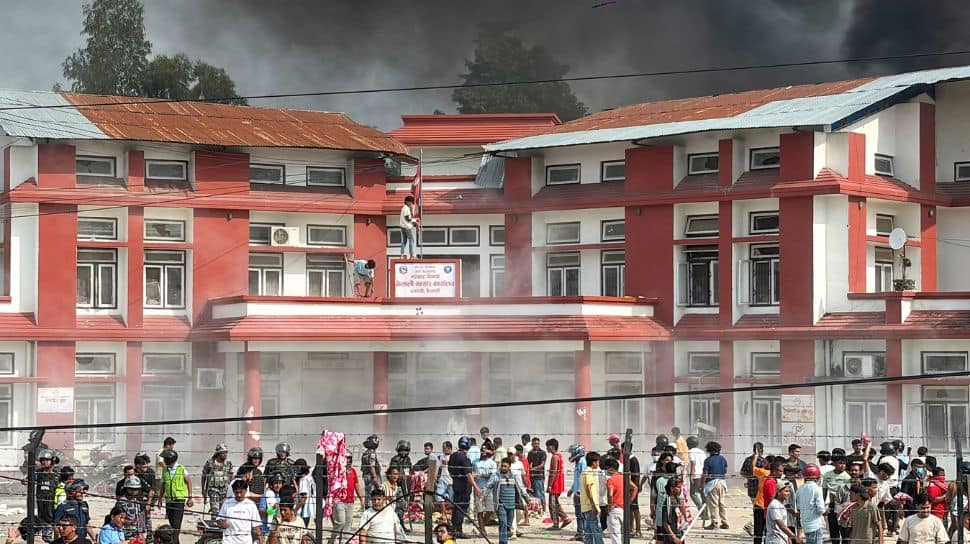
Tensions flared outside the Nepal Army headquarters on Thursday as opposing groups of Gen Z protesters fought over leadership of the interim government, revealing sharp divisions within the youth-driven movement that has unsettled Nepal in recent days.
Eyewitnesses reported heated exchanges between demonstrators that quickly escalated into scuffles, even as the army held discussions with protest representatives to reach an agreement on a interim prime minister following KP Sharma Oli’s resignation.
Disagreements Over Potential Candidates For Interim Leadership
Disagreements have emerged over potential candidates for interim leadership. One section of protesters continues to support former Chief Justice Sushila Karki, praised for her reputation as “honest and fearless.” However, another faction insists on nominating former Nepal Electricity Authority chief Kulman Ghising instead, arguing that Karki’s appointment could deepen the deadlock as the constitution restricts former justices from holding the prime minister’s office.
The unrest has taken a heavy toll. According to The Kathmandu Post, the death count from the ongoing protests in Kathmandu has risen to 31. As per The Kathmandu Post so far the identities of 25 victims have been identified, while six others, five men and one woman, remain unidentified.
Security officials said most identifications were possible through documents retrieved at protest sites or recognition by family members. Beyond the fatalities, over 1,000 demonstrators have sustained injuries across different cities.
Former Nepal PM Jhala Nath Khanal’s Wife Battling For Life
In a related development, Ravi Laxmi Chitrakar, the wife of former Prime Minister and CPN (Unified Socialist) leader Jhala Nath Khanal, is battling for life after being severely burned in an arson attack during violent clashes. Earlier reports of her death were later corrected by The Kathmandu Post, which confirmed that she remains in critical condition.
Nepal Gen Z Protest
The wave of protests began on September 8 in Kathmandu and quickly spread to major cities including Pokhara, Birgunj, and Butwal after the government imposed a ban on major social media platforms, citing concerns over tax collection and cybersecurity. Curfews have been enforced in several urban areas, including the capital, and remain in effect until Friday morning, according to the Nepalese Army.
The demonstrators, predominantly young Nepalis, say they are demanding an end to what they describe as entrenched corruption and favouritism in governance. Their anger has been further stoked by revelations on social media about the extravagant lifestyles of politicians’ children under the “Nepo Babies” trend, which protesters argue highlights the widening gap between political elites and ordinary citizens.
(With ANI Inputs)