

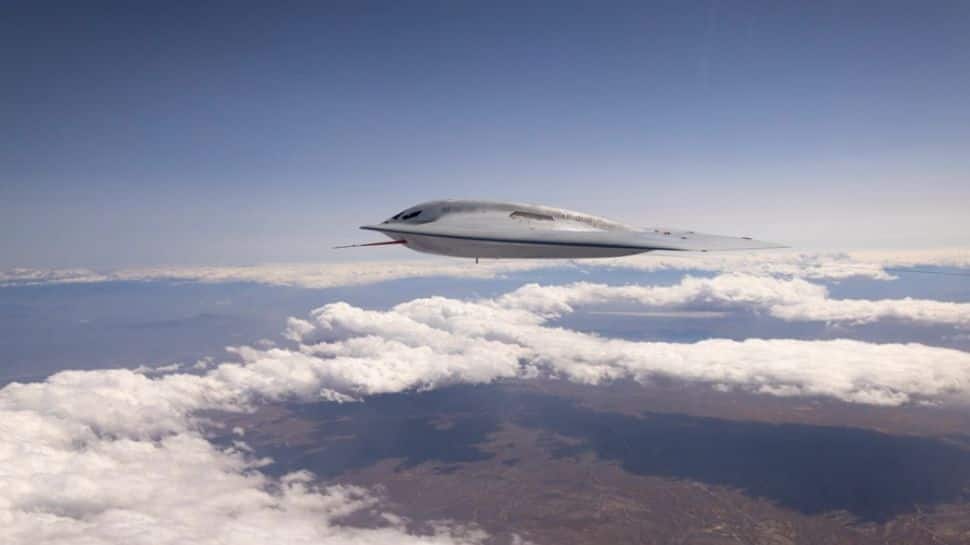
Washington: After the success of Operation Midnight Hammer against Iran, the United States Air Force is preparing to induct the B-21 Raider, the world’s first sixth-generation stealth bomber. Long regarded as the crown jewel of America’s bomber fleet, the B-2 Spirit is now moving toward retirement.
Major General Jason Armagost, head of the Eighth Air Force, spoke about the transition during a webinar hosted by the Mitchell Institute for Aerospace Studies. His command oversees the current fleet of B-2, B-1 and B-52 bombers.
He said the B-21 will give the Air Force a campaign-ready strike force capable of deploying multiple classes of weapons and carrying out missions across continents at the same time.
Northrop Grumman, the developer of the Raider, describes the aircraft as the world’s first true sixth-generation bomber. The Air Force plans to acquire a good number of units, signalling the scale of the programme.
A New Era in American Strike Capability
The B-52 and B-1 bombers entered service in the 1990s. The B-2 Spirit soon took the lead as the most advanced stealth platform in the world. The fleet remained small; only 21 aircraft were ever built. One was lost in a crash, while another has been grounded.
Maintenance costs also remain extremely high. These limits drove U.S. planners to fast-track the B-21 Raider.
The B-21 is still in testing phase. Its design resembles the B-2’s flying wing, though it carries major upgrades. The air inlets are recessed to evade radar detection. The 2-D exhaust system suppresses heat emissions and makes infrared tracking difficult.
The aircraft is equipped with advanced radar, electronic warfare systems and intelligence, surveillance, reconnaissance (ISR) technology. It also features a long strike range, allowing operations across vast areas without mid-air refueling.
The Raider’s open-system architecture will allow easy integration of new weapons and future technologies, giving it an edge in adaptability.
U.S. Strategy for the B-21
Reports suggest that the Air Force aims to add at least 100 B-21 bombers to its fleet. Analysts warn this may fall short. When the B-2 was conceived, the target was 132 units, though only 21 were completed. The limited production pushed costs above $2 billion per aircraft. A similar shortfall in B-21 procurement could again raise the price per plane to extreme levels.
Senior U.S. commanders have advised a much larger fleet, with some recommending more than 200 units. Their reasoning is to ensure the United States can project airpower simultaneously across Asia, Africa and the Middle East. The calls for expansion have grown louder with the possibility of confrontation with China in mind.