

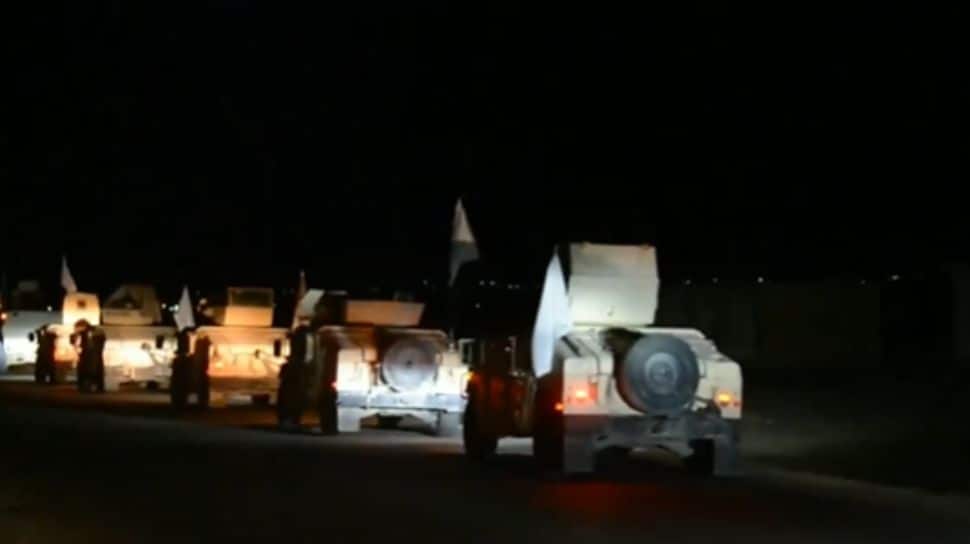
Intense fighting broke out along the Pakistan-Afghanistan border on Saturday night, with both sides exchanging heavy fire at multiple locations across Khyber Pakhtunkhwa and Balochistan provinces. The clashes mark a significant escalation in cross-border tensions following disputed airstrikes in Kabul earlier this week.
According to Pakistani security officials, Taliban forces opened fire on several Pakistani border posts late Saturday, prompting what they described as a “prompt and intense response” targeting Afghan positions. Taliban authorities, meanwhile, claimed the attack was retaliation for Pakistani airstrikes on Afghan territory.
Conflicting Accounts Of The Violence
Pakistani security officials told Dawn that their forces “effectively targeted several Afghan border posts,” claiming notable damage to multiple Afghan positions and militant formations. The firing occurred at key border locations including Angoor Adda, Bajaur, Kurram, Dir, and Chitral in Khyber Pakhtunkhwa, and Baramcha in Balochistan.
“The counteroffensive effectively targeted and destroyed multiple Afghan posts at the border. Dozens of Afghan soldiers and Khwarij were killed in retaliatory fire,” The Express Tribune reported, citing Pakistani security sources. “Khwarij” is the Pakistani state’s designated term for the banned Tehreek-e-Taliban Pakistan (TTP).
Taliban border forces provided a different narrative, stating the clashes erupted “in retaliation for the air strikes by Pakistani forces.” The Afghan military said its border forces in the east were “engaged in heavy clashes against Pakistani forces’ posts in various border areas.”
Taliban officials from the provinces of Kunar, Nangarhar, Paktika, Khost, and Helmand, all located along the Pakistan-Afghanistan border, confirmed the fighting. Some Taliban sources claimed to have seized two Pakistani border posts in Helmand province, which local authorities reportedly confirmed, though this could not be independently verified.
Pakistan begins ‘retaliatory operation’ against Afghanistan — state media MASSIVE artillery fire lights up night — PTV News https://t.co/r9amR2q0IH pic.twitter.com/IFJpznRye7 — RT (@RT_com) October 11, 2025
The Kabul Airstrikes Dispute
The current escalation follows reports of airstrikes in Kabul earlier this week. While Islamabad has not confirmed conducting the strikes, it has called on Kabul to “stop harbouring the Tehreek-e-Taliban Pakistan (TTP) on its soil.”
Pakistani security sources told The Express Tribune that Saturday’s Taliban firing was aimed at “facilitating the illegal entry of Khwarij” into Pakistani territory—an allegation that frames the violence within Pakistan’s ongoing battle against TTP militants it claims are sheltering in Afghanistan.
Late Thursday, a Taliban spokesperson said an explosion was heard in Kabul but downplayed the incident, stating “no one should worry, it is all well and good” and that investigations were underway with no damage reported.
Military Escalation And Weaponry
Reports indicate that Pakistan deployed artillery, tanks, and both light and heavy weaponry in its counterattacks along the border. The scale of the engagement suggests this was not a minor skirmish but a significant military confrontation involving substantial firepower on both sides.
Political Context And Warnings
The escalation comes as Afghanistan’s Foreign Minister Amir Khan Muttaqi is on a week-long visit to India, the first high-level visit from Kabul since the Taliban seized power in August 2021. The timing adds another layer of complexity to an already volatile regional situation.
On October 10, Pakistan’s Defence Minister Khawaja Asif told the National Assembly that “collateral damage” cannot be ruled out if Pakistani security forces come under attack, stating that “enough is enough.”
Former US envoy Zalmay Khalilzad expressed concern over the reported Pakistani strikes in Kabul on Friday, calling them a “huge escalation” that poses dangerous risks. In a post on X, Khalilzad advocated for dialogue between Islamabad and Kabul rather than military escalation, suggesting negotiations should address terrorist sanctuaries on both sides of the Durand Line.