

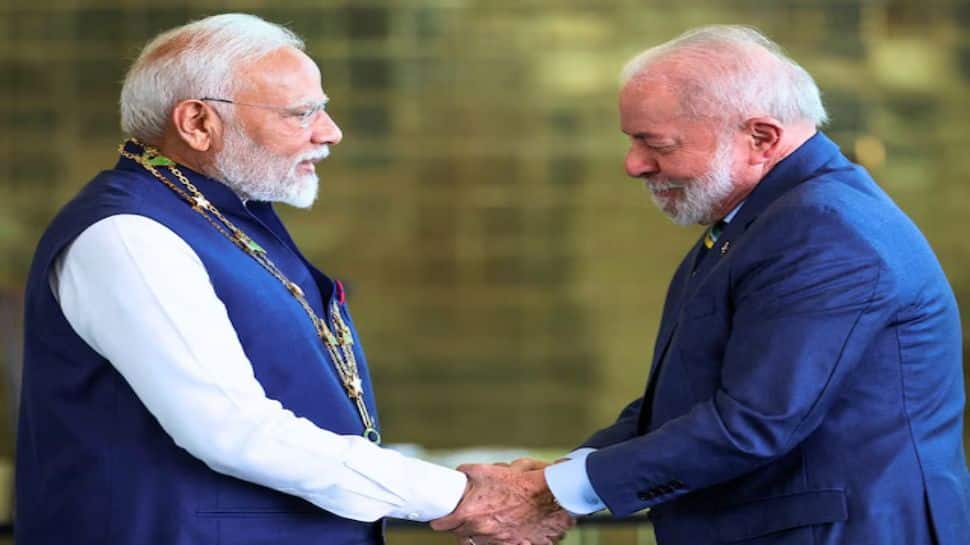
New Delhi: A new alliance is taking shape across the Global South. India, Brazil and South Africa are working together to set up an international platform that will respond to Europe’s increasingly strict climate and trade policies. The idea is to create a forum where developing countries can openly raise concerns about measures such as carbon border taxes and import restrictions linked to deforestation.
Brazil will host the COP30 climate summit in November this year. During the meeting, the country is expected to present the proposal for the new platform at the World Trade Organisation (WTO). The stated goal is to give a collective answer to what leaders describe as Europe’s strategy of using climate policy as a trade barrier.
Brazilian officials argue that neither the WTO nor the United Nations climate framework provides the right space for these discussions. The proposed forum will meet several times a year and work towards solutions that are both practical and fair for producers and buyers.
Why India Sees It As Crucial
India is among the countries most directly hit by Europe’s climate-linked trade rules. Indian exports to Europe include steel, cement, coffee, cocoa and soybeans. Under Europe’s new laws, many of these goods will face additional taxes, weakening their competitive edge in the global market.
Indian officials have repeatedly stated on international stages that they accept the urgency of fighting climate change. But they argue that using climate concerns as a pretext to impose trade barriers is unjust and biased. India’s interest in joining Brazil and South Africa stems from the need to protect its exporters while also shaping a fairer global framework.
Europe’s Justification
The European Union (EU) insists that its new policies, such as the Carbon Border Adjustment Mechanism (CBAM), are not designed to block trade. Officials in Brussels claim these steps are meant to ensure a level playing field. European industries already pay heavy fees for their own carbon emissions, and the EU argues that foreign companies should bear the same costs if they want access to its markets.
But for developing countries, the picture looks very different. Governments in Delhi, Brasília and Pretoria believe the EU’s real aim is to shield its industries from cheaper imports. They say the policies unfairly target producers in Asia, Africa and Latin America, many of whom lack the resources to quickly switch to low-carbon technologies.
Towards A New Voice
By building this new forum, India, Brazil and South Africa hope to shift the conversation. They want trade and climate talks to include the realities of the Global South, where development goals remain urgent and economic vulnerability runs deep. For them, the platform is not merely about resisting European rules, it is about reshaping how global trade and climate policy interact in the decades ahead.