

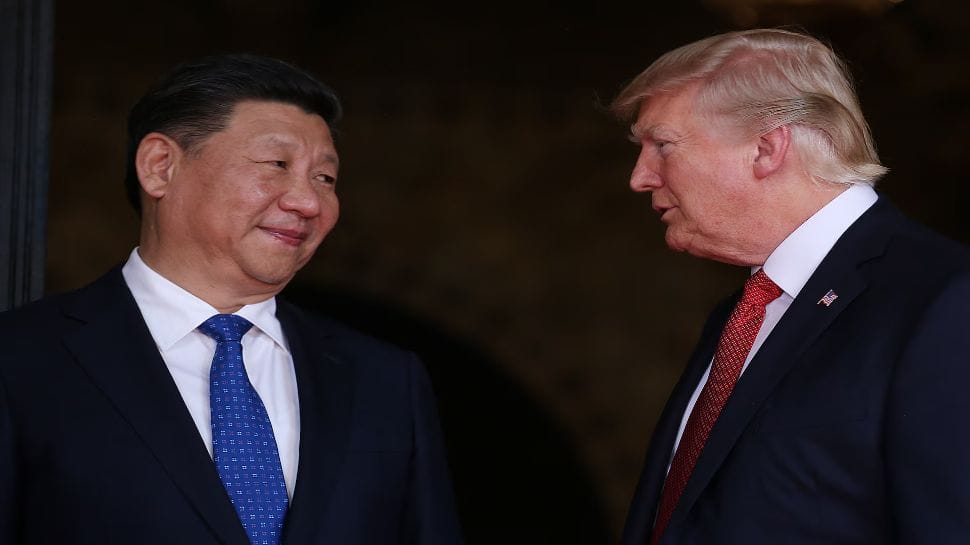
Trump-Xi Meeting: U.S. President Donald Trump is on a week-long tour of Asia, attending a series of high-stakes summits across Malaysia, Japan and South Korea. All eyes are on his scheduled metting with Chinese President Xi Jinping on October 30 in South Korea during the Asia-Pacific Economic Cooperation (APEC) summit. The primary focus of the meeting will be trade, an area where tensions between the world’s two largest economies have surged once again.
The US president arrived in Kuala Lumpur on Sunday to attend the ASEAN summit, marking the first stop on his five-day tour. Following Malaysia, he will travel to Japan and South Korea, where his meeting with Xi is set to take place.
The objective for Trump is clear. Securing new trade agreements that provide American companies with fresh opportunities and maintaining tariff revenues for the U.S. Treasury are key priorities.
China holds the leverage in these negotiations, and the outcome could shape the direction of U.S.-China relations for the remainder of Trump’s second term.
Trump has acknowledged that the harsh tariffs on Chinese goods cannot last indefinitely. Even without explicitly stating it, the growing economic clash with China poses significant consequences not only for both countries but for the global economy. Historical pauses in U.S.-China talks have previously triggered declines in American stock markets, highlighting the stakes.
Success for Trump on this trip would include finalising a trade deal with South Korea and securing new industrial investments from Japan. His overarching goal, however, remains persuading Xi to resume purchases of U.S. agricultural products, ease restrictions on foreign companies, expand access for American firms in the Chinese market and avoid an escalation of the trade war.
For Trump, the entire tour revolves around this mission.
Xi Jinping’s Calculated Approach
Xi is expected to enter the talks as a strong negotiator, leveraging China’s dominance in rare earth minerals. These minerals are crucial for semiconductors, weapons systems, vehicles and smartphones – vulnerability the United States cannot ignore. China has strategically withheld purchases of U.S. soybeans to influence domestic politics in the American heartland.
The Chinese premier has drawn lessons from Trump’s first term. Beijing appears prepared to endure tariff-related losses this time, partly because the Washington no longer represents the critical export market it once did. Domestically, Xi must balance economic tensions with the United States against rising challenges at home, including youth unemployment, a real estate crisis, local government debt and a population cautious about spending.
Analysts suggest China is likely to offer concessions only if Trump agrees to resume exports of advanced AI chips or reduce U.S. military support to Taiwan. Trump’s willingness to take risks contrasts with Xi’s long-term strategy, raising the question of whether the US president can afford to wait.
ASEAN And Regional Stakes
During his visit to Malaysia, Trump focussed on regional issues, attending a summit where Thailand and Cambodia agreed to withdraw troops from disputed border areas. The aim is to normalise relations and reduce tensions in Southeast Asia.
ASEAN member countries are hopeful that Trump’s presence, even if brief, will help stabilise their economic ties with the United States. Many of these export-dependent economies have been shaken by US tariffs. Since his previous visit to the region in 2017, regional exports to the American market have doubled, but high tariffs continue to create uncertainty.
The Myanmar civil war remains a shadow over ASEAN meetings, an issue outside Trump’s immediate focus.
Industrial centres across Asia are awaiting relief from U.S. tariffs. While some nations have reached agreements, others remain in prolonged negotiations, with no formal deals so far concluded. Any concrete progress or formal agreements would be welcomed as a positive step.
China remains central to these dynamics. The upcoming meeting between Trump and Xi signals potential progress, though numerous issues, from tariffs to exports, still need resolution. The race for dominance in artificial intelligence and advanced technology adds another layer to the negotiations. Even a slight easing of tensions would benefit countries caught between the United States and China, particularly Southeast Asian nations deeply integrated into electronics supply chains but reliant on Chinese demand.
Japan And South Korea
Japan and South Korea face separate challenges. Both allies seek stable and lasting agreements on tariffs and investment. Japanese automakers, including Toyota, Honda and Nissan, navigate the volatile U.S. market amid these discussions.
Prime Minister Senei Takaichi has emphasised her ability to establish a stable and effective relationship with Trump, signalling Tokyo’s readiness to assume a greater security role along with the United States.
Japan has pledged $550 billion in U.S. investments to strengthen supply chains for pharmaceuticals and semiconductors, while committing to increased purchases of American agricultural products, including rice. Maintaining policy continuity, Takaichi retained key negotiators from the previous administration.
For South Korea, tariffs remain the primary concern. U.S. tariffs currently set at 25% on South Korean exports could drop to 15% under a negotiated deal, though negotiations have stalled. Trump has demanded an upfront $350 billion U.S. investment from South Korea, a move that risks triggering economic strain. Officials remain cautiously optimistic that concrete progress could emerge by the end of the summit.
China-U.S. Talks In Malaysia
Ahead of the Trump-Xi meeting, China and the United States reached a “basic consensus” on trade during two days of meetings in Kuala Lumpur. Discussions included tariffs, export controls, agricultural trade and cooperation on fentanyl enforcement. The threat of a 100% tariff on Chinese goods has been withdrawn, and both sides now aim to prevent any escalation of tensions.
Trump expressed optimism about achieving a deal with China, signalling a hopeful start to the high-stakes encounter scheduled for October 30.