

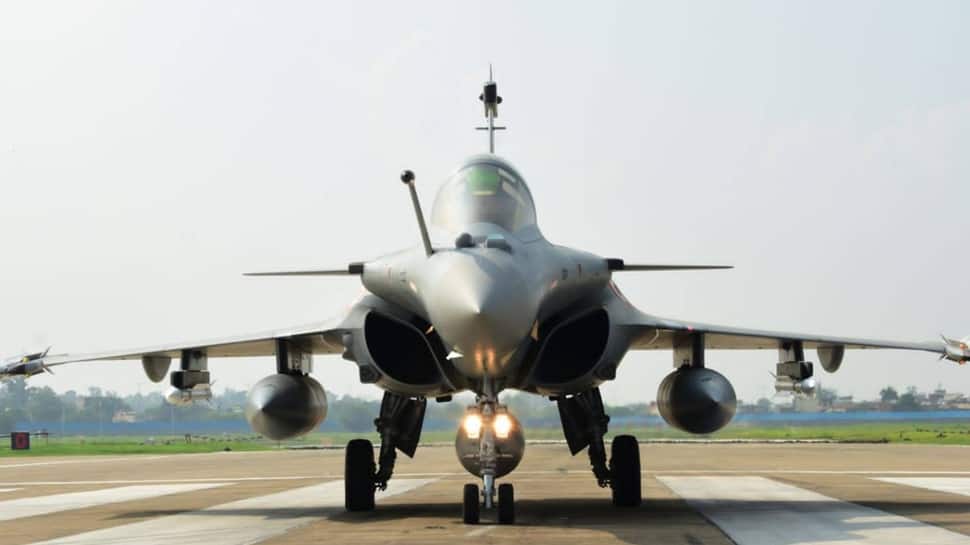
India has shown its interest in the procurement of 26 Rafale-M (Marine) fighter jets for the Indian Navy, alongside a proposal from the Indian Air Force (IAF) to acquire 114 Rafale aircraft to be manufactured domestically under the “Make in India” initiative. Notably, India’s decision to expand its Rafale fighter fleet could face new strategic complications as recent reports suggest that France’s export policies toward Gulf nations may be compromising sensitive military technology.
France’s sale of Dassault Rafale multirole jets to Qatar and the United Arab Emirates (UAE) has raised growing concerns among security analysts. The issue gained traction after reports emerged that Qatari and Emirati air forces had allowed Pakistani and Turkish pilots to train on their Rafale and Mirage platforms, indirectly exposing key performance and electronic warfare characteristics of the French jets.
India, which inducted 36 Rafale aircraft between 2020 and 2022 under a 7.87 billion Euro deal, used the fleet effectively during Operation Sindoor, a high-intensity exercise against simulated Pakistani targets. The Indian Air Force (IAF) has since been considering a follow-on order for 26 Rafale-M variants for aircraft carrier INS Vikrant, and potentially more for its land-based squadrons. However, the unrestricted Rafale exports to states with historical military ties to Pakistan and Turkey are now prompting strategic reconsideration.
Europe-based security researcher Babak Taghvaee, whose detailed analysis of arms transfers and technology leakage has gone viral among defense watchers, warned that “Macron’s administration is unintentionally empowering NATO’s adversaries by recklessly selling Dassault Rafale fighters to the UAE and Qatar without proper export-control safeguards.”
“A striking case is Turkey’s cooperation with Qatar. Ankara has accelerated training of its F-16 pilots and S-400 operators to counter the Hellenic Air Force’s Rafales, using six Qatari Rafale DQ/EQ fighters deployed to Turkey. Similar instruction continues in a joint Turkish-Qatari squadron in Qatar. By allowing a close French defense customer to expose Rafale performance and signatures to a state threatening a NATO ally, Paris again demonstrates the danger of its permissive export policy,” wrote Taghvaee in his blog.
When the French government ignores legitimate national security concerns, the media becomes the only tool left to hold it accountable.
Macron’s administration is unintentionally empowering NATO’s adversaries by recklessly selling Dassault Rafale multirole fighters to the UAE and… pic.twitter.com/aTkp28tMCF
— Babak Taghvaee – The Crisis Watch (@BabakTaghvaee1) October 25, 2025
The risks are not theoretical. The UAE has previously transferred Mirage 2000-9EAD technology and MICA missile data to China, which analysts believe supported Beijing’s work on PL-10 and PL-15 air-to-air missiles. Emirati Mirage aircraft were also observed in China during 2023–2024 as part of a bilateral training program with the People’s Liberation Army Air Force (PLAAF).
Such developments could erode the technological edge India and its allies currently enjoy. Any overlap between the Rafale systems operated by Qatar or the UAE and Pakistan’s exposure to them directly impacts IAF’s combat confidentiality, noted defence analysts.
Scripting new chapters in inter operability, an @Armee_de_lair Rafale fighter captures images of his wingman, an #IAF Su-30MKI, while flying over the deserts of Rajasthan, as part of #ExerciseGaruda VII. (1/2) @rajnathsingh @IAF_MCC @giridhararamane pic.twitter.com/9nD9XufKEX
— Ministry of Defence, Government of India (@SpokespersonMoD) November 2, 2022
Experts also point out that France’s lack of strict end-user monitoring—especially compared to US defense sales—has enabled unintended technology diffusion. The UAE’s rejection of the F-35A was reportedly driven by Washington’s stringent control clauses, while Paris imposed few restrictions.
Industry observers warn that the issue could backfire on France’s defense credibility within NATO, especially if sensitive data leaks result in the compromise of Rafale’s Spectra electronic warfare suite or radar signature profiles.
If conflicts involving NATO or India arise where Rafale jets face opponents equipped with Chinese or Russian missile systems, analysts argue that Paris’s lax export control regime could end up eroding the aircraft’s survivability.