

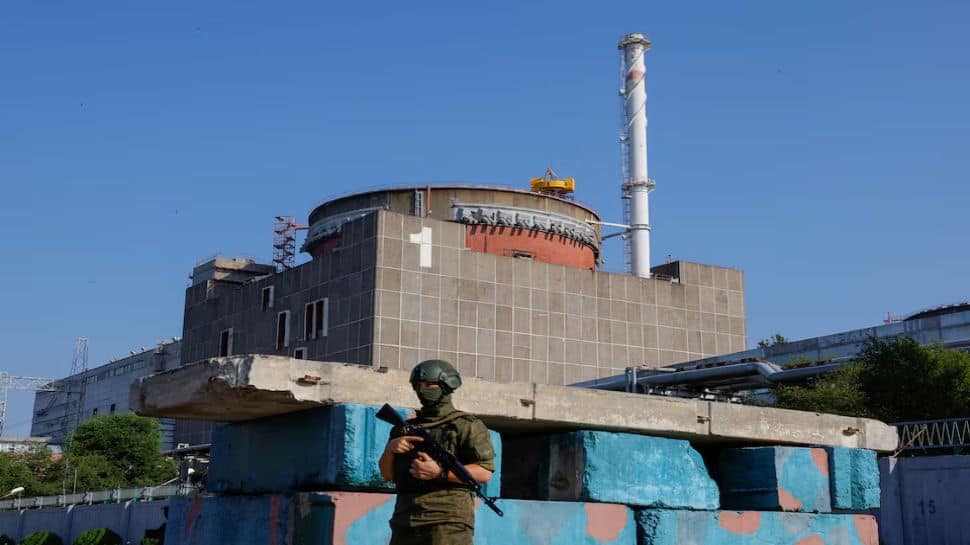
Kyiv (Ukraine): Russian President Vladimir Putin claimed on October 2 that Ukrainian attacks destroyed a high-voltage transmission line linking the Moscow-controlled Zaporizhzhia nuclear plant to Kyiv-administered areas. Days earlier, Ukraine’s President Volodymyr Zelenskyy accused Russian shelling of severing the plant from the electricity network.
A six-reactor giant, the Zaporizhzhia plant, which is largest in Europe, sits less than 10 kilometres from the front line. It has been shut since 2022, generating none of the electricity that once supplied up to a fifth of Ukraine’s needs.
Moscow-deployed engineers have tried to restart it, so far without success. Ukraine fears Russia wants the station to supply Crimea and other occupied areas. Putin said the alleged Ukrainian strikes caused a blackout that forced diesel generators to keep the plant running. He called it the longest wartime outage of power.
“On the (Ukrainian) side, people should understand that if they play so dangerously, they have an operating nuclear power station on their side,” Putin said at a forum in St Petersburg.
Ukraine has three other operating stations, plus the shutdown Chornobyl facility, site of one of the world’s worst nuclear disasters.
“And what prevents us from mirroring (Ukraine’s alleged actions) in response? Let them think about it,” the Russian president added.
Ukraine said Russia shelled the Chornobyl site, damaging the power supply to the Reactor Four sarcophagus. Both Chornobyl and Zaporizhzhia need electricity to keep cooling systems running. The nuclear fuel, made up of thousands of uranium rods, continuously generates intense heat and cannot be removed or relocated safely.
In Chornobyl, spent fuel sits in cooling ponds or ventilated facilities. At Zaporizhzhia, the rods are still inside the reactors, newer, hotter and made in the United States. Ukraine began switching from Russian Rosatom hexagonal rods to Westinghouse square rods before the war. It would take years for the U.S.-made rods to cool enough to remove safely.
The radioactivity is so powerful that one cannot get the fuel out or transport or handle in other ways until it burns out. It will take years.
Cooling water is another challenge. The plant is 15 kilometres upstream from the Soviet-era Novo-Kakhovka dam on the Dnieper River. The dam created a reservoir supplying the plant. In June 2023, the dam was destroyed in blasts. Ukraine and Russia traded blame. Water levels dropped. The deep cooling ponds never froze before. Now water is enough for shutdown reactors, but not enough for a restart.
It is absolutely impossible to switch on even one bloc. Of course, the Russians keep digging and supply some water, but it is not enough at all, say experts.
Russia cannot hook the plant to its occupied regions’ energy grid because Ukrainian forces target transmission lines, fuel depots and thermal stations.
The Russians are restoring them any way they can, but Ukrainian forces very much prevent the restoration.
Norway-based nuclear monitor Bellona said on October 2 that Moscow could use the crisis to justify reconnecting Zaporizhzhia to its own grid. That would worsen the situation, give Russia leverage and increase the risk of a nuclear accident.
Analysts highlighted that U.S. President Donald Trump proposed transferring the plant to American management in March as a possible solution.
Ukrainian strikes will go on until Russia makes a peace deal that also includes US control over the ZAES and its operation, opine experts in the region.
Blackouts in Crimea have become erratic.
Moscow needs Zaporizhzhia to supply energy to occupied regions and support plans to occupy parts of Zaporizhzhia and the Sea of Azov region, say a Kyiv analyst.
Analysing satellite images, Greenpeace said on October 1 that there was no evidence of Ukrainian strikes around power pylons. They said the blackout is a “deliberate act of sabotage by Russia” to disconnect the plant from Ukraine’s grid and link it to Russian-occupied areas.