

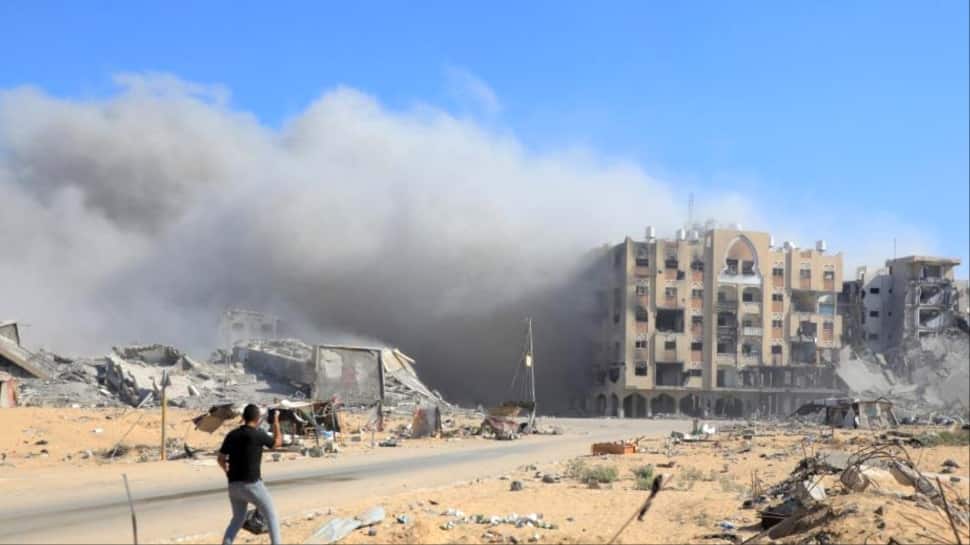
Israel and Hamas have commenced indirect negotiations aimed at ending the war in Gaza, coinciding with the second anniversary of the conflict. The talks, which began on Monday in Egypt’s Red Sea resort of Sharm el-Sheikh, are being brokered by the United States, with both parties indicating initial support for US President Donald Trump’s peace plan.
The proposed peace initiative, which has gained broad international support, outlines a multi-phase roadmap starting with a ceasefire and the release of all remaining hostages held by Hamas. In exchange, Israel would release hundreds of Palestinian prisoners, including 250 serving life sentences and 1,700 detained from Gaza since the war began. All women and children are to be included, along with 15 Palestinian bodies for every deceased hostage returned.\, according to an Associated Press report.
The Gaza conflict began on 7 October 2023, when Hamas-led militants crossed into southern Israel, killing around 1,200 people, mostly civilians, and abducting 251 others. The violence escalated into a prolonged war, leading to tens of thousands of Palestinian deaths and the devastation of the Gaza Strip. Despite cautious optimism, major uncertainties persist around the peace plan, most notably, the demand for Hamas to disarm, and the future governance of Gaza, the reports added.
Negotiators And Timelines
According to media reports, a senior Egyptian official, US envoy Steve Witkoff, is heading the American delegation. Egyptian media reported the arrival of Witkoff and Jared Kushner, President Trump’s son-in-law, who are expected to join the negotiations.
Chief negotiator Khalil al-Hayya leads Hamas’s delegation, while Israel’s team is expected to include Ron Dermer, a close aide of Prime Minister Benjamin Netanyahu, along with foreign policy adviser Ophir Falk.
While Netanyahu stated that talks would be “confined to a few days maximum”, Hamas has indicated more time may be required to locate hostages’ bodies buried under rubble. Trump has warned that Hamas must act swiftly or “all bets will be off.”
Under the first stage of the agreement, all hostilities would end immediately. Hamas would release the remaining 48 hostages, including the bodies of the deceased, within 72 hours. Israel believes that 20 hostages are still alive.
Terms Of The Deal
Key elements of the plan include — Israeli withdrawal from Gaza following Hamas’s disarmament, Deployment of an international security force, Gaza is placed under international governance, overseen by Trump and former UK Prime Minister Tony Blair, Establishment of an interim administration led by Palestinian technocrats, No role for Hamas in Gaza’s administration; its military infrastructure dismantled, Amnesty for members who pledge peace; exit offered for those who wish to leave Gaza, No expulsion of Palestinians from Gaza, and Large-scale humanitarian aid, coordinated by neutral international bodies such as the United Nations and the Red Crescent.
In a statement released on Friday, Hamas said it is willing to release hostages and hand over power to other Palestinians but noted that further consultations are needed on several parts of the plan. Notably, the statement did not mention disarmament, a key Israeli condition.
Hamas reaffirmed its openness to handing power to a politically independent Palestinian authority, but has not clarified its stance on foreign oversight or security forces. Senior official Osama Hamdan told Al Araby TV that the foreign administration of Gaza was unacceptable, as per the media reports.
Meanwhile, Netanyahu stated that Israel was prepared to begin implementing the plan’s first phase, but insisted that any resolution must adhere to Israel’s existing principles, including Hamas’s surrender and disarmament.
Disagreements Remain
There are disputes over the plan’s details, including:
- Hamas’s reluctance to formally agree to disarmament
- The role of foreign forces in Gaza
- Israel’s proposed “security perimeter presence”, which could result in a buffer zone remaining inside Gaza
- The long-term governance of Gaza and its potential pathway to Palestinian self-determination and statehood
While a senior Hamas official, Mousa Abu Marzouk, stated that the group is open to handing over weapons to a future Palestinian body, this point was not included in the official Hamas response to the Trump plan. The future of Gaza remains uncertain, and despite progress, deep divisions persist, both between Israel and Hamas and within Hamas itself, on how to move forward.