

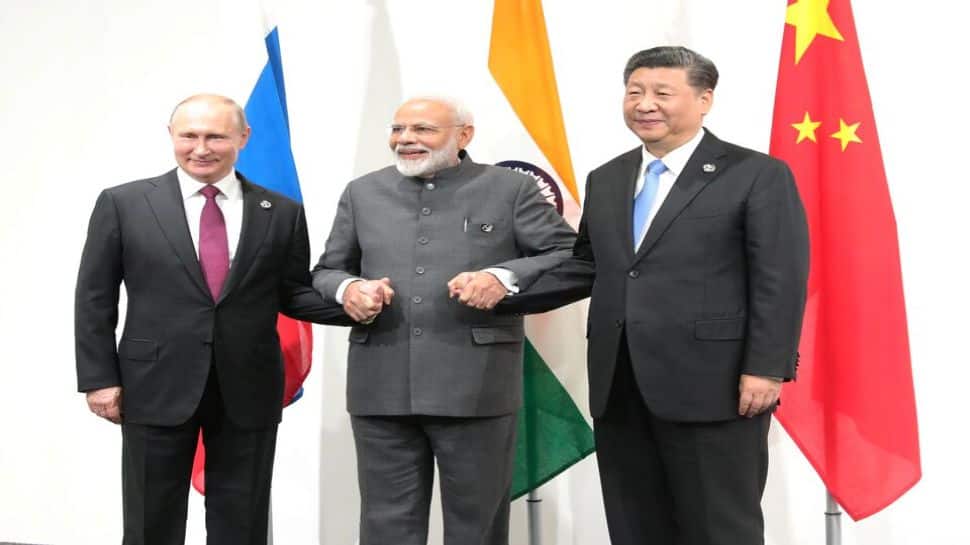
Beijing: China prepares for a major diplomatic gathering next week. President Xi Jinping will host more than 20 heads of state at the Shanghai Cooperation Organisation (SCO) summit. The high-level event will be held in the northern port city of Tianjin from August 31 to September 1.
Prime Minister Narendra Modi will attend the summit in his first visit to China in over seven years. Russian President Vladimir Putin will also participate to deepen Beijing and Moscow’s growing alignment. Leaders from Central Asia, South Asia, Southeast Asia and the Middle East have also confirmed their attendance.
China is using this meeting to amplify its vision of a multipolar world. Western policymakers remain focused on containing Beijing, Moscow and Tehran. But the SCO bloc keeps expanding its reach.
“Xi will want to use the summit as an opportunity to showcase what a post-American-led international order begins to look like and that all White House efforts since January to counter China, Iran, Russia and now India have not had the intended effect,” Eric Olander, editor-in-chief of The China-Global South Project, told Reuters.
“Just look at how much BRICS has rattled Donald Trump, which is precisely what these groups are designed to do,” he added.
Citing a senior Chinese foreign ministry official, the news agency reported this year’s summit will be the biggest since the bloc was founded in 2001. The official described the SCO as “an important force in building a new type of international relations”.
Once a six-nation grouping focussed on regional security, the SCO now has 10 permanent members. It includes 16 dialogue and observer partners. The organisation has expanded its agenda to include economic links, military cooperation and infrastructure plans.
Expectations remain high across the Global South. But actual outcomes have often fallen short.
“What is the precise vision that the SCO represents and its practical implementation are rather fuzzy,” said Manoj Kewalramani, chairperson of the Indo-Pacific Research Programme at the Takshashila Institution in Bangalore.
“It is a platform that has increasing convening power, which helps in narrative projection. But the SCO’s effectiveness in addressing substantial security issues remains very limited,” he said, according to Reuters.
Diplomatic friction remains between India and Pakistan. A recent SCO defence ministers’ meeting ended without a joint statement. India objected to the lack of reference to the April 22 attack in Pahalgam, Jammu and Kashmir. The incident led to the deadliest India-Pakistan confrontation in years.
India also did not join the SCO’s joint criticism of Israeli strikes on Iran earlier in June.
Despite past tensions, New Delhi and Beijing have moved to calm border tensions that began in 2020. That, combined with renewed tariff pressure from Washington, has opened the door for engagement between Modi and Xi.
“It is likely (New Delhi) will swallow their pride and put this year’s SCO problems behind them in a bid to maintain momentum in the détente with China, which is a key Modi priority right now,” said Olander.
Observers expect announcements related to troop withdrawals and easing of border tensions. Discussions may also include trade, visas, climate partnerships and cultural cooperation.
“This summit is about optics, really powerful optics,” Olander stated.
PM Modi is expected to return home after the summit concludes. President Putin will remain in China for a World War II military parade scheduled in Beijing later in the week.