

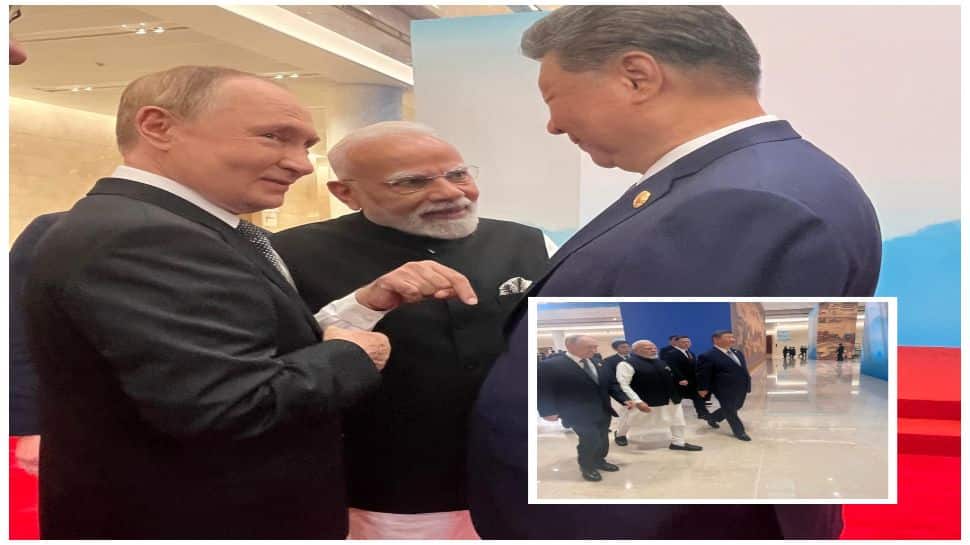
New Delhi: At the Shanghai Cooperation Organization (SCO) Summit in Tianjin, China, Prime Minister Narendra Modi and President Xi Jinping met with cautious warmth unlike their previous encounter in Kazan last year. The meeting carried a significance that went beyond routine diplomacy, arriving at a time when both leaders face the pressures of U.S. tariffs and unilateral decisions that strain their countries’ foreign relations.
The quake of Modi and Xi’s meeting resonated in the statement released afterward. Traditionally seen as rivals, the two countries were described as “partners in development”. The statement highlighted the importance of not allowing differences to escalate into disputes. This message was critical, especially since tensions have lingered since the 2020 Galwan clash. The leaders sought to project an image of stability and trust, discussing not only trade and border management but also a vision of a multipolar Asia and world, one where the United States is not the sole leader.
The backdrop of US President Donald Trump’s tariff wars loomed large. The tariffs imposed on India, justified by America due to India’s cheaper oil imports from Russia, have effectively cornered India into seeking alternative global platforms where the U.S. influence wanes. This pivot is visible in India’s growing engagement with Eurasian forums. India signalled a willingness to work closely with China and Russia amid deteriorating ties with the United States under Trump’s policies, though the benefits may be short-lived.
The language during the summit was carefully calibrated. Modi’s emphasis on peace and stability at the border came with both an olive branch and a cautionary undertone. Talks of ongoing dialogue and small steps towards peace appeared as significant progress. On the economic front, India expressed readiness to boost trade with China, provided India’s concerns are respected. New Delhi also rejected any notion of succumbing to pressure from third countries, affirming its “strategic autonomy” in determining relations with China.
The meeting is an example of strengthening ties bilaterally and within the SCO platform. It as a step toward bridging the trust deficit and enhancing regional cooperation on issues such as international crime, connectivity and people-to-people relations.
The optics were telling. Modi sharing a stage with Xi and Russian President Vladimir Putin conveyed a message well beyond the SCO hall. This photo-op came just days after Trump’s imposition of tariffs on Indian exports. Though a US federal appeals court declared these tariffs unlawful, they remain in effect pending a Supreme Court ruling.
Modi standing alongside leaders facing US sanctions symbolised a united front against Washington’s pressure tactics.
Russia’s role in this triangular dynamic is significant. India has become the largest buyer of discounted Russian crude oil, shielding its citizens from inflation. Reports indicate Putin’s visit to India later this year, further cementing ties. Russia stands not only as a supplier of oil and arms but also as a symbol of India’s ability to maintain balanced relations without bowing to U.S. demands.
However, experts caution. They warn that Russia’s military and diplomatic power is waning due to prolonged conflict in Ukraine. This partnership, then, is more a necessity than a romance, providing India with leverage amid uncertain U.S. ties.
The SCO Summit itself is no mere gathering of authoritarian regimes, as often portrayed in the United States. For India, it represents a unique forum that brings together Russia, China, Central Asian states and now Iran.
China’s message to India through the summit was clear: it views India as a partner, not a rival. This summit tested whether repeated calls for stability could evolve into a more trustworthy relationship.
In Delhi, realities are well understood. The border dispute with China remains unresolved, and India faces a $99 billion trade deficit with China, a significant political headache. Still, dialogue continues because it is deemed necessary.
Managing China will remain India’s biggest strategic challenge for decades. The SCO itself has grown from 6 original countries to 10 members, 2 observers and 14 dialogue partners. It covers the largest geographical area of any regional bloc and represents the world’s largest population.
India’s engagement with the SCO and growing ties with Russia and China do not mean a break with the United States. The deep defense, technology and investment links remain firmly in place. The Quad remains central to countering China’s assertiveness. The difference lies in tone and approach. Modi sought balance, refusing to be boxed in.
The Trump administration’s policies have accelerated India’s shift to explore alternative partnerships. India’s message to the United States is clear: it will chart its own course and maintain diplomatic autonomy.
The Modi-Xi meeting in Tianjin sends a reminder that India has options and will not be forced into submission.
History may remember Donald Trump as the US president who alienated allies and accelerated America’s decline. Modi might be remembered as the leader who kept doors open, maintained dialogue with rivals and secured room for India to navigate a world not dominated by a single power.
This nuanced diplomacy reflects India’s emerging role on the global stage that is complex, pragmatic and determined to remain independent.