

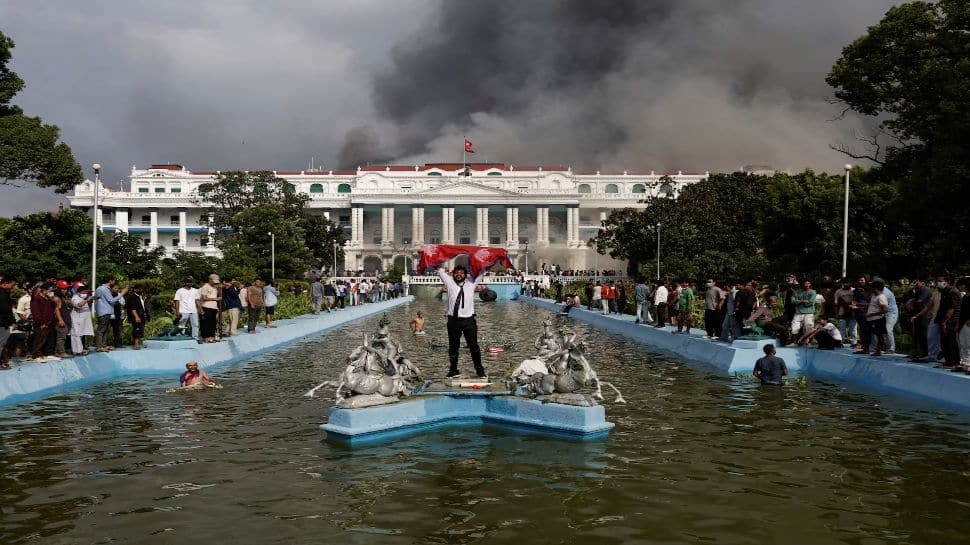
Kathmandu: On September 8, Nepal witnessed a historic uprising led by Gen-Z. Prime Minister KP Sharma Oli and nearly all of the country’s top leaders saw their political careers come to an abrupt halt. Many were forced to flee their homes and even the country.
Parliament, the Supreme Court and other public properties were set on fire. On the first day, 19 people were killed in shootings. By the next day, the toll had risen to 58, with hundreds more injured.
The question is why Oli’s government failed to contain the protests. Was the administration unable to grasp the power of Gen-Z or did police actions escalate the violence? Here are the five main reasons behind the government’s collapse:
1. Failure To Prepare Security Plans
Despite prior intelligence on the protests, the Nepalese government failed to craft an effective security strategy. Both the Kathmandu administration and the Ministry of Home Affairs underestimated the strength of Gen-Z.
Security forces were not deployed at critical locations. Command authority was left with junior officers, resulting in police opening fire on protesters outside Parliament. Immediate chaos led to 19 deaths, and violence quickly spiralled.
2. Delayed Government Response
During the uprising, the government’s presence was largely absent. Home Minister Ramesh Lekhak convened a central security committee meeting only after 19 people had already died.
Earlier that day, he and his top security officials were attending a parliamentary committee on a police bill instead of monitoring the protests.
Prime Minister Oli was also missing from the scene. He joined an emergency meeting later in the evening and announced a committee to investigate the violence.
3. Leadership Vacuum In Security Agencies
No senior police officials were present on the ground during the protests. Following the retirement of AIG Tek Bahadur Tamang, no replacement was appointed to the Kathmandu Valley Police Office.
With no one to guide them, officers fired directly at protesters to protect themselves and the Parliament. Bullets struck in the chest rather than below the waist, intensifying the bloodshed.
4. PM Oli’s Misjudgment
The prime minister underestimated the scale and intensity of the agitation. Following his usual pattern, he attempted to blame Opposition parties instead of acknowledging the gravity of the movement.
When dozens were killed on the first day, Oli expressed no sympathy, labelling anti-government forces as responsible. He resisted resignation demands until the situation escalated beyond control.
Analysts and observers point to Oli’s miscalculations as the largest single cause of the government’s failure.
5. Public Outrage Fueled By Corruption
The protests were not only about security failures. Nepalis were fed up with corruption, misuse of government resources and involvement of leaders in major scams.
The movement gained widespread support across all social layers because it reflected ordinary people’s grievances. Leaders enriched themselves while citizens struggled to secure basic necessities. The uprising was as much a revolt against corruption as it was against government inaction.
The Gen-Z revolution in Nepal serves as a moment to reflect. It demonstrated the power of youth-led movements, exposed political mismanagement and forced a reckoning with widespread corruption and administrative failures.
Oli’s downfall reflects the consequences of underestimating citizens’ anger and failing to respond effectively to crises.