

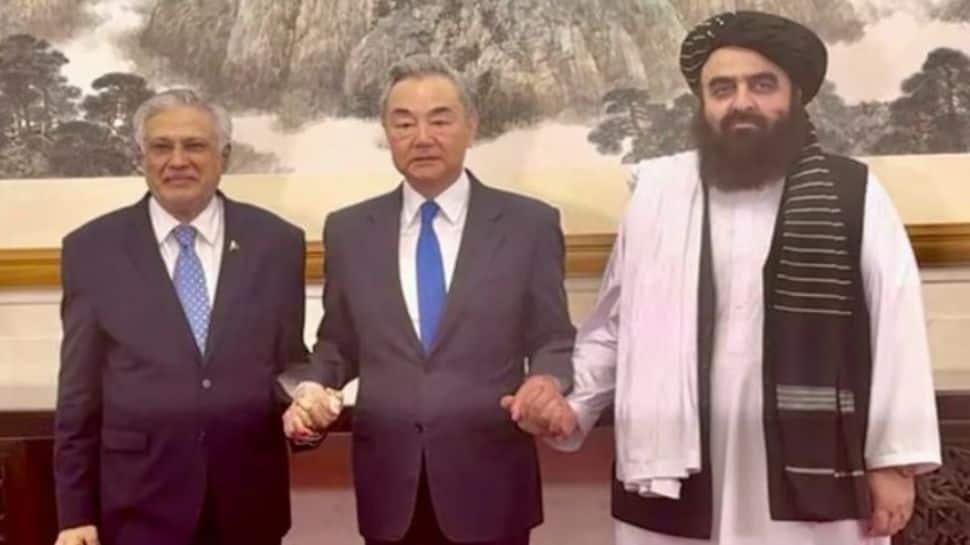
New Delhi: A cup of tea once shared in Kabul is now haunting Pakistan’s rulers. It was the autumn of 2021 when the Taliban had just taken over Afghanistan. Cameras flashed as Pakistan’s then Inter-Services Intelligence chief Faiz Hameed smiled over a cup of tea in a hotel in Afghanistan’s capital. Light-hearted at the time, that image now burns like acid through Islamabad’s political veins.
In recent weeks, Pakistan has been shaken by threats from the Tehrik-e-Taliban Pakistan (TTP). Videos of armed commanders, messages of vengeance and warnings of attacks deep inside the country’s territory have filled the internet.
Pakistan’s Deputy Prime Minister Ishaq Dar admitted that the tea once shared with the Taliban has become “too costly to swallow”.
Behind the irony lies a grim reality. Pakistan’s decades-long policy of nurturing the Taliban as a regional pawn has turned against it. The same Taliban government that once welcomed Pakistani generals now accuses Islamabad of violating Afghan sovereignty.
Talks Turn Toxic
Peace talks between Pakistan and Afghanistan have reached a breaking point. In Ankara, where the third round of negotiations is taking place, tempers are rising. Pakistan demands that the Afghan Taliban dismantle TTP hideouts along the border. Kabul refuses. It insists those fighters are “brothers in faith”, not enemies.
The Afghan Taliban’s silence speaks volumes. Their leadership, rooted in Pashtun tribal identity, will not turn its guns on their own kin.
Led by Field Marshal Asim Munir, the Pakistani military calls this stance a betrayal. But inside Afghanistan, many see the neighbour’s Army chief himself as the problem.
Afghan newspapers are now openly criticising him. An editorial in Al-Mirsad recently asked, “Is Asim Munir commanding the army or digging Pakistan’s political grave?” It accused him of turning the military into a political machine that serves narrow interests rather than national stability.
From Brothers To Enemies
When Munir became the chief of army staff in November 2022, the ceasefire with the TTP collapsed within days. By 2023, Pakistan began expelling Afghan refugees, triggering outrage in Kabul. In 2024, Pakistani jets bombed Taliban-held border provinces. The Taliban retaliated with deadly strikes that killed over 2,500 on both sides.
By mid-2025, the two countries were on the brink of war. Taliban’s rockets hit Pakistani checkpoints. Pakistan’s airstrikes deepened the hostility. Under pressure, Islamabad was forced to return to the negotiating table in October. But the Taliban came back stronger, more confident and unafraid.
Pakistan’s Fear Within
For Islamabad, the nightmare is no longer limited to the Afghan border. The TTP has resurfaced inside Punjab, the country’s political and military heart. In a recent video, Taliban commanders from Pishin, Lakki Marwat, Mohmand and Bajaur declared they were already “inside Pakistan”. “We strike when we wish, where we wish,” they warned.
The footage showed their faces, weapons and confidence. It was filmed inside Pakistani territory. For Munir’s army, it was a humiliation. Once feared, Pakistan’s intelligence networks have failed to contain the insurgency.
Over the past year, 22 splinter groups of the TTP have rejoined the main organisation. The total number has gone up to 75 since 2020. Among them is the Hafiz Gul Bahadur faction, which is responsible for some of the deadliest ambushes on Pakistani troops.
Even Baloch rebel groups are now linking up with the Taliban, expanding the insurgency’s reach.
Surrounded On All Sides
The map of Pakistan now glows with instability. To the west, Taliban fighters dominate the Afghan frontier. To the southwest, Baloch militants strengthen their grip near Iran. From Khyber to Punjab, rebellion simmers.
Inside the army, morale is low. Economically, the nation is gasping. Pakistan’s foreign debt now equals 35 percent of its GDP. Growth has slowed to 2.5 percent. Reserves hover near $10 billion, barely enough for four months of imports.
With war out of reach and peace slipping away, Islamabad’s options are vanishing. The Taliban know it. Their negotiators now meet Pakistan’s envoys as equals, not dependents. For the first time in history, Kabul looks Pakistan in the eye and refuses to blink.
The Bitter Aftertaste
What began as a photo-op (a cup of tea shared in celebration) has turned into a curse. The Taliban’s rise was once Pakistan’s triumph. Today, it is Pakistan’s undoing.
The tea has gone cold. But its bitterness still lingers on the tongues of generals, ministers and men who once believed they could sip power and swallow peace in the same breath.