

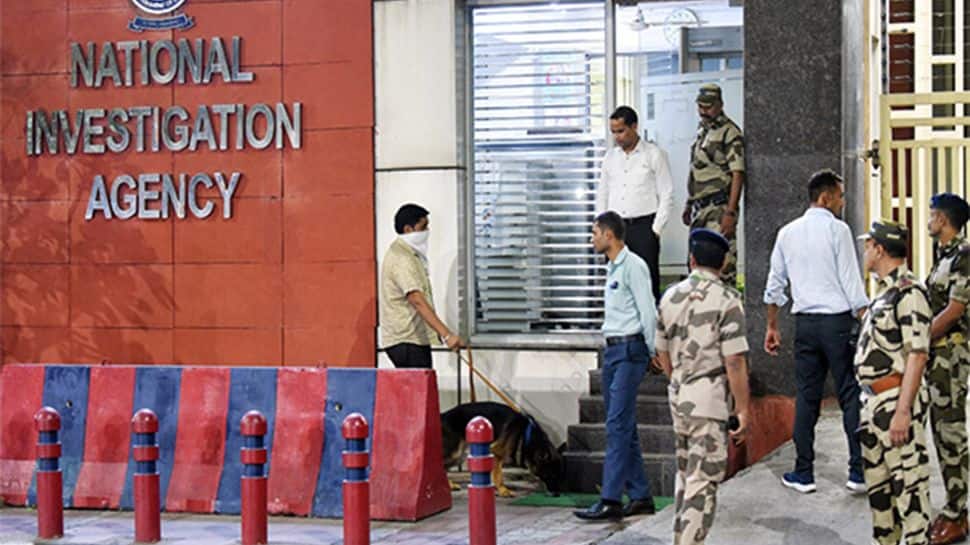
A special NIA court in Visakhapatnam has handed down prison sentences to two key operatives linked to a foreign espionage network in the high-profile naval spying case. They have been given jail terms of five and a half and six years, marking another significant development in the ongoing investigation.
With this verdict, the number of convictions in the case has risen to four, further exposing how a well-coordinated racket managed to leak sensitive information from crucial Indian Navy bases.
Those convicted are Mohammad Haroon Haji Abdul Rehman Lakdawala from Mumbai, who has been sentenced to five-and-a-half years of simple imprisonment, and Imran Yakub Giteli from Godhra, Gujarat, who has received six years of simple imprisonment. Both were found guilty under Sections 17 and 18 of the Unlawful Activities (Prevention) Act (UAPA), underscoring the serious national security implications of their actions.
NIA Special Court Sentences 2 more Accused in Visakhapatnam Navy Spying Case pic.twitter.com/kZEYpz4nci
— NIA India (@NIA_India) October 17, 2025
The NIA took over the probe in December 2019, uncovering what investigators described as a large-scale espionage module allegedly backed by Pakistani intelligence handlers. So far, 15 people have been arrested in connection with the case, including 11 Indian Navy personnel, pointing to deep infiltration attempts across multiple naval stations not only in Visakhapatnam but also in Karwar and Kochi.
According to the NIA’s investigation, this was not just a random attempt at espionage but a carefully structured network created to extract and leak classified details about Indian Navy ships, submarines, and their operational movements.
The racket relied heavily on honey-trapping and illegal money channels to lure and maintain contacts.
Investigators found that the handlers, believed to be based in Pakistan, created fake identities on social media to reach out to individuals connected to naval and defence establishments. Using deceptive interactions, often under the guise of friendship or romance, they gradually drew the targets into sharing information.
Once these individuals were compromised, they were directed to pass on sensitive inputs through apps like WhatsApp, keeping the flow of intelligence steady and discreet.
The financial trail uncovered another layer of the operation. Lakdawala and Giteli, now convicted, were found to be in regular contact with Pakistani handlers and played a crucial role in moving funds across borders. With family connections in Pakistan and frequent visits there, they reportedly engaged in unauthorised cross-border trade involving garments and other goods.
The revenue generated through this illegal business was used to pay naval personnel and civilian informants in exchange for classified information, helping keep the espionage network active and well-funded.