

C-8 Missiles vs India’s Rafales And BrahMos: The Thar Desert wakes to a crisp orange dawn, the sky bleeding saffron as the first rays hit the sand. Two machines of war (a sleek French-made Indian Rafale and a Pakistani F-16) streak across the horizon. Both cut through the clouds like shadows of steel, whispers of death in the cold morning air.
With the call sign “Viper Slayer”, the Rafale pilot spots the enemy 120 kilometres away. It is too far for the naked eye, but well within the reach of modern technology. Beneath him, the Astra Mk-2 ignites, India’s beyond-visual-range spear. Its ramjet heart roars, tearing toward the F-16 with precision.
The F-16 responds instantly with an AIM-120C-8 Advanced Medium-Range Air-to-Air Missile (AMRAAM). This missile is fire-and-forget. It is guided by active radar and receives pings from an AWACS sentinel far behind the frontlines. It crosses paths like two predators, each one blending speed with smart targeting. In a heartbeat, one jet plummets, trailing smoke, while the other ghosts away, unscathed.
This scenario is not a work of fiction. The United States’ clearance for AIM-120C-8 missiles to Pakistan injects a new level of lethality into Pakistan Air Force (PAF) operations. The U.S. embassy, however, insists the reports are “false” and clarifies that the contract is for “sustainment and spares” for multiple nations, including Pakistan.
Analysts suggest that the arrangement may still replenish stocks, potentially sharpening F-16 lethality.
AIM-120C-8 Anatomy
The AIM-120C-8 is Raytheon’s pride, standing 3.65 meters long and weighing 159 kilograms. It reaches Mach 4 speeds and carries a 23-kilogram high-explosive blast-fragmentation warhead. The missile is guided by active radar, a two-way datalink and GPS/INS for anti-jamming resilience.
Analysts often describe it as giving a missile a smartphone, as it receives real-time updates from airborne sensors. Mid-course guidance keeps it unstoppable even during high-G dogfights.
From Iraqi MiGs in 1991 to Syrian jets in the 2010s, it has been proven through 4,900 test firings and over 13 combat engagements. The C-8 variant extends its operational range to 160 kilometres.
How Pakistan Benefits
The PAF’s 76 Block 52 F-16s receive a significant upgrade with the AIM-120C-8. Engagement envelopes now stretch to 160 kilometres, far beyond the Astra Mk-1’s 110 kilometres. Early-warning Erieye aircraft feed real-time targeting data, allowing F-16s to strike and retreat.
The missile’s resilience against electronic countermeasures, integration with Chinese PL-15s and relatively low acquisition cost ($1-2 million per missile) sharpen the PAF’s air posture. Training intensifies as pilots rehearse “shoot-and-scoot” tactics, solidifying deterrence.
India’s Arsenal Against The C-8
The Indian Air Force (IAF) counters with a layered arsenal. The Astra Mk-1 has a 110-kilometre range, active radar, inertial guidance and weighs 154 kilograms. It is deployed on Su-30s and Tejas aircraft but has only completed trials with no combat kills. The Astra Mk-2 extends the range beyond 160 kilometres with a dual-pulse motor and will be operational by 2026.
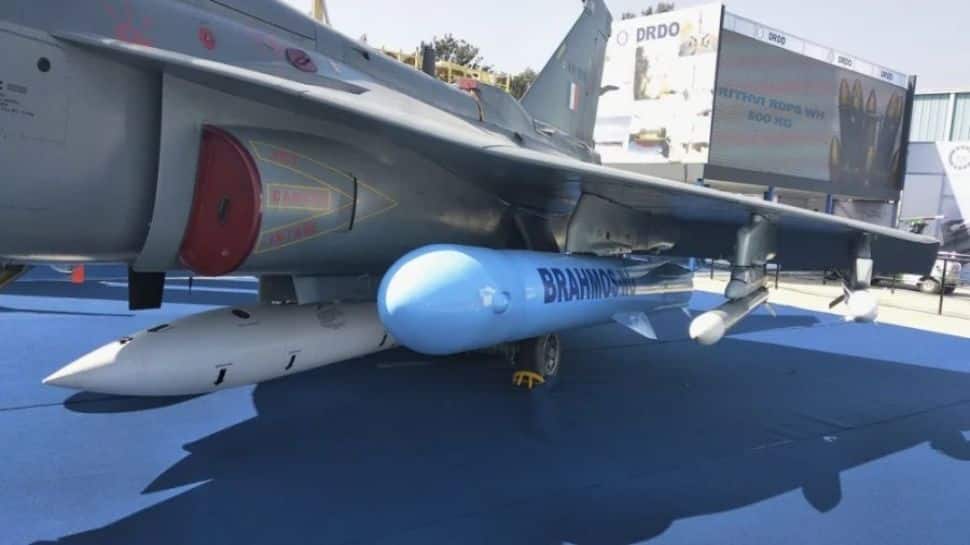
The BrahMos missile, a Mach 2.8-3.0 supersonic cruise missile, can strike airbases and ships within a 290-500 kilometre range. It carries a 300-kilogram warhead and was proven in Operation Sindoor, leveling PAF bases within seconds.
Feature Comparison Table
Feature: AIM-120C-8 (Pakistan), Astra Mk-1 (India), BrahMos (India’s Trump Card)
Type: BVR air-to-air, BVR air-to-air, supersonic cruise (anti-ship/ground)
Range: 160 km, 110 km, 290-500 km (air-launched)
Speed: Mach 4, Mach 4.5, Mach 2.8-3.0
Guidance: Active radar + datalink + GPS/INS, active radar + inertial, inertial + GPS + terrain contour
Warhead: 23 kg HE-Frag, 15 kg HE-Frag, 200-300 kg conventional/nuclear-capable
Platforms: F-16, JF-17 (adapt), Su-30, Tejas, Rafale, Su-30, MiG-29K, Ships, Subs
Combat Proven: 13+ kills, trials only, Operation Sindoor (2025)
Key Edge: Mid-course updates, indigenous, low cost, standoff base-busting
The table highlights the asymmetry. The AMRAAM bolsters PAF’s offensive capability, while Astra and BrahMos fortify India’s defensive depth and deep-strike capacity.
Geopolitics Of The C-8
The C-8’s introduction signals a recalibration in U.S.-Pakistan relations. Under Trump-era “America First” logic, $2.5 billion in F-16 parts and now the C-8 missiles indicate a strategic tilt.
China observes Indo-Pak tech synergies with interest. India recalls the AMRAAM engagements of 2019 and the echoes continue in 2025.
IAF’s Counters
The IAF has layered strategies to neutralise the C-8 threat:
- Missile Parity: Fast-track Astra Mk-2/Mk-3 integration and Meteor deployment.
- ECM Overdrive: Rafale’s SPECTRA suite combined with Growler support.
- AWACS and Numbers: Netra Mk-1A and Phalcon fleets coordinate squadron saturation tactics.
- Standoff strike: BrahMos, Nirbhay, and Akash-NG create layered air defense.
- Training and Tech Leap: Tarang Shakti drills and AMCA stealth aircraft are fast-tracked.
“AMRAAMs make PAF punchier; IAF’s job is to duck the haymaker,” say analysts.
The AIM-120C-8 injects fresh lethality into the PAF, increasing BVR parity with India. BrahMos remains India’s trump card, capable of levelling airbases. India’s strategic depth combines numbers, technology and BrahMos dominance.
The C-8 may whisper death, but the IAF’s response is layered, lethal and unbreakable.
In the grand theater of South Asian skies, the patient builder triumphs. India continues to build an empire in the clouds.