

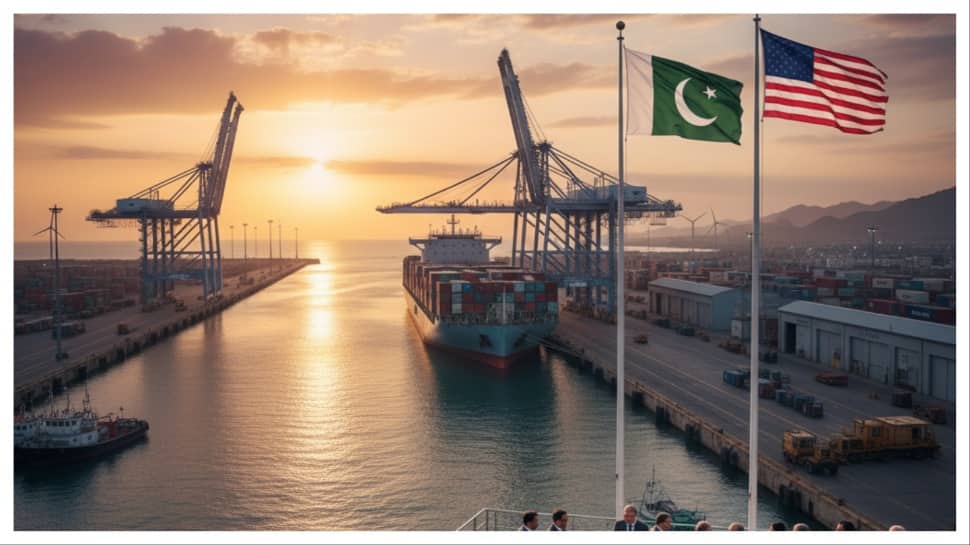
In what could mark a significant geopolitical shift in the region, advisers to Pakistan’s Army Chief General Asim Munir have reportedly presented a proposal to US officials for the construction and operation of a new port at Pasni on the Arabian Sea. The plan, if realized, would offer Washington a strategic foothold in a critical maritime corridor, just miles from Iran and China’s Gwadar port.
The initiative, not yet formal government policy, was reportedly discussed with General Munir ahead of his White House meeting with US President Donald Trump last month. However, a senior US official clarified that the proposal had not been formally presented to the president or his advisers for consideration.
According to media reports, the proposal envisions transforming the small fishing town of Pasni, located roughly 100 miles from Iran and 70 miles from Gwadar, into a hub for processing and exporting Pakistan’s critical minerals, such as copper and antimony. These minerals are vital for manufacturing batteries, fire-resistant materials, and missile components.
The proposed USD 1.2 billion Pasni project includes a railway link connecting the port to Pakistan’s mineral-rich interior, including the Reko Diq mine operated by Canada’s Barrick Gold Corporation. Funding, according to the plan, would come from a combination of Pakistani federal resources and US-backed development finance.
Supporters of the proposal argue that the project could help Pakistan diversify its strategic partnerships and reduce dependence on China, which already operates Gwadar under the Belt and Road Initiative (BRI). The plan describes Pasni’s location as advantageous for US engagement in the Arabian Sea and Central Asia, offering “a counterbalance to China’s growing influence through Gwadar.”
The document also attempts to address security sensitivities, specifying that there would be no “direct basing,” meaning the facility would not host any US military presence.
For India, the potential development carries significant strategic implications. A US-backed port at Pasni could alter the maritime balance in the Arabian Sea, challenge China’s regional dominance, and complicate India’s naval calculus along its western seaboard. The move underscores Pakistan’s growing attempt to position itself as a strategic pivot between Washington and Beijing amid shifting power dynamics in South Asia.
ALSO READ: Indian Dental Student Shot Dead In US: Killed By ‘Black People’, Says Mother