

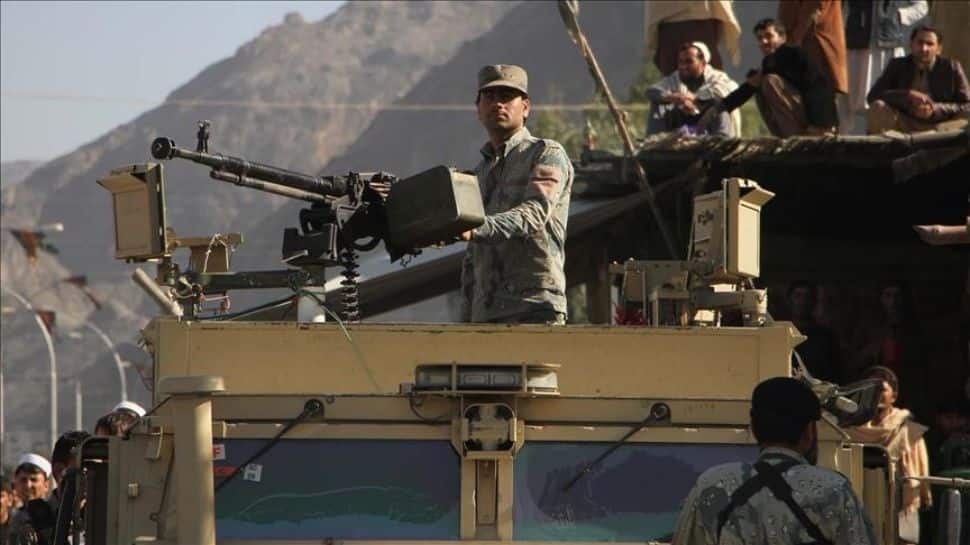
New Delhi: Pakistan is witnessing its deadliest stretch in over a decade. The Islamabad-based Centre for Research and Security Studies (CRSS) reports that more than 2,400 security personnel have been killed in the first nine months of 2025, pushing the country toward its most lethal year since 2015.
The third quarter of this year alone recorded 901 fatalities and 599 injuries, reflecting a 46% spike in violence compared to the previous period. Between January and September, deaths rose 58% from the same timeframe last year. Unlike 2024, when terror attacks were the primary cause of casualties, over half of this year’s deaths (1,265) occurred during state-led counterterror operations.
The main battlegrounds are Khyber Pakhtunkhwa (KP) and Balochistan. KP bore the brunt with 71% of fatalities, Balochistan 25% and Sindh, though smaller, saw killings rise by 162%. Analysts warn that despite intense military campaigns, the insurgency continues to grow.
The ‘Quad Of Terror’
Four forces dominate Pakistan’s internal conflict: the Tehrik-e-Taliban Pakistan (TTP), Baloch insurgents, Islamic State Khorasan (IS-K) and Taliban elements hostile to Islamabad. Once stable, the western frontier turned volatile after the Taliban returned to power in Kabul in 2021. Long sheltered in Afghan territory, TTP fighters intensified attacks in KP.
Baloch separatists, particularly the Baloch Liberation Army (BLA), struck Chinese interests and Pakistani convoys with increasing sophistication.
Pakistan has responded with a mix of strategies: Taliban-mediated talks, religious diplomacy via Deobandi clerics, economic pressure through border blockades, deportations of Afghan refugees and covert drone and air strikes across the Durand Line.
Balochistan Burns
Balochistan, Pakistan’s largest and most resource-rich province, has become a war zone. Districts such as Khuzdar and Zehri are under near-permanent lockdowns. Drone strikes have caused civilian casualties. One person told ANI, “We have no ties to any armed group, but we have been targeted and murdered.”
Hospitals remain ill-equipped, schools are scarce and infrastructure is destroyed. Enforced disappearances continue, with students, activists and local leaders detained or killed.
Historically, Balochistan’s insurgency has flared since 1948, driven by resentment over economic neglect and military repression. The China-Pakistan Economic Corridor (CPEC) raises stakes, with Chinese projects in Gwadar becoming high-value targets.
Since 2021, the BLA has moved deeper into Afghan territory, exploiting Taliban-controlled regions such as Nimroz and Helmand to regroup. Pakistan claims the March 2025 Jaffar Express hijacking was orchestrated from Afghanistan using satellite communications, citing Taliban complicity.
Border On Fire
Pakistan-Afghanistan border recently erupt with intense fighting. Pakistan claimed to capture 19 Afghan posts after Taliban attacks, while Kabul reported 58 Pakistani soldiers killed in retaliatory strikes.
Taliban spokesman Zabihullah Mujahid called the strikes “unprecedented, violent and reprehensible”. Pakistan’s Interior Minister Mohsin Naqvi said, “Our forces have given a prompt and effective response and no provocation will be tolerated.”
PTV News reported Pakistani forces using artillery, tanks, airpower and drones against Taliban camps, targeting “Daesh and Khawarij hideouts”. Both sides offered wildly different death tolls. Pakistan claimed 200 militants killed, while the Taliban said nine of its fighters died.
Why Pakistan Is Losing
Once an Islamabad’s ally, the Taliban now leverages insurgencies to extract political and economic advantage. Autonomous local commanders allow militants to operate freely. American weapons left after the 2021 withdrawal fuel militant attacks, with BLA forces now armed with advanced rifles, explosives and satellite communication gear. Unregulated financial networks in Afghanistan, through narcotics and extortion, fund these operations.
Pakistan, which once helped the Taliban rise to power, now faces a volatile frontier it can no longer control. A rift over the TTP, sheltered by Afghan territory, has worsened the crisis. Counterterrorism raids blur with open warfare as Pakistan confronts the TTP in KP, the BLA in Balochistan, IS-K in tribal areas and hostile Taliban forces across the border.
A Neighbourhood On Edge
Violence now spills beyond Pakistan. Iran and Pakistan exchanged missile strikes earlier this year in Baloch border regions. Taliban assertiveness risks drawing China into the conflict, threatening CPEC projects. Pakistan’s military insists on striking back. “We will not tolerate the treacherous use of Afghan soil for terrorism against Pakistan,” said a military spokesperson.
The country that once brokered Taliban peace is now fighting a multi-front war against insurgents it helped empower and neighbours it cannot control.