

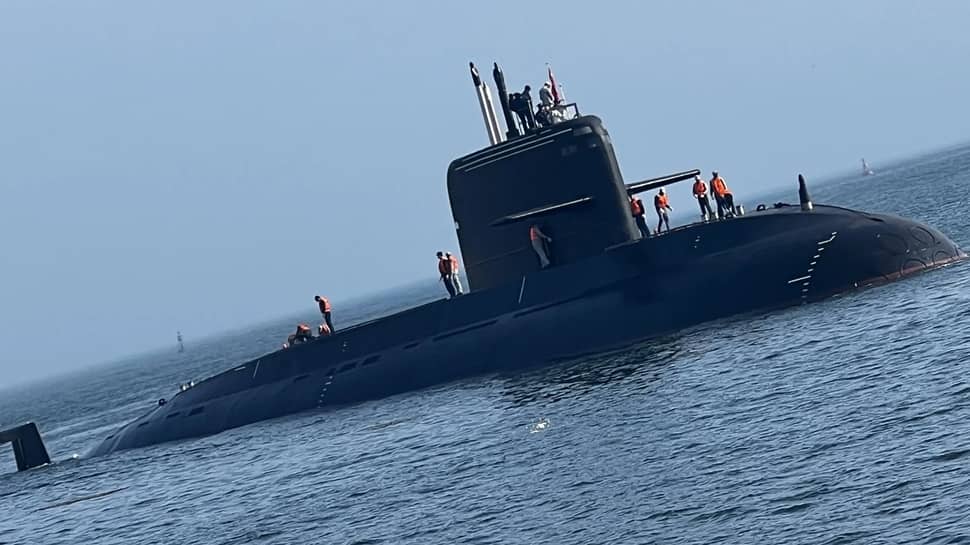
When governments tout multi-billion-dollar arms programmes, they promise security for the nation. In theory, the Hangor-class submarines and any such subsequent relevant proposals may bolster Pakistan’s deterrence at sea. In practice, however, the benefits of the Hangor deal likely accrues mostly to insiders, not the sailors who will ply the seven seas or the citizens of Pakistan.
Operational Risks Remain
Firstly, there is serious doubt about whether the submarines will perform at the level it has been sold on. Open-source analysts point out that the Hangor-class boats are export versions of China’s Yuan-class, with many sensitive systems downgraded. The engine swap already mentioned may compromise stealth, as the CHD620 diesel is ‘unproven’ in combat submarines, and the Hangor’s noise profile is expected to be worse than India’s newer Scorpene subs.
Also Read: Meet The Hangor-Class Submarine China Delivered To Pakistan; Can It Survive India’s Kill Zone?
The oceans are unforgiving, and a noisy submarine is one that’s easily detected, a fundamental mismatch with the claimed strategic edge. In short, the crews might find their state-of-the-art sub is not so state-of-the-art after all. History suggests that design flaws or compatibility issues often show up only after years at sea. If the Hangors face mechanical teething or sensor gaps (as happened in Thailand’s similar S26 subs), the sailors will bear the burden of the failure. Repairing a submarine in service means diverting scarce budget into unplanned fixes with either docking at friendly regions, or scrambling dry docks to friendly areas in the seven seas, in a world in which they are seeing a reduction in allies around the world. Training programs, also imported under contract, may have to scramble to address unforeseen problems. All the while, lives could be on the line in a crisis. A flawed sub is no defender of the nation; it is a tiresome liability.
National Ledger and Hungry People
Equally concerning is what Pakistan did not get by spending so much on the Hangor. Islamabad has just approved an unusually tight federal budget, with total expenditures cut by nearly 7%, while defence outlays jumped by 20%. In absolute terms, some PKR 2.55 trillion (about $9 billion) has now been allocated to the military. The navy’s share – about PKR 266 billion ($941 million) – includes the Hangor payments and related costs. By contrast, every social program sits on the chopping block. Major cuts to subsidies, health, education and infrastructure are being discussed, with Pakistan under severe pressure from the IMF, and its other creditors.
This trade-off comes as Pakistan grapples with a food crisis; roughly one in six Pakistanis are now food-insecure, as per UNICEF; inflation is at crisis highs, and public nutrition indicators are deteriorating. Limited fiscal space means that the government cannot afford robust social safety nets. Yet billions of rupees flow into a defence project whose full cost and efficacy are unknown. Billions are tied up in opaque deals, yet the cost is borne by ordinary taxpayers who see reduced investment in food, energy and social services. In economic terms, every rupee lining the pockets of insiders is a rupee that could have fed a malnourished child or kept a hospital running.
Defence of Perks Over People
Finally, one must ask – Who are these Hangor subs really defending? If institutional benefits are any guide, the answer is not the people. As Pakistani civil society regularly reports, large defence procurements end up shoring up a rentier class. A 2025 op-ed by Sakariya Kareem in Asian Lite laid it bare: the military establishment is “arguably the most deeply embedded source of institutional rot, shielded by power, sustained by opacity”. In this view, national security is often interpreted as securing the privileges—or ‘perks’ -of a few, including housing projects in gated enclaves, overseas bank accounts, and control of lucrative industries.
That mindset persists unless there is civilian oversight, which Pakistan sorely lacks since its independence. By contrast, an honest appraisal would recognise that human security includes feeding the hungry and educating the young. An IMF-backed reform agenda emphasises poverty reduction and investment in health. But with more budget diverted into the Hangor and other weapons, those goals recede. Despite lofty strategic arguments, the Hangor deal risks becoming a case where Pakistan’s defence truly serves the defence of its perks, not its people. The sailors who man these submarines will know better; if the boats are noisy and unreliable, the cold calculus of corruption will have failed them from within. And the citizens will remember that when levies climb and grain prices soar, it was their money, not theirs, that paid for the unseen commissions beneath the waves.
In the end, all one must note is, a country is not made up of land barriers or hand-plotted maps, but its people. A country is, in all effect, a people. And if the people do not have food to eat or clothes to wear, space-age submarines that cannot move past the dockyard are no good to the country. As Freud said, if the id is satisfied, the ego and the superego tag along.