

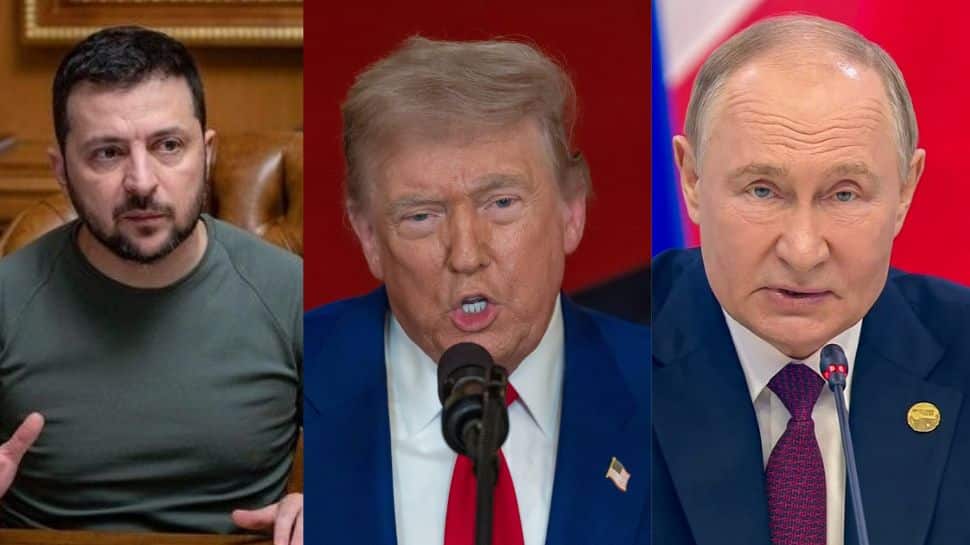
The much-hyped summit between Donald Trump and Vladimir Putin in Alaska yesterday ended with handshakes, warm words, and absolutely no breakthrough on ending the war in Ukraine. For all the red carpet treatment, fighter jet flyovers, and diplomatic theater at Joint Base Elmendorf-Richardson, the harsh reality remains unchanged: this conflict is far more complex than Trump’s campaign promises suggested.
The Theater Of Diplomacy
The optics were certainly striking. Putin, isolated from the West for over three years, received a hero’s welcome on American soil complete with military honors and a ride in Trump’s presidential limousine. For Moscow, this was already a victory even before the talks began. Russian state media gleefully proclaimed the end of Putin’s diplomatic isolation, showing the world that the most powerful nation on earth was ready to do business with the Kremlin again.
Trump’s decision to roll out the red carpet was clearly calculated. By treating Putin as an equal partner rather than a pariah, he was signaling his willingness to reset US-Russia relations entirely. The message was unmistakable: past grievances could be set aside if Putin was ready to make a deal.
The Hard Reality Check
But three hours of closed-door negotiations revealed what many experts suspected all along – this war cannot be ended with a simple handshake deal between Trump and Putin. “There’s no deal until there’s a deal,” Trump admitted afterward, acknowledging that “a couple of big ones that we haven’t quite gotten there” remained unresolved.
Trump had entered the meeting expecting to achieve an immediate ceasefire, something he had promised throughout his campaign. Instead, he emerged with vague talk of “progress” and “agreements” that neither leader was willing to specify. The absence of Ukrainian President Volodymyr Zelensky from these talks became glaringly obvious as it became clear that any deal would ultimately require Kyiv’s consent.
Putin’s Strategic Victory
From Putin’s perspective, the Alaska summit was a masterstroke regardless of its lack of concrete outcomes. For the first time in years, he was treated as a legitimate world leader by the American president rather than as an international criminal. Putin’s grin as he peered out the window of Trump’s limousine said everything: after years of western isolation, he was back in the most powerful nation on earth.
More importantly, Putin managed to buy himself more time without making any meaningful concessions. “It seems Putin has bought himself more time,” observed Ukrainian lawmaker Oleksiy Honcharenko. “No cease-fire or any kind of de-escalation has been agreed upon.”
Throughout the crisis, Putin has consistently demanded not just territorial concessions but fundamental changes to Ukraine’s sovereignty and security arrangements. The Alaska meeting did nothing to suggest he has softened these maximalist positions.
The Zelensky Problem
Perhaps the most telling moment came when Trump put the onus on Ukrainian President Volodymyr Zelensky to negotiate a ceasefire, saying “Now it’s really up to President Zelensky to get it done,” and urging him to “make a deal.”
This represents a fundamental misunderstanding of Ukraine’s position. Zelensky is not simply being stubborn or unrealistic – he represents a nation fighting for its survival against an invader that has repeatedly violated international law. For Ukraine, this is not a business negotiation about profit margins but an existential struggle about national independence.
The Ukrainian president will meet Trump at the White House on Monday, but the pressure being placed on him to accept Putin’s terms essentially asks Ukraine to reward Russian aggression with territorial concessions and security guarantees that would leave the country vulnerable to future attacks.
European Concerns Mount
European leaders watched the Alaska summit with growing alarm. Lithuania’s defense minister Dovile Sakaliene noted that Putin’s comments consisted of “gaslighting and veiled threats,” pointing out that Russian forces continued to “bomb civilians in Ukraine” even as the peace talks were taking place.
The Czech Foreign Minister warned about Kremlin propaganda efforts, emphasizing that “The problem is Russian imperialism.” These reactions highlight the deep skepticism in European capitals about any deal that would legitimize Russian territorial gains.
The Unchanging Military Reality
While diplomats talked in Alaska, the war continued unabated. Russia attacked Ukraine overnight with a ballistic missile and 85 drones immediately after the summit, demonstrating Putin’s unwillingness to even pause hostilities during peace negotiations.
This military reality underscores the fundamental problem with Trump’s approach. Putin has shown no indication that he is willing to end the war without achieving his core objectives: Ukrainian territorial concessions, limits on Ukraine’s sovereignty, and implicit acceptance of Russian dominance in the region.
The Path Ahead
Trump rated the meeting a “10 out of 10” because “we got along great,” but personal chemistry between leaders cannot bridge the fundamental gap between Russian demands and Ukrainian red lines. When Putin suggested their next meeting should be “Next time in Moscow,” it revealed his confidence that he holds the stronger hand.
The Alaska summit has essentially reset the diplomatic clock without changing the underlying dynamics of the conflict. Putin has gained international legitimacy and breathing space while making no meaningful concessions. Trump has learned that ending this war is far more difficult than his campaign rhetoric suggested.
The real test now comes with Monday’s Trump-Zelensky meeting. If Trump continues to pressure Ukraine to accept territorial losses without credible security guarantees, he risks alienating America’s European allies and emboldening Putin to pursue even greater objectives.
The Bigger Picture
The Alaska summit reveals the limits of personal diplomacy in resolving conflicts rooted in fundamental disagreements about international law, sovereignty, and the post-Cold War order. Putin’s war in Ukraine is not primarily about territory – it is about Russia’s challenge to the entire framework of international relations that has governed Europe since 1945.
Trump’s transactional approach to foreign policy, while successful in some business contexts, struggles with conflicts where the stakes involve national survival and historical identity rather than economic gain. The warm handshakes in Alaska cannot mask the cold reality that this war will likely continue until one side concludes that the costs of fighting exceed the benefits of their war aims.
For now, Putin appears to believe that time is on his side, while Ukraine fights for its very existence. The Alaska summit has done little to change either calculation.
(Girish Linganna is an award-winning science communicator and a Defence, Aerospace & Geopolitical Analyst. He is the Managing Director of ADD Engineering Components India Pvt. Ltd., a subsidiary of ADD Engineering GmbH, Germany.)