

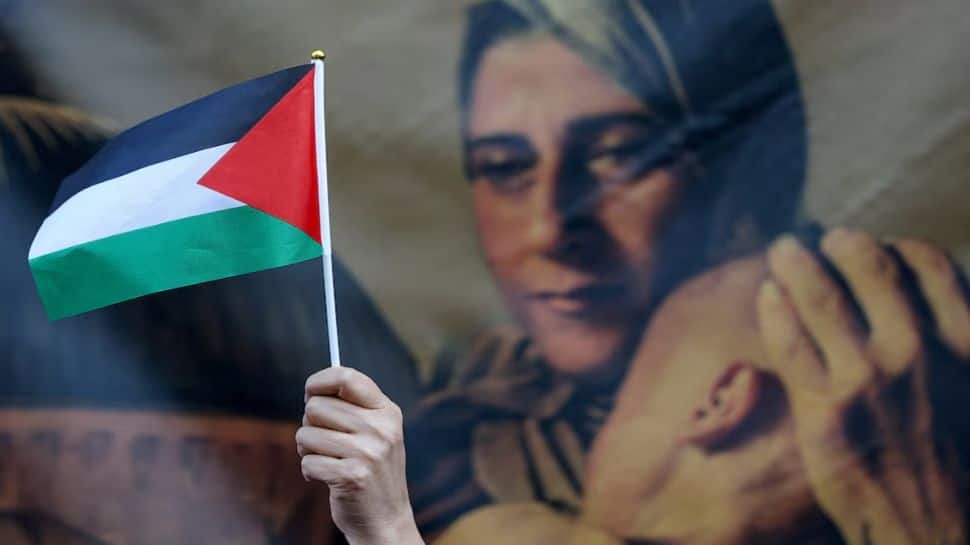
New Delhi: Over 160 countries around the world have formally recognised Palestine as a state. The United Kingdom, France, Canada and Australia too have joined the growing roster. However, this acknowledgment remains largely symbolic.
With Israel refusing Palestinian statehood and the United States opposing recognition, these declarations remain far from reality.
A Diplomatic Signal
Recognising Palestine is not about immediate sovereignty on the ground. It is a diplomatic statement, a signal that the vision of a two-state solution (Israel and Palestine coexisting as independent nations) still matters.
UK Prime Minister Keir Starmer stated, “It is the path toward creating a viable Palestinian state co-existing with a secure Israel.”
But he and other world leaders acknowledge the practical difficulties, as Israel resists any formal Palestinian statehood.
Gaza’s Crisis Demands Action
The renewed international push comes amid the ongoing devastation in Gaza. French President Emmanuel Macron emphasised the urgency, saying, “We must finally build the State of Palestine, ensure its viability and enable it, by accepting its demilitarisation and fully recognising Israel, to contribute to the security of all in the Middle East.”
Public protests, humanitarian concerns and media coverage of Gaza’s suffering have pushed several governments to act.
US Secretary of State Marco Rubio explained, “It really is them responding to their own domestic politics, you know, protesters in their streets and things like that.”
US Opposition, Israel’s Stance
The United States has repeatedly signalled opposition to recognition, arguing it rewards terrorism. US President Donald Trump reiterated this at the UN General Assembly.
Rubio criticised Macron’s decision, calling it “reckless” and claiming it “serves Hamas propaganda and sets back peace. It is a slap in the face to the victims of October 7”.
The United States continues to back Israel’s military operations in Gaza and has not publicly opposed West Bank settlement expansion. Any attempt to push Palestinian recognition at the UN Security Council would face a US veto.
Conditions Attached To Recognition
Many countries view recognition as the first step in a longer process. Australia, for instance, said that Palestinian Authority President Mahmoud Abbas reaffirmed Israel’s right to exist and promised democratic reforms, including elections and changes in governance, finance and education.
Recognition is also contingent on excluding Hamas from governing roles. A July declaration from 27 states stated, “Hamas must end its rule in Gaza and hand over its weapons to the Palestinian Authority, with international engagement and support, in line with the objective of a sovereign and independent Palestinian State.”
Leaders like Starmer stress that the Palestinian state must be demilitarised to ensure long-term stability.
Leadership Questions Remain
Who would lead a recognised Palestinian state is still uncertain. Abbas, 89, has named Hussein al-Sheikh as his deputy and likely successor. Born in 1960, Sheikh is a veteran of Fatah, the PLO faction founded by Yasser Arafat.
The Palestinian Authority struggles with declining public support due to alleged corruption and perceived inefficiency amid ongoing Israeli incursions.
Marwan Barghouti, 66, a jailed Palestinian leader, remains the most popular person among Palestinians, but Israel refuses to release him.
The Fragile Two-State Solution
The two-state solution is under severe strain. Starmer admitted, “Hope of a two-state solution is fading, but we cannot let that light go out.”
Israel’s “occupation” of Gaza and discussions of annexing parts of the West Bank make the prospect of a viable Palestinian state increasingly distant.
Far-right ministers within Israel’s coalition push these expansion plans even as the international community, including over 160 countries, supports an independent Palestinian state.
Recognition is a gesture. A message to the world. A fragile glimmer of hope for Palestinians living under siege. It may not immediately change life on the ground, but it signals that the world has not abandoned the dream of justice, independence and a sovereign Palestine.