

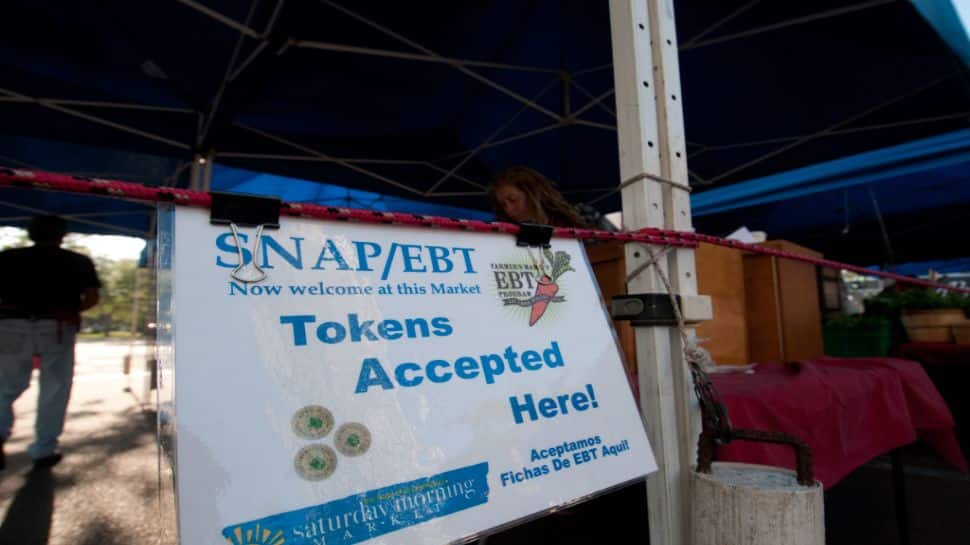
Washington: The government shutdown in the United States stretches on. The clock for food aid moves toward zero. Disaster creeps through grocery store aisles in silence.
Forty two million people rely on the Supplemental Nutrition Assistance Programme. SNAP (SNAP) functions as the primary food source for low-income families. The programme reaches every corner of the country. Poverty rules most SNAP households. The benefit determines whether children eat dinner.
The Department of Agriculture told states on October 10 that SNAP funding ends in November if lawmakers fail to act. The notice came with cold precision. The warning ripped through offices that track hunger.
The White House places blame on the Democrats. Agriculture Secretary Brooke Rollins took to X with a pointed statement on October 16, “Democrats are putting free health care for illegal aliens and their political agenda ahead of food security for American families. Shameful.”
The message went viral. The anger swelled. Families watched the accusations while their budgets already broke.
The shutdown originated inside a battle over the Affordable Care Act. The Democrats want enhanced subsidies extended. The Republicans want federal funding approved first. Political pride fills the room. Food insecurity sits outside the door.
SNAP money comes from the Congress. State agencies manage operations. Each recipient receives an average of $190 per month. Each household receives an average of $356. The money buys produce, meat, dairy and bread. The money rarely lasts the month.
Social media erupts with warnings that food stamps vanish on November 1. An Instagram user posted, “Let that sink in – just in time for the cold season and the month of giving thanks.”
The post travels fast through phones of families trying to stretch a half-gallon of milk. Payment schedules differ by state. The threat arrives on different days in November. The anxiety arrives now.
The Donald Trump administration can reach into a contingency fund. The fund covers nearly two-thirds of a month. More money could move from other Agriculture Department accounts. The Center on Budget and Policy Priorities outlines these possibilities. Officials confirm that the Women, Infants and Children programme has funding.
Federal documents state that SNAP continues during a funding lapse as long as money exists. State officials received instructions from the United States Department of Agriculture (USDA) to delay any steps that would send out November benefits. Government rules require larger cuts for households with slightly higher incomes. The poorest keep benefits the longest. That rule holds until the reserves drain.
Journalists ask for details. Administration officials stay silent.
State leaders step forward. Illinois, New York, North Carolina, Texas and Wisconsin warn that November benefits may not arrive. A spokesperson for the Florida Department of Children and Families told PolitiFact that no benefits will be issued if the shutdown survives into November.
California moves resources into the emergency. Governor Gavin Newsom prepares the National Guard and California Volunteers to support food banks. The state will spend $80 million to reinforce basic food supplies.
Wisconsin Governor Tony Evers sends a message to Rollins through a formal letter. He writes: “Empty cupboards and stomachs are not abstract outcomes. They are the very real and near consequences of the dysfunction in Washington. These are also consequences you can prevent today.”
The statement reads like a verdict.
Food banks feel new pressure. ProPublica reported on October 3 that $500 million in Emergency Food Assistance Programme deliveries were cut earlier in the year. Supplies fall. Demand rises. Shelves echo.
Congressional voices continue to offer claims.
House Speaker Mike Johnson insisted on Face the Nation on May 25. “We are not cutting” SNAP, he said. Bill records dispute that assertion. The House passed a Republican-backed measure known as the One Big Beautiful Bill. The Congressional Budget Office studied the changes in May. The estimate revealed 3.2 million fewer participants per month over nine years. The reduction comes from shifts in work requirements and limits on state waivers in high-unemployment areas. An August update placed the estimate at 2.4 million.
Wisconsin state Representative Francesca Hong pointed to a vital detail on June 12 through X. She wrote, “Nearly 25 cents of every $1 spent via SNAP goes to farmers and ranchers.”
The Agriculture Department figures confirm the number. Farm operations earned 24.3 cents of each dollar spent on food at home in 2023. Cuts to SNAP reach deep into rural communities.
House Democratic leader Hakeem Jeffries stated on May 8 that “about 20 percent of households with veterans rely upon” the SNAP. A study released April 2 says that 8 percent of veterans receive SNAP support. No state rises above 14 percent. Older research shows figures from 4.9 percent to 6.6 percent.
The shutdown drags forward. Refrigerators empty. Tension spreads through homes that never asked for this fight.
Winter calls. The hunger line grows. Washington continues its stalemate. Food insecurity watches from the front row.