

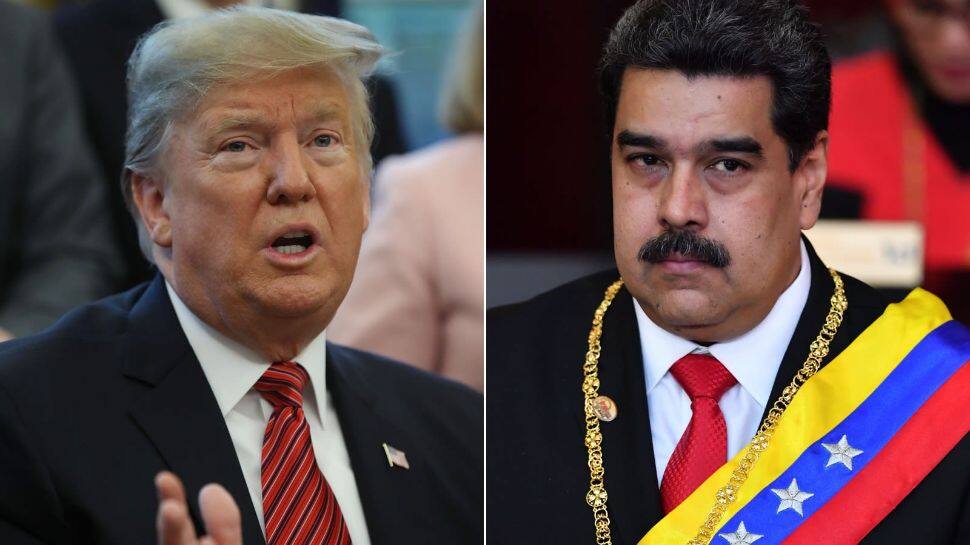
Caracas: Tensions between Venezuela and the United States have intensified in recent weeks. The situation escalated last month when the Donald Trump administration deployed submarines and warships close to Venezuelan waters. On Tuesday, the atmosphere turned almost wartime when a U.S. strike targeted a Venezuelan vessel, killing 11 people.
President Nicolás Maduro responded to the attack by criticising what he described as aggressive actions by Washington. Simultaneously, Caracas is in talks with China for the potential purchase of J-10C fighter jets, aircraft considered among the most advanced in the world.
According to reports, Venezuela is preparing to alter the power dynamics in South America. Chinese J-10C multirole fighters are under consideration. If the deal moves forward, Beijing’s sophisticated fighter jet would operate dangerously close to U.S. influence in the region.
Official confirmation of any agreement between China and Venezuela has not yet been issued.
At present, Venezuela’s air force is dominated by Russia’s Su-30MK2 fighters. Western sanctions and the ongoing conflict in Ukraine have hindered Moscow’s ability to supply new aircraft to Caracas. China has offered Venezuela a package of 20 J-10C jets. The acquisition could allow Venezuela to challenge U.S. influence while reshaping military configurations in South America.
The J-10C is a 4.5-generation multirole fighter jet equipped with modern systems. Its features include advanced Active Electronically Scanned Array (AESA) radar, helmet-mounted targeting and digital avionics designed to ensure survivability in electronic warfare environments. Equipped with long-range PL-15 missiles capable of striking targets up to 200 kilometres away, the J-10C is considered highly lethal.
Pakistan’s experience with the J-10C demonstrates its operational effectiveness. The Chinese fighter has been integrated into the Pakistan Air Force and reportedly performed successfully in exercises and operational deployments. Priced around 40 million dollars per unit, it represents a cost-effective option for Venezuela.
China also offers financing options, which may help ease economic pressures on a country navigating sanctions and financial constraints.
If China and Venezuela finalise the deal, the implications for South America could be profound. The region has not faced a serious challenge to U.S. air dominance. The deployment of Chinese aircraft in Venezuelan hands would disrupt the established military equilibrium. It would also allow Beijing to place advisors, technicians and training units within striking distance of U.S. territory, altering regional security calculations.
This emerging partnership illustrates how military hardware can influence geopolitical dynamics. Venezuela’s consideration of the J-10C signals a willingness to explore alternatives to existing dependencies, introducing new uncertainty into South American defense alignments and U.S. strategic calculations.