

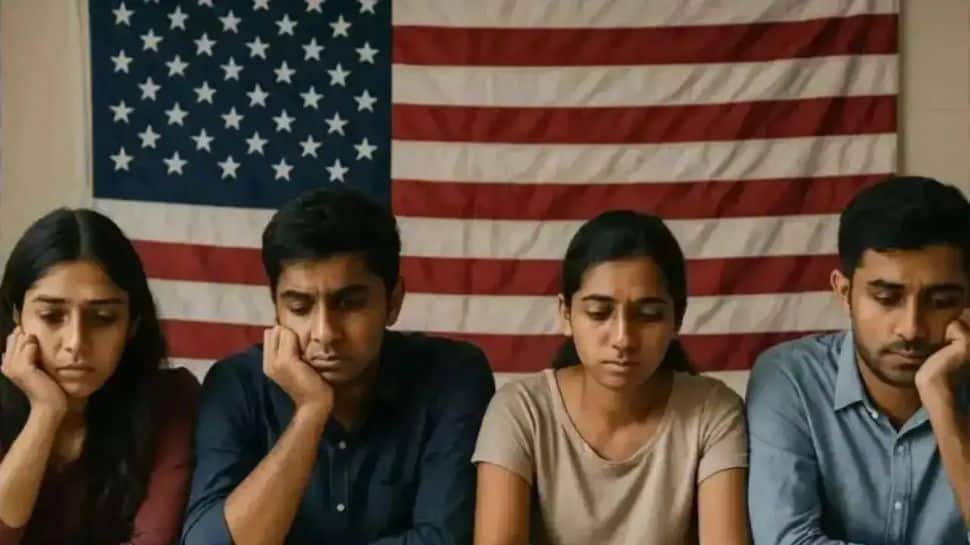
New Delhi: Thousands of Indian students in the United States are caught in circumstances they never anticipated. Basic living expenses are becoming harder to manage. With limited work options and stricter visa regulations, many now find themselves stuck between survival and uncertainty.
Over the past year, the landscape has shifted drastically. After the Donald Trump administration introduced a tougher immigration stance, student life in the United States has become more stressful than ever. Earlier, part-time jobs were easy to find and offered a way to manage rent, food and daily expenses. Now, these opportunities have dried up.
The pressure of rising living costs, strict inspections and limited legal work options is pushing them into distress.
Official numbers paint a worrying picture. More than 4,700 student visas have been revoked in the past recent months. The reasons range from irregular college attendance to unauthorised part-time employment.
Indian students, who once relied on jobs in restaurants, shops or delivery services, are now quitting these roles out of fear. In several US states, immigration officials are conducting spot checks at workplaces. The fear of being caught is real and constant.
One 25-year-old Indian student in Los Angeles, pursuing a master’s in cybersecurity, shared how things have changed for him. He once managed to balance studies with an eight-hour restaurant job. That income was enough for rent and food. But after checks increased, his employer dismissed all student workers. He found another job, but the new restaurant allows only three hours of work per day. His income now falls short of even his basic grocery bills.
The pattern is widespread. Another student, 27, studying computer science in Atlanta, now shares a two-bedroom flat with five others. At one time, he earned about $1,200 a month. Now, his monthly earnings have gone below $300. “I have stopped going out, cancelled every non-essential service and track every dollar,” he said.
These choices are not about saving but surviving. The problem goes beyond daily needs. The path to long-term employment has narrowed. The Optional Practical Training (OPT) programme, which once helped students find work after graduation, has become difficult to access. Stricter rules and fewer company sponsorships are closing doors. Data shows a 28% drop in active student enrolments from India year-on-year, up to March 2025.
A 25-year-old IT graduate in Atlanta described the situation, “I came here to invest in my future. But every day is a struggle just to stay. I worry more about rent and visa rules than about building a career.”
If there is no change in the situation, he says, returning to India may be his only realistic option.
Consultants are now advising caution. Chirandeep Patnaik from Lemma One Consulting said this year’s intake has been the worst in decades. “We are telling future applicants the truth. Conditions in the United States are tough, and they are not improving soon. Students already there are struggling, and new arrivals should be prepared for the same,” he said.
The dream of studying in the United States still holds power for many. But for a growing number of Indian students, that dream now comes with too high a cost financially and emotionally.