

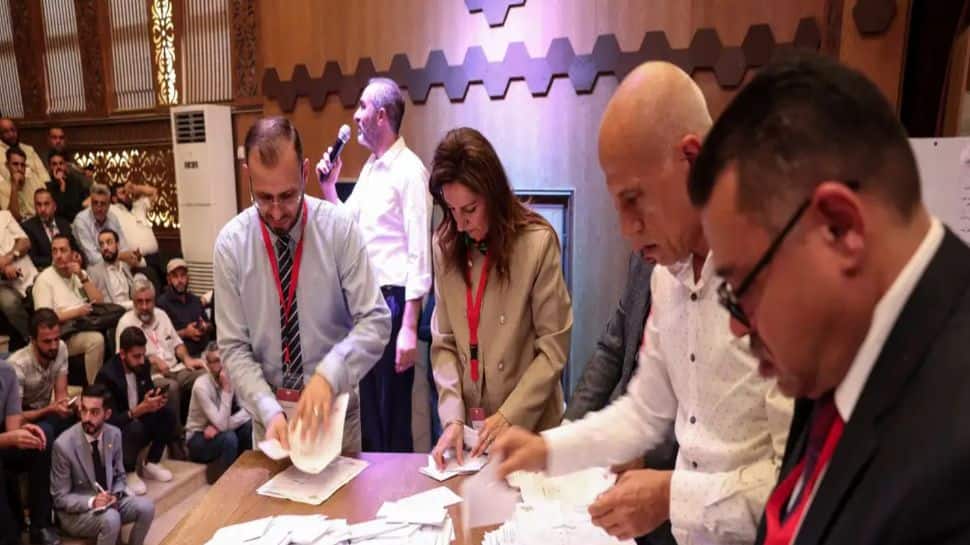
Damascus: Syria is counting votes following its first parliamentary elections since Bashar al-Assad’s ouster in December 2024. Polls closed on October 5 evening after voting hours were extended in major cities, including Damascus.
The elections are a historic milestone, ending more than five decades of al-Assad family rule and testing the new government under President Ahmad al-Sharaa.
Syrians cast ballots for two-thirds of the 210-seat People’s Assembly. One-third of seats are appointed directly by Sharaa, while the remaining seats are filled by regional electoral bodies and subcommittees under an 11-member Supreme Committee.
The system relies on roughly 6,000 electors, and no nationwide popular vote was held due to the lack of reliable census data after years of war and displacement.
A total of 1,578 candidates competed for 140 elected seats. Women made up 14 percent of the candidate pool. Observers from diplomatic missions and accredited ambassadors monitored voting at central polling locations, including the National Library in Damascus.
President Sharaa visited the polling centre, urging Syrians to participate in shaping the new country and expressing hope that the assembly would address vital legislation, approve the budget and represent citizens’ interests.
The assembly will serve 2.5-year terms. Political parties are absent and debate has been limited, though the political environment is freer than under al-Assad’s censorship-heavy regime. Some seats in Kurdish-controlled regions and the southern province of Suwayda could not be contested due to ongoing unrest, leaving up to 32 seats temporarily vacant.
Security challenges have persisted. A candidate from Tartous, Haidar Shahin, was killed days before the vote amid lingering sectarian tensions. Other parts of the country remain cautious, reflecting past violence and attacks on minorities.
Despite these concerns, public support for democratic reform is strong. Surveys show a majority of Syrians favour a pluralistic system with accountability, while smaller groups support Islamic law-based governance or restricted political competition.
Sharaa remains the central figure in Syria’s transitional politics. Analysts suggest the elections may elevate local leaders and notable people, providing communities with a connection to central power in Damascus.
While the assembly is unlikely to challenge the president’s authority, the process represents an initial step toward building a more pluralistic political framework after decades of authoritarian rule.
Final results are expected by Tuesday (October 7). Observers will be watching to see whether the People’s Assembly exercises real legislative power or functions primarily to endorse government decisions. The elections are widely viewed as an early phase in Syria’s post-revolutionary political reconstruction, laying the groundwork for possible future competition and representative governance.