

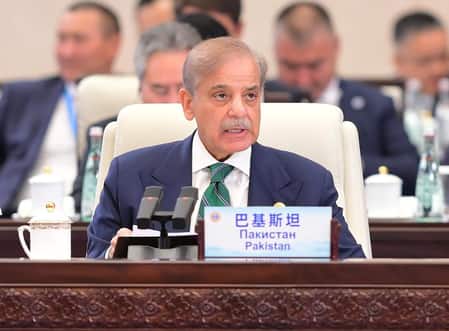
Tensions between Pakistan and Afghanistan escalated dramatically on Sunday after violent clashes along the border resulted in disputed casualty claims and territorial losses. Pakistani Prime Minister Shehbaz Sharif condemned what he called provocations by Afghanistan and vowed a strong response to attacks that Taliban sources claim killed dozens of Pakistani soldiers.
The Taliban government’s chief spokesman, Zabihullah Mujahid, stated that Afghan forces captured 25 Pakistani army posts during the confrontation, with 58 soldiers killed and 30 others injured. Pakistan has not independently confirmed these casualty figures, though Sharif’s statement acknowledged serious border violence.
The Taliban government characterized the military action as retaliation for what it described as repeated violations of Afghan territory and airspace by Pakistani forces. This framing suggests the clashes represent an escalation of ongoing cross-border tensions rather than an isolated incident.
Prime Minister Sharif issued a firm warning in his official statement, declaring that there would be no compromise on Pakistan’s defense and that every provocation would be met with a strong and effective response. He accused Taliban authorities in Afghanistan of permitting their territory to be used by terrorist elements targeting Pakistan.
The Kabul Airstrikes
The recent tensions follow reports of airstrikes in Kabul earlier this week. Although Islamabad has not officially confirmed carrying out the strikes, it has urged Kabul to stop providing refuge to the Tehreek-e-Taliban Pakistan (TTP) within its borders.
The escalation coincides with Afghanistan’s Foreign Minister, Amir Khan Muttaqi, undertaking a week-long visit to India—the first high-level trip from Kabul since the Taliban came to power in August 2021.