

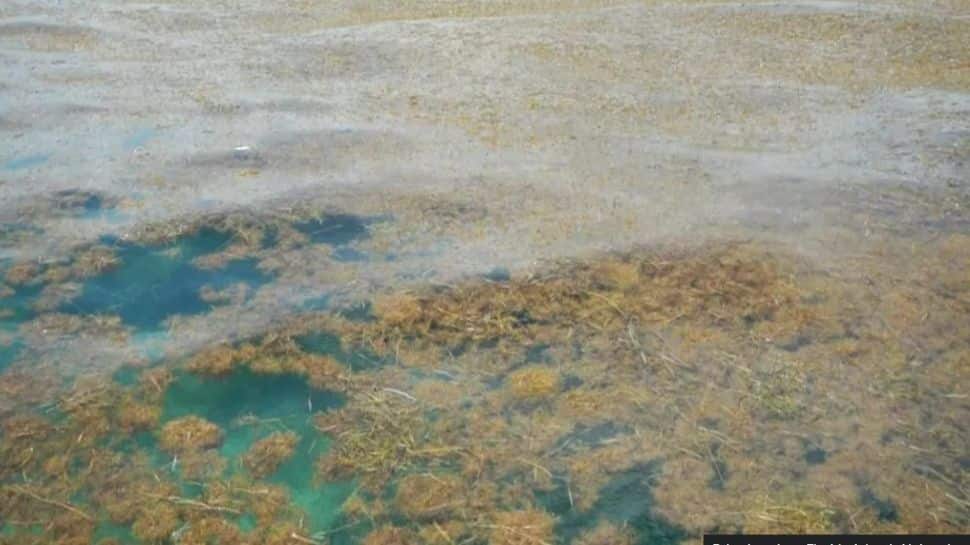
Great Atlantic Sargassum Belt: Scientists are alarmed by a striking phenomenon in earth’s oceans. A brown algae belt stretches nearly 8,850 km from the Atlantic Ocean to the Gulf of Mexico. Named the Great Atlantic Sargassum Belt (GASB), it weighs an estimated 37.5 million tons and is visible even from space.
The belt threatens both marine ecosystems and human life. Its first major appearance occurred in 2011. Since then, its size has doubled annually. Its width now rivals the North American continent.
What Is Sargassum; Why Is It Dangerous?
Sargassum is floating seaweed once confined to the Sargasso Sea. It provides natural habitat for small marine organisms and fish while drifting on the ocean surface. The problem emerged when it began expanding beyond traditional boundaries.
Warm and nutrient-rich waters now fuel its rapid growth. Excess nitrogen and phosphorus from agricultural runoff, sewage and industrial discharge enter rivers and flow into the ocean.
Scientific Warning
Research from the Florida Atlantic University’s Harbour Branch Oceanographic Institute shows nitrogen content in Sargassum rose 55% between 1980 and 2020. The nitrogen-to-phosphorus ratio increased by 50%. The algae now grows faster than ever.
The Amazon River contributes the largest share of nutrients. Ocean currents such as the Gulf Stream and Loop Current carry the algae from the Atlantic to Mexico, forming a continuous brown ribbon.
Impact On Marine Life
The Sargassum belt creates a major threat to ocean life. Sunlight cannot penetrate where the algae accumulates, halting photosynthesis in coral reefs. Carbon sequestration by oceans also suffers.
Decomposition of Sargassum releases hydrogen sulfide, methane and other greenhouse gases, accelerating climate change.
When the algae reaches coastlines, foul odors and toxic gases pose health risks for nearby populations.
Economic Effects
Sargassum accumulation on coasts disrupts tourism and halts fishing operations. Cleaning the algae costs millions of dollars. In 1991, Florida’s coast experienced such a massive accumulation that a nuclear power plant had to temporarily shut down. This demonstrates that Sargassum is not just seaweed, but a serious environmental and economic crisis.
Growth Conditions
Rising ocean temperatures provide an ideal environment for Sargassum growth. Changes in wind patterns and ocean currents may allow it to spread further north.
If no action is taken soon, this ‘Sargassum Monster’ could engulf the entire Caribbean and U.S. coastline in the coming years.